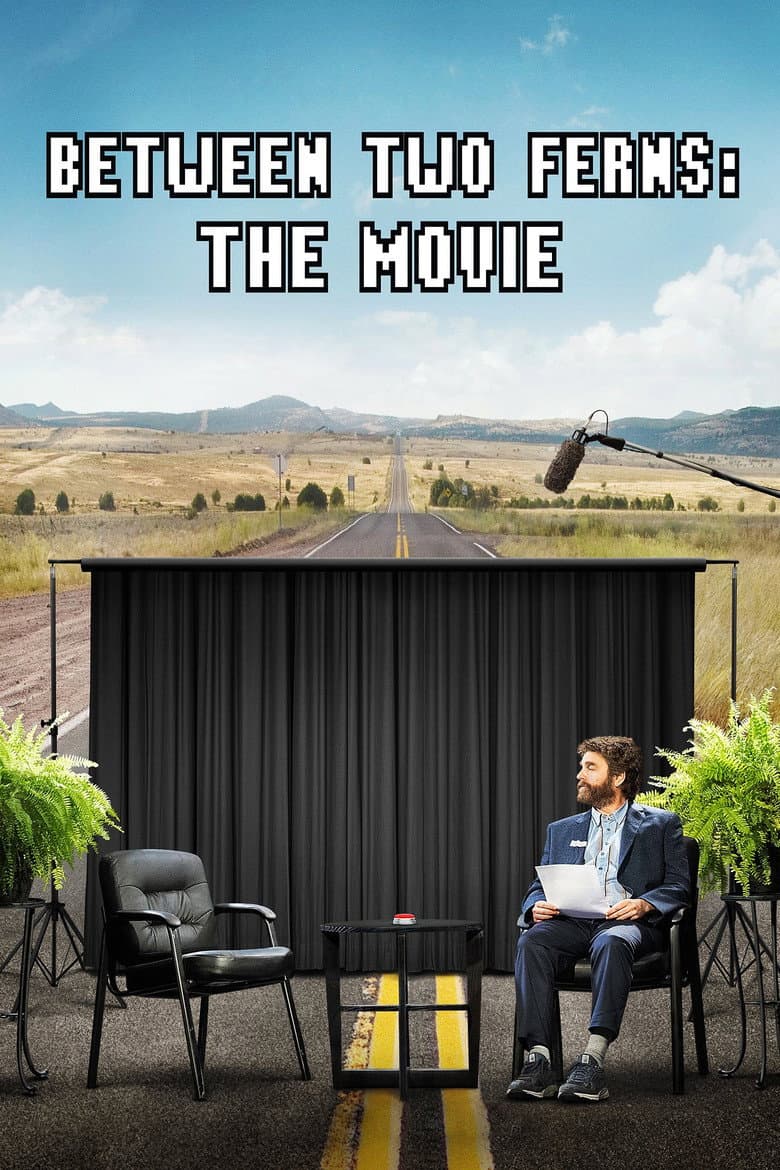
Zach Galifianakis plays a rude public access host in Flinch, North Carolina, who dreams of a national late-night show. After a flood wrecks his small studio, he takes his crew and two ferns on a cross-country trip. Will Ferrell offers him a big chance if he finishes ten celebrity interviews in two weeks. The movie uses fake documentary scenes, awkward insults, road comedy, and a small story about friendship and staying true to your work.
The movie has a few audience-visible identity and gender jokes. Zach mentions the Me Too movement, jokes about men getting easier treatment, and talks about women facing weight pressure in Hollywood. He also jokes about labels such as female comedian and Black comedian, and he makes a race joke about white people explaining jazz to black people. These moments appear in short interview bits, but the main story follows Zach's fame chase, his crew's loyalty, and his choice between a polished TV show and his rough public-access style.
Community feedback
Was our 28% Woke rating accurate?
Breakdown
These are the editorial factors and ratings behind our score for Between Two Ferns: The Movie.
Woke representation / casting
Not present. The film uses a mixed modern American crew and a wide group of real celebrity guests, but it does not frame their identities as a message or use an unusual representation pattern.
0%
Woke political dialogue
Zach jokes that the Me Too movement has taught men an important lesson. Zach asks whether a handsome actor missed that lesson because women want him. Zach talks about women being told to lose weight while men get to age in messy clothes. Zach asks Awkwafina about being called a female or black comedian and jokes about white people explaining jazz to black people. These lines appear as crude celebrity jokes, but they give the movie a brief modern identity and gender focus.
35%
Identity-driven story themes
Not present. Carol is a capable producer, but the story does not present that as a message about women. The main arc is Zach choosing his crew and original comedy over a slick TV job. The story does not make race, gender, sexuality, or DEI politics the focus.
0%
Western institutional / cultural critique
Zach briefly attacks Hollywood's unequal treatment of women. Zach says women are told to watch their weight while men are allowed to look old and messy. Zach also jokes about Me Too and male behavior. These comments target entertainment culture, but the movie keeps them inside interview jokes and never makes them the main conflict.
25%
Woke character or canon changes
Not relevant. The movie expands the web series into a road story, but it does not change a character's race, gender, sexuality, or identity.
0%
Anti-woke backlash and complaints
Not present. The supplied X pass found no anti-woke reaction. Searches of news, Reddit, audience reviews, and video coverage found complaints about the thin plot, short interviews, and crude humor instead of claims that the film pushes DEI or identity politics.
0%
Creator track record context
Scott Aukerman is mainly known for comedy and has little public activist context. Zach Galifianakis has mild liberal ties but is mainly comedy-centered. Producer Stephanie Meurer has a stronger record of socially focused projects, while Mike Farah and BJ Porter are linked to liberal comedy work. The other stored producer and casting context is low or mainly professional. Title-specific interviews describe improvised comedy and celebrity satire, not a diversity campaign.
18%
Production
Movie · 2023
A chaotic intervention. An action-packed stay in rehab. After a weird couple of years, John Mulaney comes out swinging in his return to the stage.
Movie · 2022
Exploring every facet of ‘Weird Al’ Yankovic’s life, from his meteoric rise to fame with early hits like ‘Eat It’ and ‘Like a Surgeon’ to his torrid celebrity love affairs and…
Movie · 2023
From his onstage tackle to the slap heard round the world, Dave Chappelle lets loose in this freewheeling and unfiltered stand-up comedy special.
Movie · 2018
Adam Sandler takes his comical musical musings back out on the road, from comedy clubs to concert halls to one very unsuspecting subway station.
Movie · 2024
Inseparable best friends AJ and Moose decide to run the local pool's snack shack after their plan to sell home-brewed beer goes down the drain.
Movie · 2023
Two mismatched entrepreneurs – egghead innovator Mike Lazaridis and cut-throat businessman Jim Balsillie – joined forces in an endeavour that was to become a worldwide hit in…
Movie · 2016
A comedy that follows a group of friends as they navigate their way through the freedoms and responsibilities of unsupervised adulthood.
Movie · 2016
Two teenage boys from inner-city Cork steal bicycles and ride off on a 160km quest to find an unrecovered bale of cocaine worth 7,000,000 euros.
