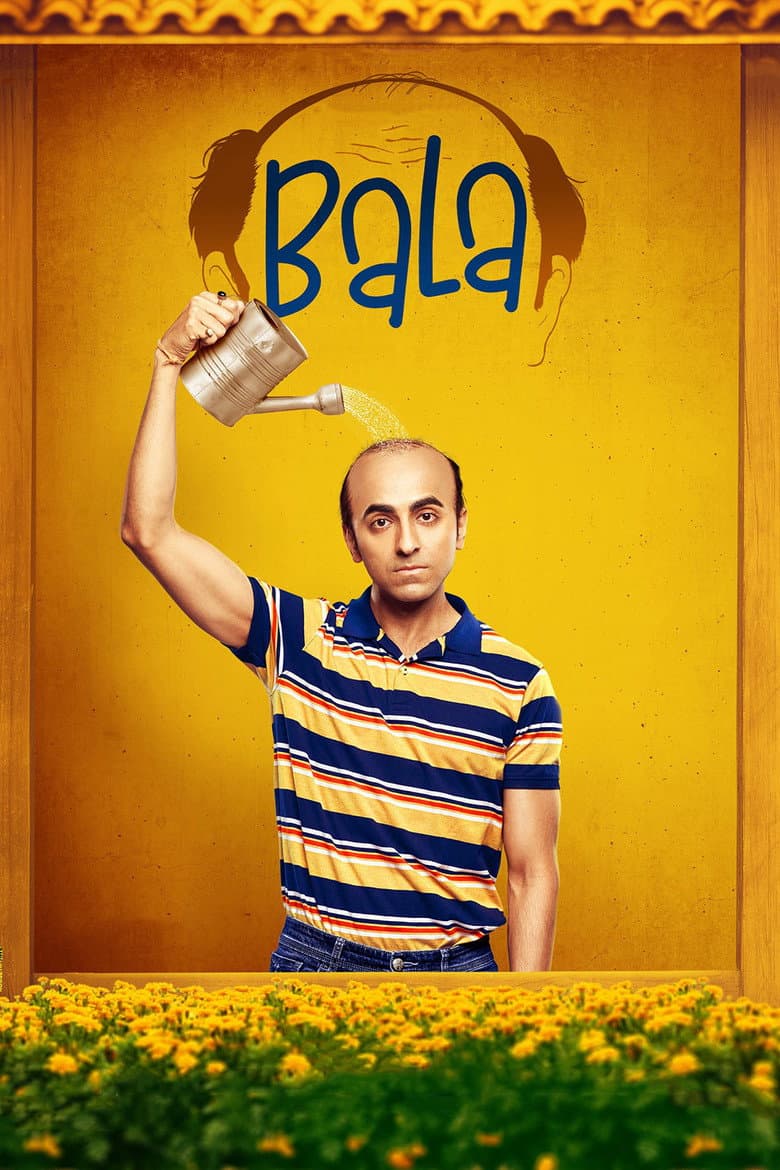
Bala is a young man from Kanpur whose thick hair begins to disappear before he is ready for it. He once used his looks and movie-star style to win praise, but baldness leaves him scared, angry, and unsure of his place. He hides under a wig while he sells fairness cream and tries to win Pari, a pretty model and short-video star. His childhood friend Latika, a sharp lawyer who has faced insults about her dark skin, stays close to the mess. The movie uses broad jokes, romance, and a court case to follow Bala from shame toward self-respect. The story keeps linking baldness, skin color, and beauty to the way people judge men and women. Bala begins as a cruel boy who mocks Latika, then learns that his own fear has made him judge others. Latika speaks firmly about accepting her skin, while Pari is allowed to leave a marriage after learning that Bala hid his baldness. The ending has Bala remove his wig in public and build a comedy act around accepting people as they are. These ideas are central to the plot, but the film presents them through a light Hindi comedy rather than a party or government debate.
Community feedback
Was our 63% Woke rating accurate?
Breakdown
These are the editorial factors and ratings behind our score for Bala.
Woke representation / casting
Bhumi Pednekar plays Latika, a dark-skinned lawyer, with makeup that makes her much darker than her real skin. The choice puts skin identity at the center of a major supporting role. The director said the team first considered a dark-skinned actor but chose Bhumi after auditions. The rest of the main cast fits a modern Kanpur story, so there is no broad one-of-each diversity pattern.
28%
Woke political dialogue
Bala and Latika repeatedly discuss skin color, fairness creams, and the shame placed on people who look different. The court scene calls the issue a woman’s rights case and says Pari can refuse a marriage after Bala hides his baldness. The final sales event rejects the idea that people should change their skin to fit society’s beauty rule. These lines are central in the last part of the film, but they do not deal with party politics.
43%
Identity-driven story themes
Bala’s main journey is about body shame, beauty rules, and learning to accept himself. Latika’s repeated rejection because of dark skin adds a second identity-based struggle. The film shows Bala as wrong for judging Latika and treats both women as people with their own choices. The ending turns the lesson into a public message that looks should not decide a person’s worth. These themes shape the romance, court case, and ending.
66%
Western institutional / cultural critique
The film attacks the beauty culture behind fairness creams and the marriage pressure tied to skin color. It also questions the idea that a woman must accept a husband she does not want. The court gives Pari a clear choice, which challenges a traditional marriage rule. The story does not target Western institutions, Christianity, capitalism, or conservatives, so this factor stays low.
18%
Woke character or canon changes
Not relevant. Bala uses original characters and does not change an established character, canon, or real historical figure.
0%
Anti-woke backlash and complaints
One Film Companion review called the movie’s message shallow woke arguments and armchair progressive values. That was an isolated review comment, not a boycott, review-bombing effort, or wide news story. Wider coverage focused on the dark makeup used for Latika and the similar film Ujda Chaman. The supplied X research found no anti-woke complaints.
12%
Creator track record context
Amar Kaushik often puts social ideas inside comedy and genre films. Niren Bhatt often uses stories about gender, nature, and social pressure. Dinesh Vijan has backed films about skin color, class, women facing violence, and other social issues. This gives the key team a moderate woke track record, even though the group is not known mainly for party politics.
55%
Production

Movie · 2019
Two young people arrive in New York to spend a weekend, but once they arrive they're met with bad weather and a series of adventures.
Movie · 2020
An on-the-lam punk rocker and a young woman obsessed with a local band go on an unexpected and epic journey together through the decaying suburbs of the American Midwest.

Movie · 2023
On the brink of losing her childhood home, Maddie discovers an intriguing job listing: wealthy helicopter parents looking for someone to “date” their introverted 19-year-old son…

Movie · 2023
After a disastrous first date, wild-child Nicole and socially-anxious Max vow to lose each other’s numbers until they learn that their dogs found a love match, and now puppies are…

Movie · 2022
Students Hayley and James are young and in love. After saying goodbye for Christmas at a London train station, they both make the same mad split-second decision to swap trains and…

Movie · 2023
The dramatic comedy is based on the true story of writer and pinball wizard Roger Sharpe, chronicling his journey to overturn New York City’s 35-year ban on pinball.

Movie · 2026
A happily engaged couple is put to the test when an unexpected turn sends their wedding week off the rails.

Movie · 2025
Dawn thinks she's joining a dating show in Paris, France, only to land in Paris, Texas. She has an exit plan — until sparks fly with the cowboy bachelor.
