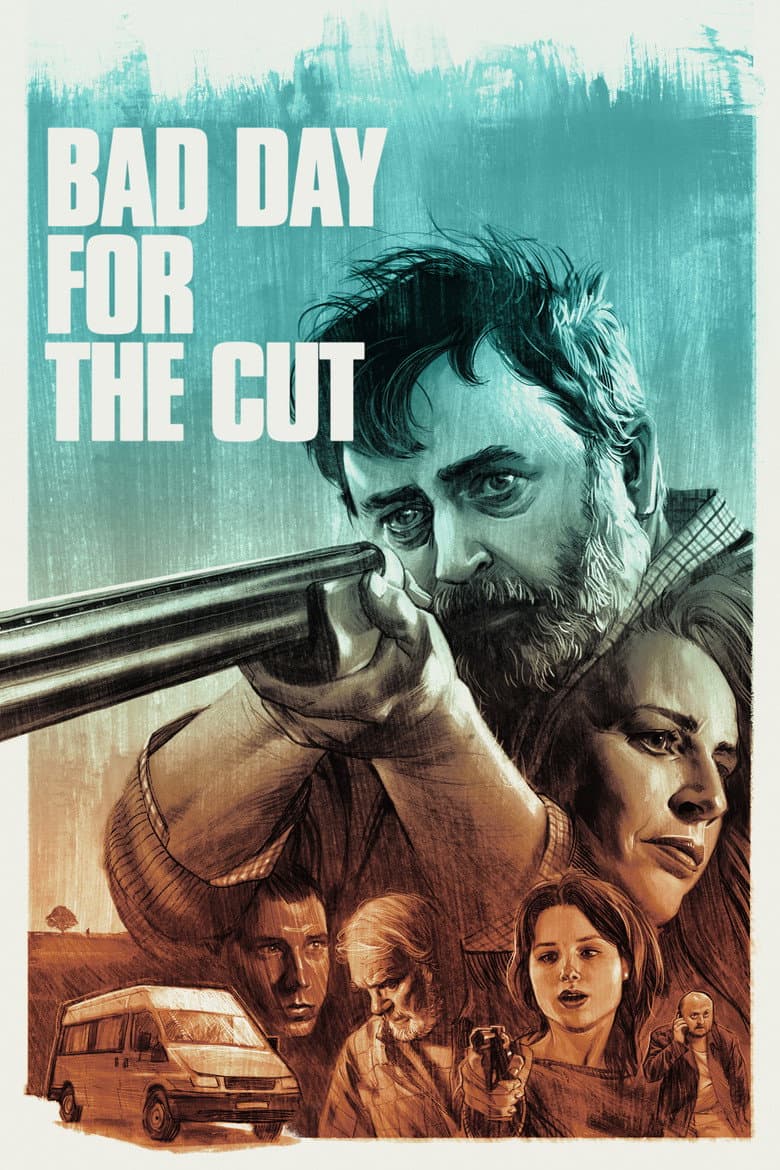
Donal is a quiet, middle-aged farmer who lives with his mother in rural Northern Ireland. He spends his days caring for her, fixing cars, and trying to build a small life outside the farm. After criminals murder his mother, Donal follows the trail into Belfast and begins a bloody search for the people responsible. The film mixes grim violence, dark jokes, and local speech with a sad story about revenge.
Frankie is a violent female crime boss who controls men and protects her young daughter, while Kaja is a Polish woman trapped by traffickers. Bartosz tries to save his sister, and Donal learns that his mother hid a secret tied to Frankie's family. The story follows family loyalty through several linked acts of revenge. Its main lesson is that violence creates more grief instead of fixing the past.
Community feedback
Was our 6% Woke rating accurate?
Breakdown
These are the editorial factors and ratings behind our score for Bad Day for the Cut.
Woke representation / casting
The film places Frankie, a woman, at the head of the criminal group and gives her a major villain role. That is a noticeable gender-role choice in a crime story. The film treats her as a violent person with family reasons, not as an empowerment symbol. The other main roles are local Irish characters and Polish siblings whose backgrounds fit the trafficking plot.
12%
Woke political dialogue
Not present. The dialogue uses local speech and talks about murder, family loyalty, human trafficking, and the past. It does not push modern identity, DEI, or activist ideas.
0%
Identity-driven story themes
Not present. The story follows revenge, family secrets, human trafficking, and the cost of violence. It does not make identity politics or representation the reason for the conflict.
0%
Western institutional / cultural critique
Not present. The film shows criminal abuse, the long reach of the Troubles, and trafficking. It does not turn those events into a modern attack on Western culture, capitalism, family life, or traditional beliefs.
0%
Woke character or canon changes
Not relevant. The movie is an original crime story and does not adapt a known character, book, real person, or historical event into a new identity role.
0%
Anti-woke backlash and complaints
Not present. The separate X research pass found no anti-woke reaction. Wider reviews and audience posts discuss revenge, violence, humor, and the female villain, not woke or DEI messaging.
0%
Creator track record context
Not present. The supplied creator records give Chris Baugh 9, Brendan Mullin 0, Katy Jackson 19, and Carla Stronge 15. Those records describe local genre work and no clear activism, DEI campaign, or identity-driven pattern. Title interviews also focus on County Tyrone, revenge, family loyalty, and local detail.
0%
Production
Movie · 2024
While awaiting the next fuel truck at a middle-of-nowhere Arizona rest stop, a traveling young knife salesman is thrust into a high-stakes hostage situation by the arrival of two…
Movie · 2019
In 1934, Frank Hamer and Manny Gault, two former Texas Rangers, are commissioned to put an end to the wave of vicious crimes perpetrated by Bonnie Parker and Clyde Barrow, a…
Movie · 2019
A young agent is tasked with investigating a tangled web of corruption and fraud in New York.
Movie · 2021
A cold and mysterious new security guard for a Los Angeles cash truck company surprises his co-workers when he unleashes precision skills during a heist.
Movie · 2019
In the wake of his dramatic escape from captivity, Jesse Pinkman must come to terms with his past in order to forge some kind of future.
Movie · 2019
A former mob enforcer who is released from prison after serving 22 years for a crime he didn't commit sets out on a path for revenge against the people who wronged him.
Movie · 2016
A U.S Customs official uncovers a massive money laundering scheme involving Pablo Escobar.
Movie · 2019
After a mass shooting at a police funeral, reclusive ex-cop Gannon finds himself unwittingly forced out of retirement when he realizes that the killer belongs to the same militia…
