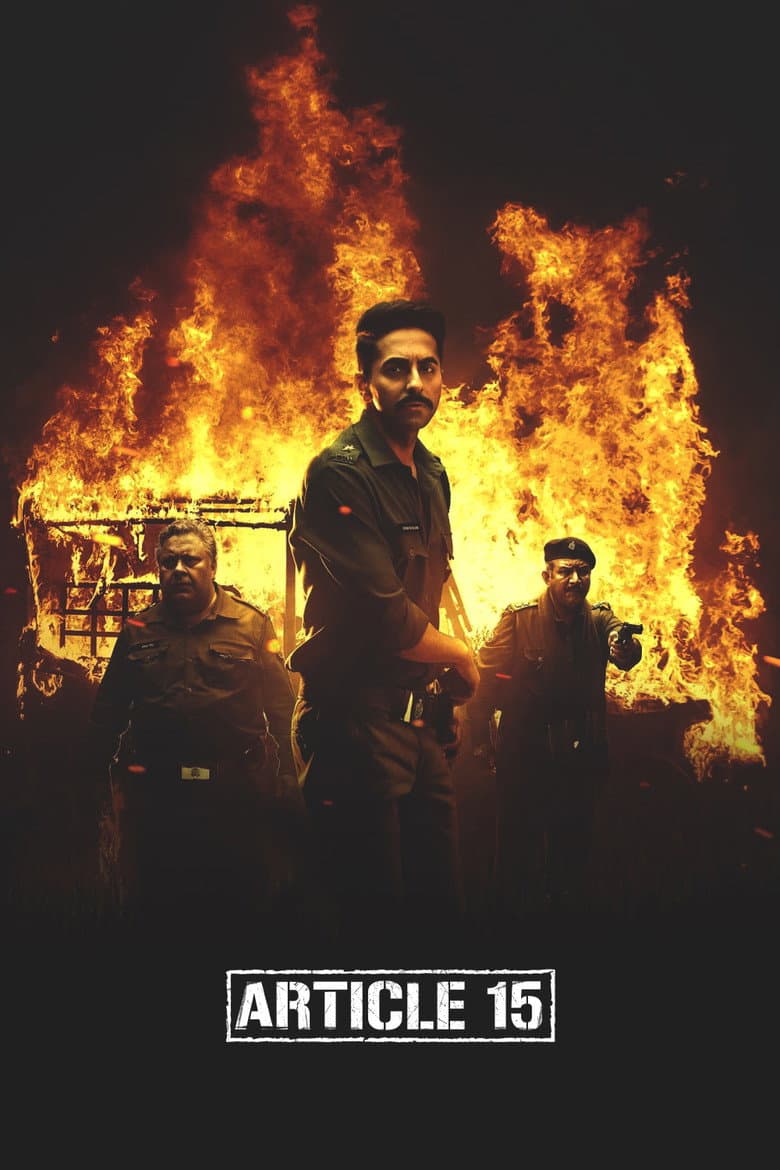
Article 15 follows Ayan Ranjan, a young IPS officer sent from the city to a rural police district in Uttar Pradesh. Three girls from a poor lower-caste family disappear, and two are later found dead. Ayan tries to find the missing girl while local officers, caste leaders, and politicians block his work. The film is a grim crime thriller with bursts of dry humor and a strong sense of anger.
Article 15 makes caste the main subject of the story. It shows lower-caste villagers facing poverty, dirty work, sexual violence, police neglect, and fear of higher-caste power. It presents Ayan, an upper-caste Brahmin, as the officer who learns about the system and becomes the main force seeking justice. A Dalit activist and other local characters challenge him, but the film still gives the final rescue and the clearest justice to the upper-caste hero.
Community feedback
Was our 88% Woke rating accurate?
Breakdown
These are the editorial factors and ratings behind our score for Article 15.
Woke representation / casting
The film places an upper-caste Brahmin officer at the center of a caste story. The film gives Dalit characters roles as victims, workers, police staff, and activists, while the main savior is a mainstream upper-caste star. Reports also noted that the Dalit roles were not played by Dalit actors. This makes caste identity a clear part of the casting, but the film does not use a broad diversity-first cast.
43%
Woke political dialogue
The film uses repeated talks about caste, equality, and the Constitution. Ayan questions police officers who treat lower-caste victims as less important. Nishad and Gaura speak about rights, protest, and the need for people to act instead of waiting for a hero. The story presents caste alliances and local elections as tools used by powerful people. These ideas are frequent and central to the investigation.
62%
Identity-driven story themes
The film’s main conflict is caste-based oppression in modern rural India. It shows lower-caste villagers facing sexual violence, dirty work, poverty, police neglect, and fear of higher-caste power. It treats the crime as part of a wider social system instead of an isolated act. It also follows a Dalit activist’s protest and a Brahmin officer’s change from an unaware outsider to the main law-enforcement force for justice.
84%
Western institutional / cultural critique
Not present. The story criticizes caste abuse, Indian police failures, and local political power. It does not attack Western institutions, Christianity, or Western family and gender norms.
0%
Woke character or canon changes
The film is loosely inspired by the Badaun case and other incidents, so it does not claim to reproduce one exact event. Reports about the real case described different caste details from the film’s use of upper-caste villains. That identity change helps build the film’s anti-caste conflict. The score stays moderate because the story uses fictional names and a combined plot.
32%
Anti-woke backlash and complaints
Brahmin organizations said the film made Brahmins look like villains and used wrong caste details from the Badaun case. The complaint led to local protests, threats or show disruptions, and a Supreme Court petition asking for the film to be stopped. The court declined to ban the film and sent the group to the proper legal channel. The separate X pass found repeated anti-left and anti-Brahmin posts, but no review-bomb or organized boycott.
52%
Creator track record context
Anubhav Sinha has a sustained record of films about caste, communal prejudice, gender abuse, political conflict, and state power. Gaurav Solanki and Sagar Shirgaonkar also have repeated links to social-issue projects. The two casting directors have weaker or unclear public records on activism. This gives the film strong issue-focused creator context, but the story remains the main evidence.
66%
Production
Movie · 2018
After receiving an anonymous tip, a tax officer leads a raid on the mansion of the most powerful figure in Lucknow, a member of parliament who has been evading income tax for…

Movie · 2019
In the wake of his dramatic escape from captivity, Jesse Pinkman must come to terms with his past in order to forge some kind of future.

Movie · 2024
While awaiting the next fuel truck at a middle-of-nowhere Arizona rest stop, a traveling young knife salesman is thrust into a high-stakes hostage situation by the arrival of two…

Movie · 2017
A newly-released prison gangster is forced by the leaders of his gang to orchestrate a major crime with a brutal rival gang on the streets of Southern California.

Movie · 2021
When a man's only son goes missing, he travels to the town where his ex-wife lives in search of answers. [To play a man whose life is clouded by mystery, McAvoy will not be given…

Movie · 2018
Los Angeles Police Department detective Russell Poole has spent years trying to solve his biggest case -- the murders of The Notorious B.I.G.

Movie · 2019
A charismatic New York City jeweler always on the lookout for the next big score makes a series of high-stakes bets that could lead to the windfall of a lifetime.

Movie · 2019
In New York, former convict Pete Koslow, related to the Polish mafia, must deal with both Klimek the General, his ruthless boss, and the twisted ambitions of two federal agents…
