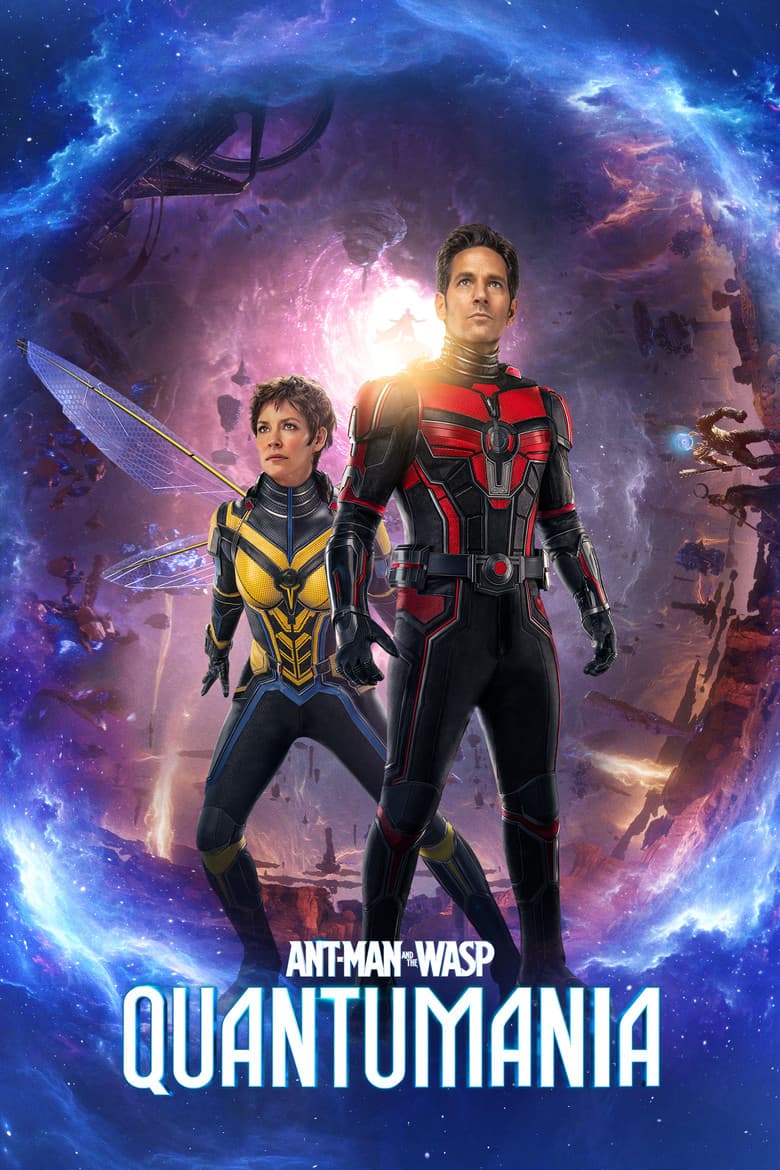
Movie review
February 15, 2023 · 125 min · PG-13 · Sci-Fi · Action · Adventure
After the Blip, Scott Lang and Hope van Dyne live as partners while Hope runs the Pym van Dyne Foundation. Scott’s teen daughter Cassie, now an activist and inventor, clashes with her famous dad. Her Quantum Realm signal pulls the whole family into that realm with Hank Pym and Janet van Dyne. There they meet strange beings, free oppressed natives, and face Kang the Conqueror in a fight to get home. The main story is family adventure, father and daughter repair, and a war against a tyrant, not identity politics as the engine of the plot.
Progressive material shows up mostly early and in how people are framed. Cassie is a teen activist who keeps getting arrested for protests about people left displaced and unhoused after the Blip, and she fights with Scott about using power for social good. Hope stays a skilled co-lead as CEO, scientist, and fighter, and several supporting roles and the central villain are cast with diverse actors. Female heroes lead in combat and inventing, and there is mild talk about helping ordinary people with power. Those beats color the start and the cast, then the long Quantum Realm stretch is adventure and a classic anti-tyrant fight.
Community feedback
Was our 53% Woke rating accurate?
Breakdown
These are the editorial factors and ratings behind our score for Ant-Man and the Wasp: Quantumania.
Woke representation / casting
The core family returns as white leads. Noticeable diversity sits in supporting and villain roles, including Jonathan Majors as Kang, William Jackson Harper as Quaz, and Katy O’Brian as Jentorra. Hope stays a full co-lead, and Cassie is cast as a teen prodigy hero. The pattern is light to moderate MCU-style diversity, not a full identity stack of the main family.
34%
Woke political dialogue
The opening sets Cassie as an activist who is arrested for protests about people left unhoused after the Blip. She and Scott argue about using power for social good, and coverage of the scene includes a progressive-coded police beat. Hope’s foundation is framed as using Pym tech to help the world. After that setup, the Quantum Realm bulk is adventure talk, not a long lecture.
33%
Identity-driven story themes
The big themes are family secrets, parenting after the Blip, underdog courage, and fighting a tyrant. Cassie as activist genius, strong female fighters and leaders, and mild help-the-little-guy morals are real but secondary. This is not a race, gender, or queer identity plot. Kang’s war is classic power and tyranny, not a modern identity rewrite of the West.
26%
Western institutional / cultural critique
Critique is limited to Cassie’s protest and police clash and a soft dig at Scott’s fame versus street activism. There is no sustained attack on Christianity, capitalism as a system, or core Western institutions. Hope runs a foundation and company for good. The anti-Kang fight is ordinary anti-tyranny, not colonial guilt or a patriarchy thesis.
24%
Woke character or canon changes
The main identity-relevant change is casting Majors as Kang against the usual white conqueror look in the comics. Cassie’s recast and age-up is normal franchise casting, not a DEI rewrite. There is no gender-swap of Ant-Man or Wasp and no confirmed sexuality rewrite of legacy heroes. Tone shifts for Cassie and Hope are writing choices more than hard identity canon flips.
28%
Anti-woke backlash and complaints
Real anti-woke and right-leaning complaints target the first act, girl-boss Cassie, a weak or belittled Scott, and activist genius daughter beats. Christian and conservative writeups also flag mild socialism or sustainability framing. Social talk still tags Cassie activism, DEI, and girl-boss MCU patterns. That volume is solid but secondary to quality, VFX, and box-office failure talk.
36%
Creator track record context
Reed scores low and the legacy comics writers score low, while Loveness is mild. Feige, Broussard’s LGBTQ inclusion efforts, and casting director Finn’s diversity-priority casting pull the studio side higher. The net is moderate studio DEI and representation culture. The director side of this comedy franchise stays politically low-profile.
42%
Production
Movie · 2018
As the Avengers and their allies have continued to protect the world from threats too large for any one hero to handle, a new danger has emerged from the cosmic shadows: Thanos.
Movie · 2017
The Guardians must fight to keep their newfound family together as they unravel the mysteries of Peter Quill's true parentage.
Movie · 2017
Fuelled by his restored faith in humanity and inspired by Superman's selfless act, Bruce Wayne and Diana Prince assemble a team of metahumans consisting of Barry Allen, Arthur…
Movie · 2021
Peter Parker is unmasked and no longer able to separate his normal life from the high-stakes of being a super-hero.
Movie · 2022
A mysterious force knocks the moon from its orbit around Earth and sends it hurtling on a collision course with life as we know it.
Movie · 2024
Several generations following Caesar's reign, apes – now the dominant species – live harmoniously while humans have been reduced to living in the shadows.
Movie · 2023
When his attempt to save his family inadvertently alters the future, Barry Allen becomes trapped in a reality in which General Zod has returned and there are no Super Heroes to…
Movie · 2019
When Alita awakens with no memory of who she is in a future world she does not recognize, she is taken in by Ido, a compassionate doctor who realizes that somewhere in this…
