Movie review
June 24, 2016 · 95 min · G · Kids · Comedy · Adventure · Family
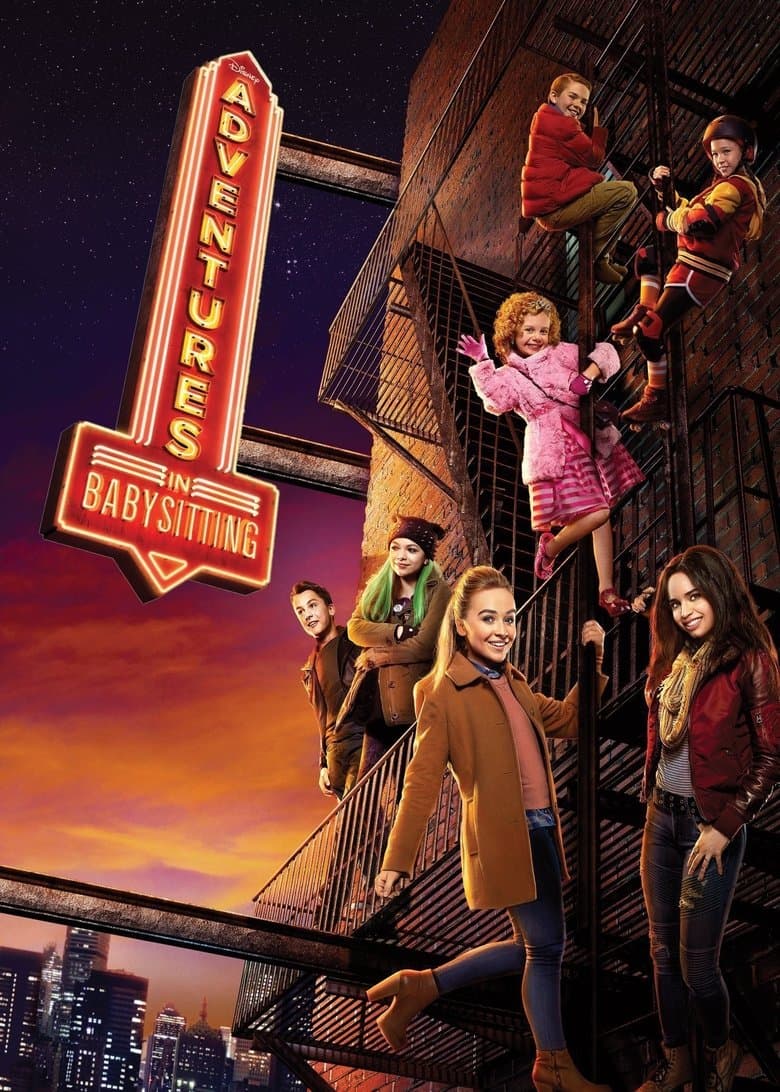
Jenny Parker is a careful high school student who runs a small babysitting business and wants a photography internship. Lola Perez is a more reckless artist who takes a babysitting job after a phone mix-up puts Jenny's name in front of a family. When one boy sneaks away to a concert, Jenny, Lola, and the other children cross the city to find him. The night brings car trouble, a police station, a rap battle, criminals, and a race to get home before the parents learn the truth. The film uses a bright, clean, fast comedy tone for children and families.
The clearest identity element is the film's focus on two teenage girls as the people who must lead the rescue and solve each new problem. Their rivalry turns into a friendship, and both girls learn to balance responsibility with risk. Jenny also tells Emily that she is smart, beautiful, and enough without changing her hair or style for a boy. The film presents confidence, teamwork, and female friendship in a positive way, but it does not build those ideas into a political or activist argument. The story stays focused on a wild night of babysitting, family trust, growing up, and learning from mistakes.
Community feedback
Was our 27% Woke rating accurate?
Breakdown
These are the editorial factors and ratings behind our score for Adventures in Babysitting.
Woke representation / casting
Sofia Carson plays Lola Perez as a prominent co-lead, and the younger group includes several visibly mixed-race children. This gives the film a noticeable diverse cast, but the movie does not frame the choices as a social message or tie the characters' skills to ethnicity. The modern setting and ordinary teen roles make the casting plausible.
18%
Woke political dialogue
Not present. The film has no modern identity, DEI, or activist speech. Lines about boys, rules, and being yourself support jokes, confidence, and babysitting rather than a political claim.
0%
Identity-driven story themes
Jenny and Lola are the main problem-solvers, while the boys around them mostly cause trouble or need help. The story makes their rivalry and growing friendship the main lesson. Jenny tells Emily that she is smart, beautiful, and enough without changing her hair or style for a boy. The rap battle also celebrates the girls as capable and unwilling to quit. The message is a clear girl-centered confidence theme, but it stays personal and does not discuss wider gender politics.
30%
Western institutional / cultural critique
Not present. The film uses parents, police, and city workers as parts of the plot. It does not portray Western institutions, traditional family life, or religion as oppressive.
0%
Woke character or canon changes
The 2016 film changes the original girl's hero encounter from Marvel's male Thor to a female roller derby star. The new hero appears in a short scene where the child meets her idol and learns a skating move. The remake also adds a second female babysitter, but that change mainly serves the new plot. The hero swap is a brief gender change, not a central theme.
25%
Anti-woke backlash and complaints
Not present. No reported anti-woke backlash or complaints about DEI, identity politics, or activist messaging were found. The supplied X pass found no anti-woke posts. Reviews and audience comments mainly discussed the weaker remake, the silly plot, and comparisons with the 1987 film.
0%
Creator track record context
Cached context gives John Schultz, Tiffany Paulsen, David Simkins, and Shawn Williamson low scores and no known activist pattern. Michelle Manning has a higher cached score because of Andi Mack and Jenny's Wedding, which include LGBTQ or same-sex marriage themes. That background is supporting context only and does not appear in this movie's story. The film's own framing stays on comedy, friendship, responsibility, and adventure.
11%
Production
Movie · 2021
Peter Rabbit runs away from his human family when he learns they are going to portray him in a bad light in their book.
Movie · 2023
After a migrating duck family alights on their pond with thrilling tales of far-flung places, the Mallard family embarks on a family road trip, from New England, to New York City…
Movie · 2019
Max the terrier must cope with some major life changes when his owner gets married and has a baby. When the family takes a trip to the countryside, nervous Max has numerous…
Movie · 2026
Living on a rundown shipwreck, Mr. Fish one day discovers a hyperactive young sea dragon Pip – who had mistaken his home for a junkyard – pilfering his belongings.
Movie · 2018
Siblings Kate and Teddy try to prove Santa Claus is real, but when they accidentally cause his sleigh to crash, they have to save Christmas.
Movie · 2016
When a radio falls from the sky into the hands of a wide-eyed Tibetan Mastiff, he leaves home to fulfill his dream of becoming a musician, setting into motion a series of…

Movie · 2017
Ferdinand, a little bull, prefers sitting quietly under a cork tree just smelling the flowers versus jumping around, snorting, and butting heads with other bulls.
Movie · 2023
A magical meteor crash lands in Adventure City and gives the PAW Patrol pups superpowers, transforming them into The Mighty Pups.
