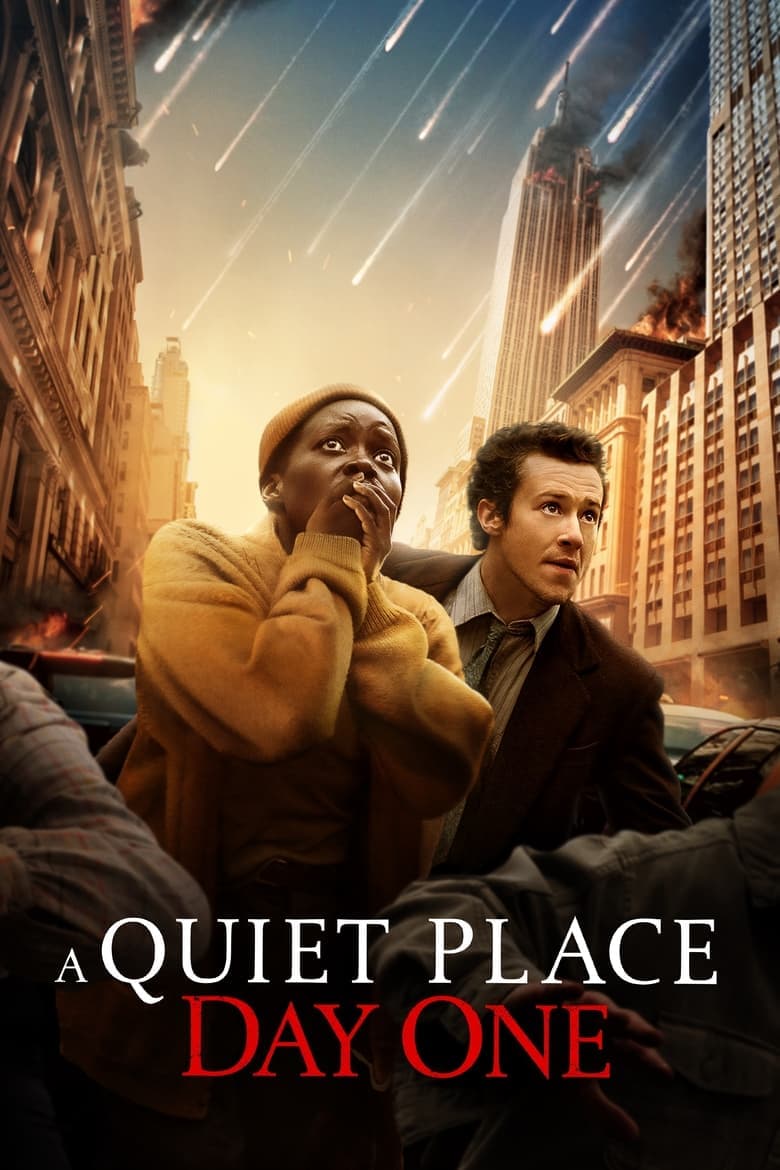
A Quiet Place: Day One is a prequel set on the first day of an alien invasion in New York City. Terminally ill cancer patient Sam and British law student Eric form a tense, platonic bond while moving through silent streets, flooded subways, and chaos. Sam wants to reconnect with Harlem, jazz, and pizza before she dies. That personal goal drives the story more than military spectacle. The main themes are mortality, companionship, and choosing how to face the end.
The film is not built around modern identity-politics messaging. Race, gender ideology, and queer identity are not what power the plot. A scene where Eric would say he is gay and was suicidal was filmed and then cut, so the theatrical version does not use that material. Casting features a black woman lead with a white British co-lead and supporting players who fit modern New York. Sam is a vulnerable hospice patient on a personal quest, not a showcase built on competence as identity.
Community feedback
Was our 15% Woke rating accurate?
Breakdown
These are the editorial factors and ratings behind our score for A Quiet Place: Day One.
Woke representation / casting
The lead is a black woman with a white British co-lead and supporting players who fit modern New York. The cast is not sold as a one-of-each diversity statement. Sam is a vulnerable hospice patient on a personal quest. She is not written as a girlboss or as competence used as identity.
18%
Woke political dialogue
Not present. The silence premise leaves almost no room for speeches, and talk covers survival and personal history rather than race, gender, sexuality, or activist politics.
0%
Identity-driven story themes
Not present. The core arc is terminal illness, loneliness, platonic friendship, and living meaningfully before death, with race, gender ideology, and queer identity not driving the story, and a filmed Eric gay reveal cut from the theatrical version.
0%
Western institutional / cultural critique
Not present. Military and disaster beats are practical, a church is temporary shelter, and there is no sustained framing of toxic masculinity, patriarchy, colonial guilt, or deconstruction of Christianity or traditional institutions.
0%
Woke character or canon changes
Not relevant. Sam and Eric are original prequel characters, and Henri expands a minor Part II figure without identity-driven rewriting of established canon or real historical figures.
0%
Anti-woke backlash and complaints
There was no major sustained culture-war campaign against the film. Scattered trailer comments, social posts, and user reviews called it woke or complained about a black female lead or casting diversity. That pushback stayed thin and mostly about casting rather than plot ideology.
18%
Creator track record context
Key writers, directors, and producers score low on activist history. Casting director Cochrane is the main higher note through professional diversity branding. Overall creative leadership is not driven by identity activism.
12%
Production
Movie · 2021
Following the events at home, the Abbott family now face the terrors of the outside world. Forced to venture into the unknown, they realize that the creatures that hunt by sound…

Movie · 2025
After returning from her first space mission, astronaut Sam Walker is placed under NASA’s care at a high security house for rehabilitation and medical testing.
Movie · 2024
The infinite playground of forbidden worlds and dangerous lifeforms offered by the sci-fi horror genre will lead to the biggest, maddest, bloodiest V/H/S ever.
Movie · 2021
A woman wakes in a cryogenic chamber with no recollection of how she got there, and must find a way out before running out of air.
Movie · 2024
With his wife out sick, a struggling father brings home a lifelike AI, only to have his self-aware new help want everything her new family has to offer...

Movie · 2020
A couple on a road trip through America encounter a terrifying dark force older than the country itself. An evil that transforms loved ones into someone terrifying, the entity has…
Movie · 2024
Curtis Pike and his family are selected to test a new home device: a digital assistant called AIA. AIA observes the family's behaviors and begins to anticipate their needs.
Movie · 2018
After waking up to find himself all alone in an apartment where a massive party was being held the night before, Sam is immediately forced to face a terrifying reality: the living…
