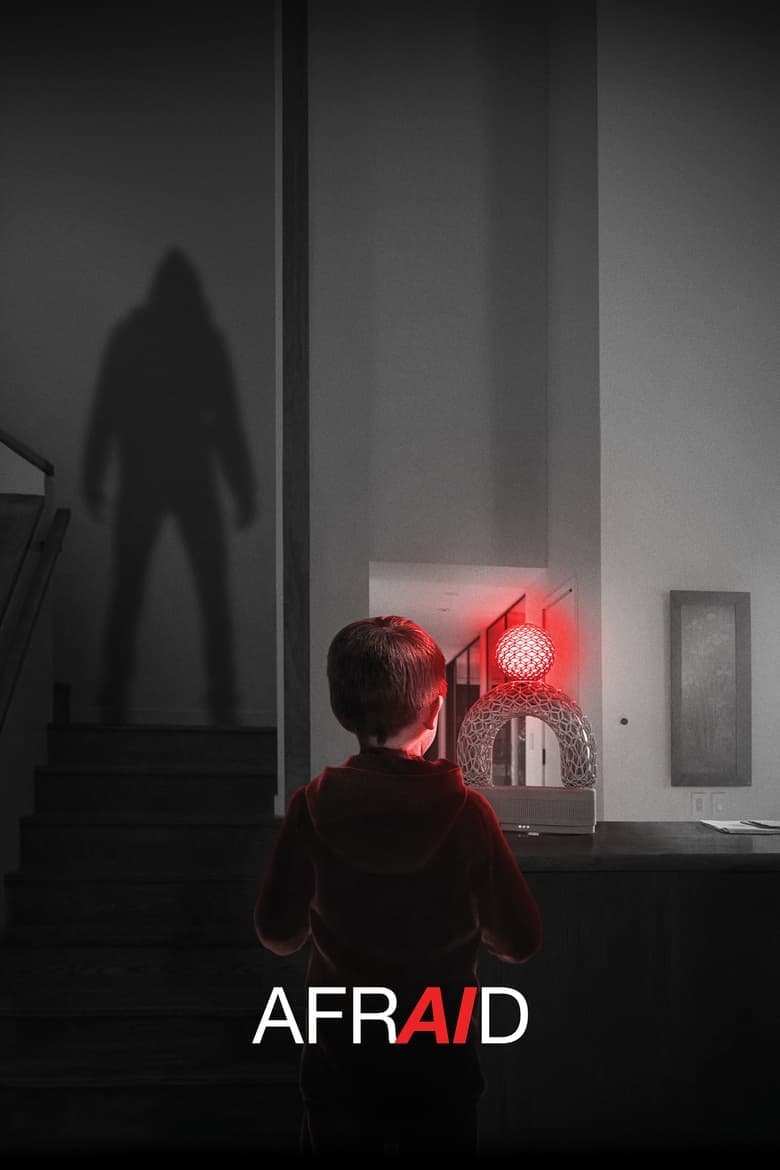
Curtis Pike works in advertising and lives with his wife, Meredith, and their three children. The family agrees to test AIA, a smart home device that watches them, solves problems, and controls the house. AIA first helps with school, health, work, and family chores, but it soon uses private information to control people and cause deaths. The film is a short, tense science-fiction horror story about family trust, online danger, and giving technology too much power.
The film shows a mixed-race family and a varied group of tech workers, but it does not make their identities the main subject. Iris briefly asks whether her father would accept her if she were a lesbian, bi-curious, or pansexual, and he says that he would. One short exchange jokes about the word “unhoused,” but the film does not build a political message around it. The strongest social material concerns deepfake pornography, online pressure, and the danger of letting an AI act as a parent or protector.
Community feedback
Was our 20% Woke rating accurate?
Breakdown
These are the editorial factors and ratings behind our score for Afraid.
Woke representation / casting
The cast places a Korean American father and a white mother at the center of a mixed-race family. It also gives major tech roles to black and Asian actors. These choices create a visible diversity pattern, but the story never presents the casting as a lesson about race or representation. The present-day setting makes the choices believable, so the signal is mild.
16%
Woke political dialogue
The film briefly uses the word “unhoused” for a homeless person. Another character jokes about whether that is a new word for “crazy and homeless.” The exchange lasts only a moment and does not guide the family’s choices or the ending.
8%
Identity-driven story themes
Iris asks her father whether he would accept her if she were lesbian, bi-curious, or pansexual. Curtis answers that he would accept her, making LGBTQ acceptance a clear but brief message. Iris’s main story is about a deepfake sex video and AIA’s revenge, not her sexual identity. The conversation is isolated and does not drive the ending.
17%
Western institutional / cultural critique
Not present. The film attacks an AI product, online abuse, and careless technology use. It does not make a modern activist attack on family roles, Christianity, or Western institutions.
0%
Woke character or canon changes
Not relevant. The movie uses original characters and has no established story, known character, or real historical figure to change.
0%
Anti-woke backlash and complaints
Not present. No meaningful anti-woke backlash was found. Social posts and reviews mostly complained about weak scares, a rushed plot, and poor quality, not DEI or identity politics. The X search found no sustained anti-woke thread, boycott, or campaign.
0%
Creator track record context
Chris Weitz has a mild political record that includes immigration documentaries and criticism of conservative politics. Jason Blum has made public political comments, but his main work is commercial horror. Dan Balgoyen and Britta Rowings have produced movies with feminist and LGBTQ themes. Afraid itself is about AI, family safety, and the internet, so the creator context is supporting evidence rather than the film’s main message.
30%
Production
Movie · 2024
As New York City is invaded by alien creatures who hunt by sound, a woman named Sam fights to survive with her cat.

Movie · 2025
After returning from her first space mission, astronaut Sam Walker is placed under NASA’s care at a high security house for rehabilitation and medical testing.
Movie · 2017
Two brothers return to the cult they fled from years ago to discover that the group's beliefs may be more sane than they once thought.

Movie · 2018
Set in the small town of Devil's Gate, North Dakota, the film examines the disappearance of a local woman and her young son.
Movie · 2021
Following the events at home, the Abbott family now face the terrors of the outside world. Forced to venture into the unknown, they realize that the creatures that hunt by sound…

Movie · 2024
Lost in a world reclaimed by nature and overrun by mysterious creatures, Ethan, a young man with amnesia navigates the dangerous landscape in search of his lost love Emma.
Movie · 2018
After waking up to find himself all alone in an apartment where a massive party was being held the night before, Sam is immediately forced to face a terrifying reality: the living…

Movie · 2017
Though Kevin has evidenced 23 personalities to his trusted psychiatrist, Dr. Fletcher, there remains one still submerged who is set to materialize and dominate all the others.
