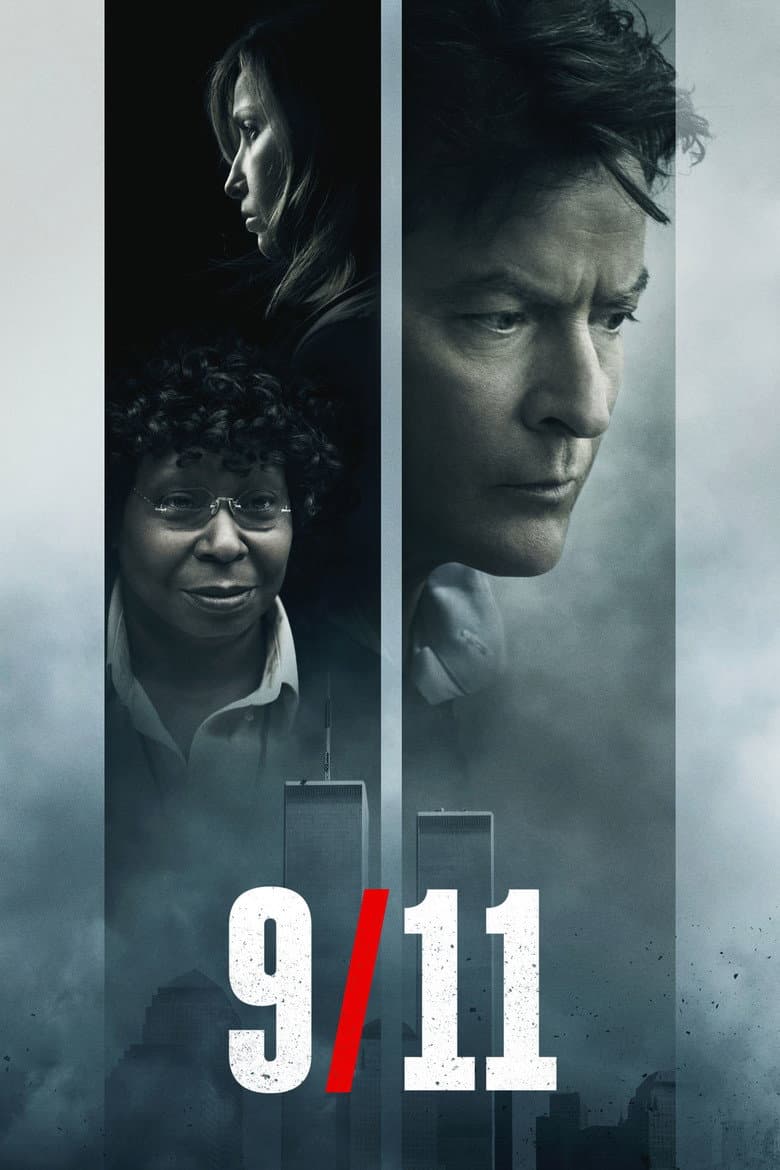
9/11 follows Jeffrey Cage, a rich Wall Street trader who enters the World Trade Center with his wife Eve to finish their divorce. After a plane hits the North Tower, Jeffrey, Eve, a bike messenger, a building worker, and a young woman become trapped in an elevator. Metzie, a dispatcher in the control room, tries to guide them while the tower burns and the elevators fail. The movie uses a tight survival setup with family calls, fear, arguments, and a serious but often melodramatic tone.
The film shows a mixed group of Black, Latino, white, and Russian characters, but it does not make identity politics the center of the story. One short argument brings up race, wealth, and the idea of a rich white man earning his success, while Eve defends Jeffrey’s hard work and charity. Michael also uses racist and anti-gay language, but the movie uses these lines to show his flaws, not to promote them. The main message is that strangers can work together during a disaster, and the story stays focused on escape, family, courage, and survival.
Community feedback
Was our 16% Woke rating accurate?
Breakdown
These are the editorial factors and ratings behind our score for 9/11.
Woke representation / casting
The central group includes a black bike messenger, a Puerto Rican building worker, a Russian woman, and a black female dispatcher beside white leads. Their identities make the group’s differences visible and help set up a short race argument. The New York setting makes the casting believable, and no title-specific diversity-first casting claim was found. The film does not make identity representation its main message.
18%
Woke political dialogue
Not present. The film has race and class talk, but it does not push modern identity, DEI, or activist ideas. Michael’s crude anti-gay and racist lines are character flaws, not woke political dialogue.
0%
Identity-driven story themes
Race, wealth, and class differences shape one short argument among the trapped strangers. Michael calls Jeffrey a white rich man, while Eve defends Jeffrey’s poor childhood, hard work, and charity. The film then returns to escape, family, and marriage. The story does not turn the argument into a wider activist message.
14%
Western institutional / cultural critique
Not present. The film does not attack Christianity, family life, men, women, or Western institutions. The story centers on the terrorist attack, a trapped elevator, divorce, personal prejudice, and rescue work.
0%
Woke character or canon changes
Not relevant. The passengers are fictional characters from the stage play Elevator. The movie does not make a woke race, gender, sexuality, or hero-role change to a known character or real historical person.
0%
Anti-woke backlash and complaints
Not present. Public complaints focused on timing, poor taste, weak quality, and Charlie Sheen’s 9/11 truther history. The X research pass found no anti-woke reaction, and no other source found a complaint that the film pushed DEI or identity politics.
0%
Creator track record context
Martin Guigui and the two writers have no clear record of identity-activist work. Dahlia Waingort has a Latino representation and access history, while Martin Sprock has supported more roles for black actors and identity-focused films. Most other listed producers and casting directors have low scores. The movie itself is not built around those causes.
15%
Production

Movie · 2017
A former rodeo star, now a motel manager, meets a young man who is responsible for the violence that suddenly has seized his small town.
Movie · 2016
When two youngsters meet and fall for each other, they must go on the run from the girl's corrupt father, who is also the sheriff of the town.

Movie · 2016
When Krisha returns to her estranged family for Thanksgiving dinner, past demons threaten to ruin the festivities.

Movie · 2018
A logger defends his family from a group of dangerous drug runners.

Movie · 2023
In 1988, American video game salesman Henk Rogers discovers the video game Tetris. When he sets out to bring the game to the world, he enters a dangerous web of lies and…
Movie · 2025
Seasoned deep-sea divers battle the raging elements to rescue their crewmate trapped hundreds of feet below the ocean's surface.
Movie · 2016
An American Ambassador is killed during an attack at a U.S. compound in Libya as a security team struggles to make sense out of the chaos.
Movie · 2016
A U.S Customs official uncovers a massive money laundering scheme involving Pablo Escobar.
