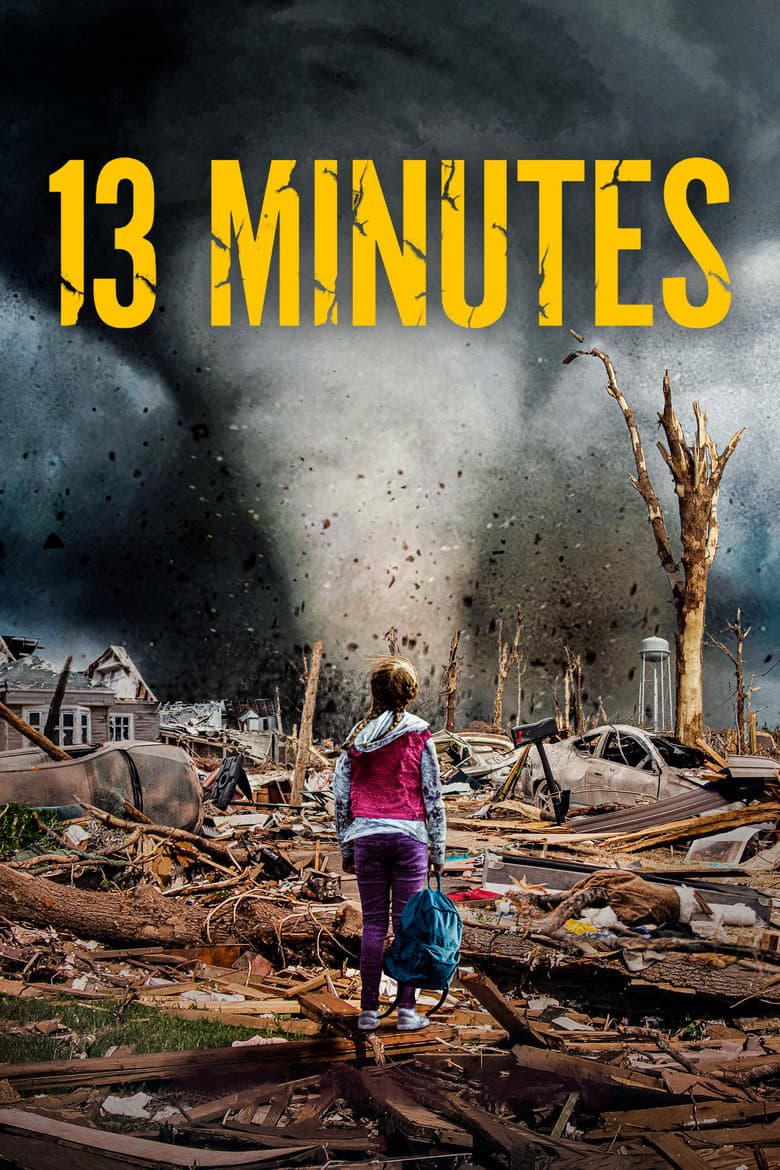
13 Minutes follows four families in Minninnewah, a small farming town in Oklahoma. A tornado is heading for them, and the residents have only thirteen minutes to find shelter and protect the people they love. A young woman faces an unplanned pregnancy, a farm son fears telling his parents that he is gay, and an immigrant couple struggles to build a home while one partner lacks legal status. A weather worker and her husband must warn the town while searching for their deaf daughter after the storm begins. The film spends more time on family drama and the wrecked town after the storm than on the tornado itself, so its tone is serious, tense, and emotional.
The woke elements are clear because the film builds its main stories around abortion choice, gay identity, immigration status, racism, and disability. Maddy's mother supports her right to choose, while a religious clinic worker pressures her to keep the baby. Luke's parents react with fear when he comes out, and the film treats his relationship with another man as love. The immigrant couple face slurs, unfair work, and fear of being forced out, while the deaf girl and a female emergency leader are important members of the community. These subjects return around the disaster, but the tornado and survival remain the main frame.
Community feedback
Was our 55% Woke rating accurate?
Breakdown
These are the editorial factors and ratings behind our score for 13 Minutes.
Woke representation / casting
The film puts a deaf girl, a gay farm son, an immigrant couple, and a native American city worker among its main families. A woman runs regional emergency planning, and another woman leads people to safety from a hotel. The group is built around many identity differences, not just a normal background crowd. The modern Oklahoma setting makes the choices possible, but the repeated pattern makes representation a clear audience-visible part of the cast.
34%
Woke political dialogue
The film has direct talks about abortion, immigration status, racism, and homophobia. Maddy's mother says the pregnancy is Maddy's choice, while Tammy uses an ultrasound and pro-life speech to push her toward childbirth. Farm and motel workers argue about undocumented labor, slurs, low pay, and medical care. Luke's talks about coming out and his parents' response keep gay identity in the dialogue.
45%
Identity-driven story themes
The film gives several important subplots to identity and social status. Luke's fear of rejection and wish to live openly shape the farmer family's story. Ana and Carlos's future depends on immigrant status, and the film presents their relationship with sympathy. Maddy's pregnancy and Peyton's deafness also shape family choices, while the storm brings different groups together. These themes fill much of the first half and return after the storm, but survival remains the main plot.
55%
Western institutional / cultural critique
The film repeatedly presents local family, work, and religious power as sources of harm. Rick and Tammy mistreat immigrant workers and react with fear when Luke comes out. Tammy's crisis-pregnancy work pressures a young woman, and other men are shown as sexist or abusive. The story asks viewers to side with immigrants, gay characters, and women who resist this behavior. The disaster also makes some people help each other, so the critique is strong but not total.
44%
Woke character or canon changes
Not relevant. The film is an original story. It does not change established characters, canon, or real historical figures.
0%
Anti-woke backlash and complaints
Several small X accounts called the film a woke checklist because it has a gay son, a pro-choice abortion plot, immigration fear, and Christian farmers shown as hostile. One account said the front-loaded gay drama was not worth the tornado story. The posts had little reach, and no boycott, review-bombing drive, or major right-leaning account made the film a culture-war target. Some small user reviews also called it a PC or preachy social-issue movie, but the evidence is weak.
15%
Creator track record context
Lindsay Gossling and Travis Farncombe have no high-confidence public record of DEI or activist positioning. Most listed producers and casting staff also have low or unconfirmed activist context. Cassian Elwes has supported gender parity and opportunities for women filmmakers, but that is limited context. Title-related interviews stress storm science, community effects, and the film's social problems rather than a wider political campaign.
16%
Production
Movie · 2018
Barents Sea, August 12th, 2000. During a Russian naval exercise, and after suffering a serious accident, the K-141 Kursk submarine sinks with 118 crew members on board.
Movie · 2021
An off-duty SAS soldier, Tom Buckingham, must thwart a terror attack on a train running through the Channel Tunnel.
Movie · 2016
Years after resigning command of an elite military police unit, the nomadic, righter-of-wrongs Reacher is drawn back into the life he left behind when his friend and successor…
Movie · 2016
An American Ambassador is killed during an attack at a U.S. compound in Libya as a security team struggles to make sense out of the chaos.
Movie · 2016
A young man washes ashore, his memory gone - but his past comes back to haunt him after he is nursed back to health and his killing ability is needed when he takes on a powerful…
Movie · 2018
A geologist races against time to save his estranged wife and two children when a devastating earthquake strikes Oslo, Norway.
Movie · 2021
Madrid, Spain, 2010. While the whole city follows the national team's successful participation in the World Cup, a group of daring thieves look for a way into one of the most…
Movie · 2016
As a huge electrical storm sweeps towards Texas, lineman Beau Ginner is haunted by memories of his brother's death by lightning years earlier.
