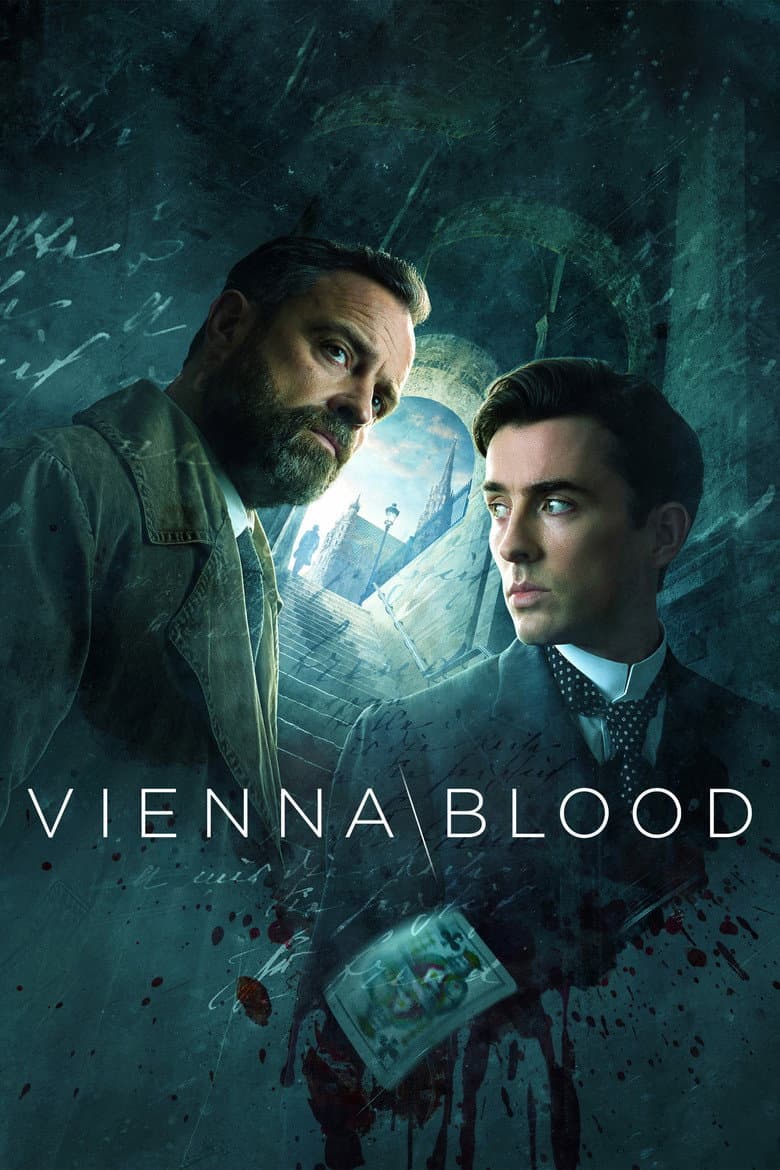
Started November 18, 2019 · Returning Series · Based on 4 seasons, 11 episodes through August 11, 2024 · TV-14 · 89 min
Vienna Blood follows Max Liebermann, a young Jewish doctor and student of Sigmund Freud, who helps Inspector Oskar Rheinhardt solve murders in Vienna from 1906 to 1909. Max studies the minds of killers while Oskar works through the police, and their different skills slowly become a strong partnership. The cases move through hospitals, wealthy homes, slums, military schools, fashion houses, cinemas, casinos, and government offices. The tone is dark and stylish, but it also has dry humor and a steady interest in science, art, love, and the fading Austro-Hungarian Empire.
The clearest identity-driven material is the repeated focus on Max's Jewish family, anti-Jewish hatred, immigrants, and nationalist violence. Max's family faces slurs and threats, while several cases expose groups that target Jews, migrants, or other outsiders. Season two also includes a secret love story between two men, and later seasons give Clara a visible path from fiancée to journalist who helps investigate cases. These themes matter across the show, but the series presents them as period history and personal drama rather than a modern activist campaign; most stories remain murder mysteries about psychology, power, and hidden guilt.
Community feedback
Was our 34% Woke rating accurate?
Breakdown
These are the editorial factors and ratings behind our score for Vienna Blood.
Woke representation / casting
Not present. The main cast is mostly white European and fits the early-1900s Vienna setting. Max's Jewish identity and the few foreign characters are tied to the cases, with no clear identity-first casting message.
0%
Woke political dialogue
The show directly discusses immigrants, blood purity, anti-Jewish hatred, nationalism, and far-right politics. These ideas appear in several cases, especially in seasons one, two, and three. The views mostly belong to villains or corrupt officials. The show treats them as period dangers rather than a present-day party message.
28%
Identity-driven story themes
Max's Jewish identity and his family's fear of anti-Jewish hatred return across several seasons. The show also follows immigrants, women facing abuse, and a secret love story between two men. Clara moves from a planned marriage to work as a journalist and helps with investigations in seasons three and four. These themes matter in several cases, but the story uses period events and personal choices instead of a modern activist message.
33%
Western institutional / cultural critique
The show exposes failures inside the hospital, police, military academy, monastery, and state security office. Men in closed groups hide abuse, use violence, or protect their own power, while Clara and other women gain more room to act. Season four gives Clara a journalism role and lets her work with Oskar on political clues. The criticism stays tied to historical crime cases and does not become a broad attack on capitalism, patriarchy, or Christianity.
22%
Woke character or canon changes
Not relevant. The title does not show an identity-driven race, gender, or political rewrite of a known character, canon figure, or historical person.
0%
Anti-woke backlash and complaints
One tiny X post called a season-three episode “Woke Vienna Blood” after a “fräulein Köller” moment. The post had about 40 views and no likes, and it gave no clear reason. No boycott, review-bombing, or wider anti-woke campaign was found. Other small posts praised the show as having no hidden political messages or recommended it.
8%
Creator track record context
Steve Thompson has publicly discussed racism, the Windrush scandal, and racial justice. Steven Thompson's political work centers on press power, government, and compromise but has a milder profile. Umut Dağ has spoken about migrants, women, and patriarchal structures, and he linked Vienna Blood's period themes to problems seen today. Robert Dornhelm and Marvin Kren have no strong activist record in the available context.
27%
Production
TV Show · 2021
Facing an existential threat that could bring down the Crime Lab, a brilliant team of forensic investigators must welcome back old friends and deploy new techniques to preserve…
TV Show · 2024
A young boy growing up in the suburbs of 1980s Brisbane faces the harsh realities of life — and the looming dangers that threaten his family.
TV Show · 2017
A war veteran turned private detective operates out of a tiny office in London’s Denmark Street. Although wounded both physically and psychologically, his unique insight and…
TV Show · 2020
Hiding a twisted past, a man maintains his facade as the perfect husband to his detective wife — until she begins investigating a series of murders.
TV Show · 2020
Grace and Jonathan Fraser are living the only lives they ever wanted. Overnight a chasm opens in their lives: a violent death and a chain of terrible revelations.

TV Show · 2024
A rising politician and his mute wife's tense marriage begins to unravel after a call from a kidnapper turns their lives upside down.
TV Show · 2022
Lucy wakes every night at exactly 3:33am. Nothing in her life has made sense for a long time. But the answers are out there, somewhere, at the end of a trail of brutal murders.
TV Show · 2026
Wrongfully imprisoned for murdering his own son, a father sets out on a desperate rescue mission after learning the boy may still be alive.
