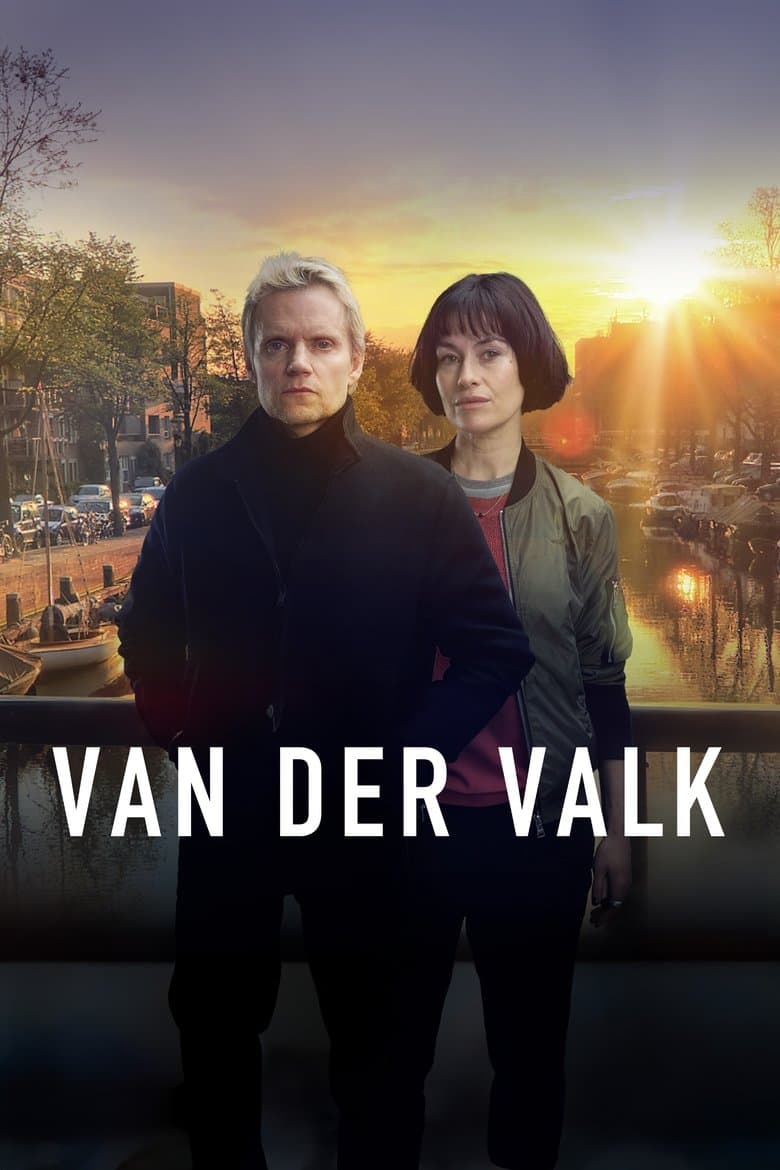
Started January 1, 2020 · Returning Series · Based on 4 seasons, 12 episodes through June 13, 2025 · TV-PG
Van der Valk follows Piet Van der Valk, a sharp but moody police detective who solves murders across Amsterdam. He lives on a boat and leads a close team that includes Lucienne Hassell, Julia Dahlman, Hendrik Davie, and younger officers. The cases move from art and politics to religion, fashion, science, and the city's criminal world. The tone is stylish and dark, but dry jokes and team banter keep the long mysteries lively. The show makes some audience-visible identity choices, but they usually sit inside normal crime plots. Lucienne's relationships with women return across the series, while the first season builds a murder case around a gay man, his Indian boyfriend, and an anti-gay politician. A season-two case links a female musician's death to stalking, sexual abuse, and wealthy people who protect criminals. A season-three case supports returning colonial-era artifacts and includes direct talk about past wrongdoing. The latest season follows an animal-protection campaign and a billionaire accused of hiding a cancer treatment breakthrough, but the show still works mainly as a detective story.
Community feedback
Was our 59% Woke rating accurate?
Breakdown
These are the editorial factors and ratings behind our score for Van der Valk.
Woke representation / casting
The team mixes men and women and includes a lesbian inspector, a female chief, and later sergeants Citra Li and Eddie Suleman. These are prominent roles, but Amsterdam is a modern and mixed city, so the casting is not a strong mismatch. The show does not present the cast as a diversity campaign.
24%
Woke political dialogue
Season 1 calls a leading candidate anti-gay, anti-immigration, and linked to anti-Muslim extremism. Season 1 also discusses working families being priced out and a fashion company accused of bullying and unpaid wages. Season 3 has direct lines calling colonial taking theft and saying cultural objects belong to the people who made them. Season 4 includes activists defending animal protection and scientists saying they have a moral duty to share a cancer treatment breakthrough. These ideas appear across several cases, but they are not the show's main subject.
42%
Identity-driven story themes
Lucienne's relationships with women are established early and return in a major season 2 case. Season 1 builds a murder case around a gay man, his Indian boyfriend, and an anti-gay politician. Season 2 links a female musician's death to stalking, sexual abuse, and powerful people. Season 3 makes colonial restitution part of a major case. These identity-driven themes matter in several long stories, but most episodes remain crime mysteries.
49%
Western institutional / cultural critique
Season 3 presents colonial taking of artifacts as theft and supports returning them to the cultures that made them. Season 1 questions an ethical fashion brand over bullying, unpaid wages, and selling out. Season 2 exposes a sex-trafficking ring protected by wealthy and powerful people, and season 4 targets animal trafficking and a billionaire accused of hiding a cancer treatment breakthrough. The show presents these abuses as crimes to uncover, but it does not turn every case into a broad attack on Western society.
46%
Woke character or canon changes
The reboot keeps Piet Van der Valk but changes the main partner from the male assistant used in earlier television versions to Lucienne Hassell. Lucienne is a highly capable police inspector who has relationships with women. The remake also replaces most supporting characters and adds new cases, but ordinary updates do not raise this factor. The gender and sexuality change is prominent, though it affects one main supporting role.
38%
Anti-woke backlash and complaints
Two small X accounts called the remake woke or said season 2 became irritatingly woke. The posts had only one and two likes and did not lead to a wider campaign. Searches found no major news story, boycott, review-bombing, or broad complaint about DEI or identity politics. Wider audience reaction focused on writing, accents, plot logic, and the Amsterdam setting.
8%
Creator track record context
Chris Murray, Nicolas Freeling, and Maria Ward have no clear public activist profile. Most directors and producers have ordinary crime and television careers. A few directors have made work about colonial history, anti-apartheid resistance, institutional harm, or youth safety, and Michele Buck has worked as a diversity script consultant. This gives some background support, but the key creator is not known for a strong identity-politics agenda.
23%
Production
TV Show · 2018
Cameron Black is the world's greatest illusionist. At least, that's what people used to call him—before his greatest secret was exposed and his career destroyed.
TV Show · 2016
Ex-pro hockey player Matt Shade irrevocably changes his life when he teams up with fierce P.I. Angie Everett to form an unlikely investigative powerhouse.
TV Show · 2016
When they were twelve years old, Mark, Pru, Danny and Slade were out together in the park. Mark’s five-year-old brother, Jesse, was annoying them.
TV Show · 2024
John Taylor lives in quiet solitude, designing puzzles for a living, under the nom-de-plume of 'Ludwig'. When his identical twin, James, disappears off the face of the earth, John…
TV Show · 2017
The story of Jim Worth, an expat British police officer starting a new life with his family as police chief in Little Big Bear, an idyllic town near the Rocky Mountains.
TV Show · 2025
Two outlaws must navigate the galaxy's dangerous underworld as they chart their destinies.
