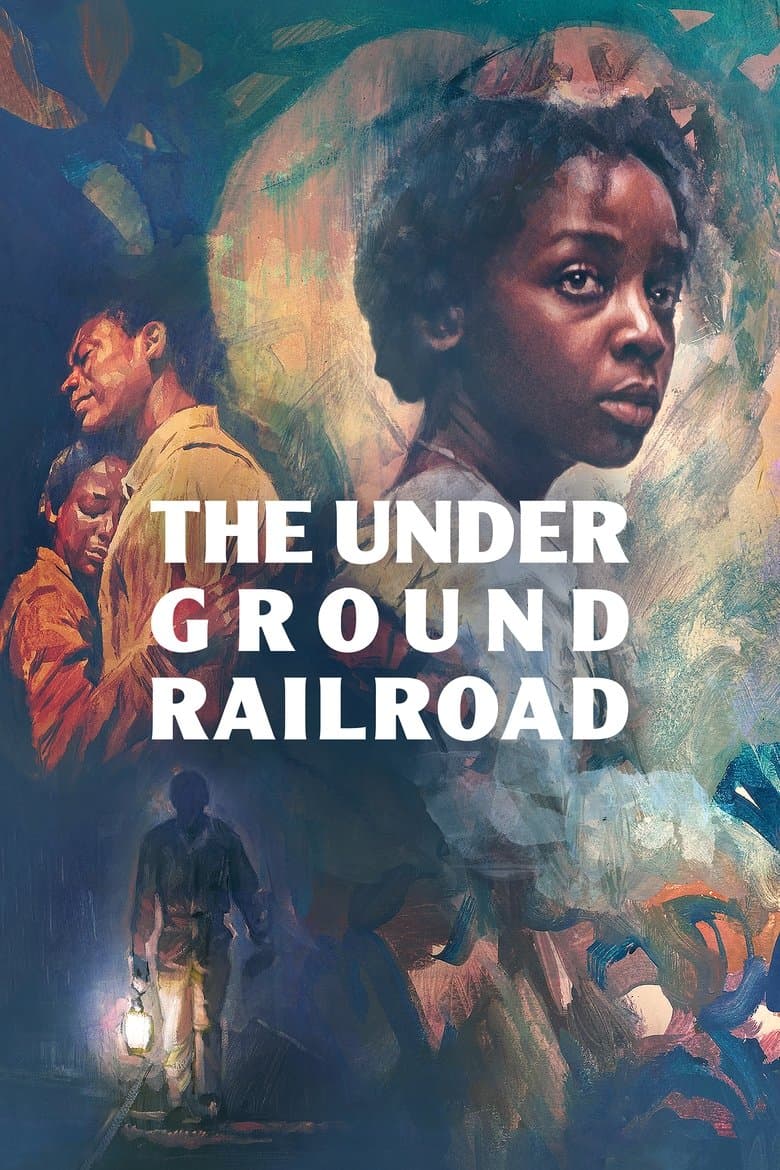
Started May 13, 2021 · Ended · Based on 1 season, 10 episodes through May 13, 2021 · TV-MA
Cora Randall is a young woman enslaved on a cotton plantation in Georgia before the Civil War. After a brutal public punishment, she escapes with Caesar and boards a secret train that runs under the South. A slave catcher named Ridgeway follows her through South Carolina, North Carolina, Tennessee, and Indiana. The journey mixes harsh violence, fear, strange visions, brief kindness, and hope.
The show makes race and slavery the center of every episode. Cora sees black people controlled through forced labor, family separation, rape, forced medical tests, sterilization, racist laws, public killings, and the hunt for escapees. The story also attacks courts, science, religion, museums, business, and the idea of America itself for supporting this system. Cora's fight for freedom and her care for other children give the season a strong message about survival, family, and Black freedom.
Community feedback
Was our 71% Woke rating accurate?
Breakdown
These are the editorial factors and ratings behind our score for The Underground Railroad.
Woke representation / casting
Not present. The cast is mostly Black because the story follows enslaved black people in the American South. The show does not use a mixed identity group or make casting a modern diversity message.
0%
Woke political dialogue
The show repeatedly has characters describe slavery as a system built through law, money, science, and racial power. A major speech at Valentine Farm says America rests on stolen land, killing native people, and enslaving black people. Other scenes discuss forced medical control, black rights, and the false promise of freedom. The language is tied to the historical fantasy, but it clearly presents American history as a system shaped by race and institutions.
43%
Identity-driven story themes
The story makes black identity and Black survival the center of all ten episodes. Cora's body, family, work, and movement are controlled because she is black and enslaved. Each stop shows another form of racial control, including family separation, sexual abuse, forced medical treatment, operations that stop women having children, anti-Black laws, public killings, and slave catching. The main rescue network is run by Black conductors and workers, not a white hero.
68%
Western institutional / cultural critique
The show presents slavery as a system protected by courts, law officers, science, religion, museums, and business. South Carolina calls itself fair while it controls Black bodies through drugs and forced medical operations. Valentine Farm debates whether money and respectability can protect a few people while others remain trapped. A speech says America's foundations include stolen land, killing native people, and slavery, although most of this criticism stays inside the historical setting.
52%
Woke character or canon changes
Not relevant. The show adds Fanny Briggs and expands Ridgeway and Mabel, but those changes serve the plot. No character or historical figure is changed for a diversity or identity message.
0%
Anti-woke backlash and complaints
A Washington Examiner critic called the series woke and said it serves guilty white liberals while reducing black characters to suffering. National Review critic Armond White said it promotes hatred, self-hatred, and white guilt. Small X accounts called the show too woke or complained that it makes white people look bad. The reaction was fringe, with no sustained boycott, review-bomb drive, or large right-leaning campaign.
16%
Creator track record context
Barry Jenkins has a strong record of stories about Black life, race, and sexuality. Colson Whitehead often writes about race, power, and injustice, but his work is not mainly activist. Several producers have backed projects about race, slavery, or identity. This creative record strongly supports the show's race-focused and social-issue direction.
76%
Production
TV Show · 2024
Jason Dessen is abducted into an alternate version of his life. To get back to his true family, he embarks on a harrowing journey to save them from the most terrifying foe…
TV Show · 2022
Irene and Franklin York, a retired couple, have a secret: a Chamber buried in their backyard that miraculously leads to a strange, deserted planet.
TV Show · 2017
A demented serial killer taunts a retired police detective with a series of lurid letters and emails, forcing the ex-cop to undertake a private, and potentially felonious, crusade…
TV Show · 2016
Kyle Barnes has been plagued by possession since he was a child. Now an adult, he embarks on a spiritual journey to find answers, but what he uncovers could mean the end of life…
TV Show · 2016
In the near future a family must make difficult decisions as they balance staying together with trying to survive.
TV Show · 2021
Interconnected phone conversations chronicle the mysterious story of a group of strangers whose lives are thrown into disarray in the lead-up to an apocalyptic event.

TV Show · 2023
At the brink of going to hell, Yee-jae must cycle through twelve separate lives and twelve separate deaths in this reincarnation drama.
TV Show · 2021
On a perilous adventure across a post-apocalyptic world, a lovable boy who's half-human and half-deer searches for a new beginning with a gruff protector.
