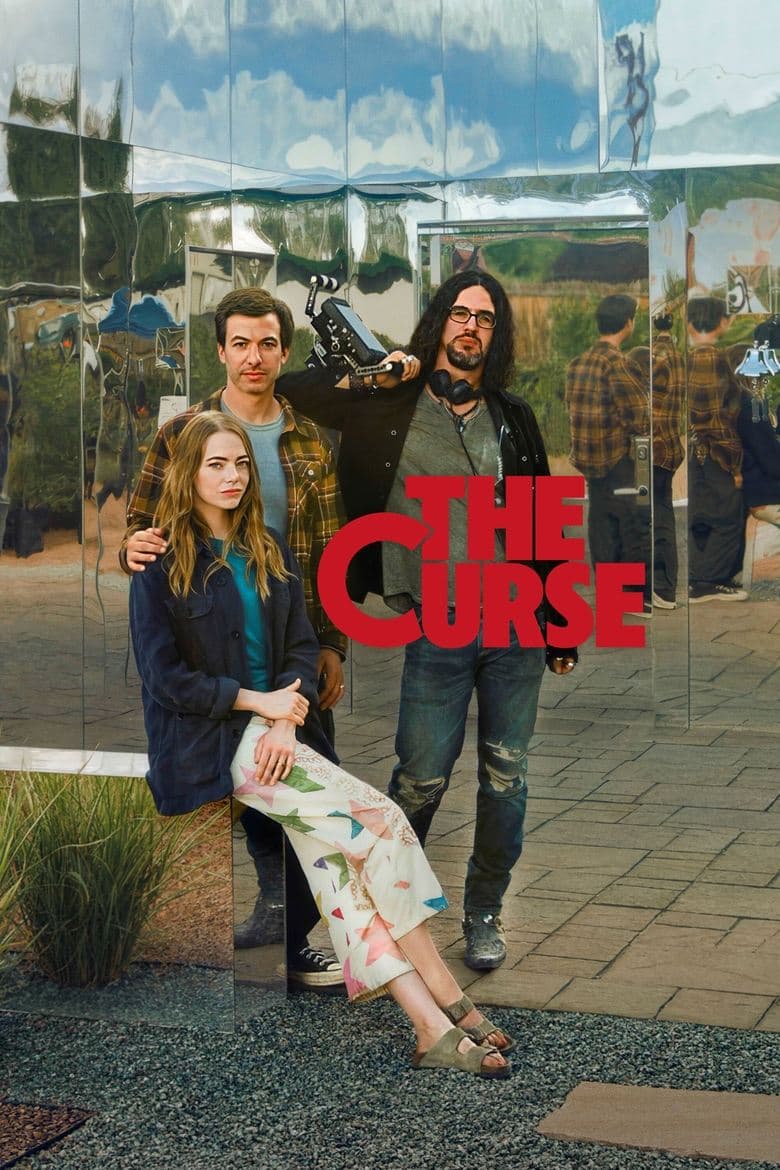
Started November 12, 2023 · Ended · Based on 1 season, 10 episodes through January 14, 2024 · TV-MA
Whitney and Asher Siegel are newly married real-estate developers in Española, New Mexico. They try to have a baby while making a home-improvement show about “ethical” housing for a struggling local town. Their producer Dougie pushes them to turn real people and private pain into better television. After Asher takes back a $100 gift from a young girl, she says she curses him, and strange events make the couple fear that her words are real. The show is a slow, dark comedy that becomes a tense and bizarre horror story.
The story repeatedly examines gentrification, white privilege, cultural appropriation, and the gap between real help and public displays of goodness. Whitney uses her friendship with Cara, a native artist, to make the show seem more honest while also treating Cara’s identity as a useful part of the brand. The couple’s houses, coffee shop plans, and treatment of Abshir and Nala show how wealthy outsiders can use local people while claiming to help them. The series often mocks these social-justice poses instead of praising them, but the identity and class issues remain central across the season.
Community feedback
Was our 48% Woke rating accurate?
Breakdown
These are the editorial factors and ratings behind our score for The Curse.
Woke representation / casting
The recurring cast puts a native artist, a Black Somali father and his daughters, and other minority locals in visible roles around the white leads. Whitney also uses Cara’s native identity as a public sign of local authenticity. The New Mexico setting makes much of this casting believable, so it is a mild representation signal rather than a clear quota pattern.
18%
Woke political dialogue
Whitney and Asher repeatedly talk about ethical gentrification, eco-housing, cultural appropriation, and using “unhoused” instead of “homeless.” Characters also discuss poverty, native identity, crime, casino gambling, and the harm caused by changing a poor town. These talks shape their TV pitch, business choices, and marriage fights across the season. The show mocks their public language as much as it presents the issues, so the message is mixed.
43%
Identity-driven story themes
Whitney uses her friendship with Cara, a native artist, to give the show local credibility. The couple’s plan keeps returning to white privilege, gentrification, cultural appropriation, and the use of poor people as TV material. Abshir and Nala’s family make the cost of the couple’s help visible. The series usually mocks the couple’s performance rather than endorsing it, but these identity-driven themes remain central through the season.
48%
Western institutional / cultural critique
The show repeatedly presents rich outsiders changing a working-class town through housing, a coffee shop, and television. Whitney’s parents’ housing business, the casino’s treatment of gamblers, and the TV crew’s staged charity widen the criticism beyond one bad couple. The series questions whether private business and media can solve public problems. Its main target is the couple’s rich liberal performance, so the critique is sharp but not a full anti-Western message.
42%
Woke character or canon changes
Not relevant. The show is an original story about Whitney and Asher. It does not change established characters, a known canon, or real historical figures.
0%
Anti-woke backlash and complaints
Not present. The supplied X pass found no anti-woke reaction. Web coverage found a split between strong critics and a low audience score, but it did not show a real anti-woke campaign against the series.
0%
Creator track record context
Nathan Fielder has a cached score of 12, and Benny Safdie has a cached score of 6. The cached scores for the writers and Zellner directors are also low, with no strong activist record. Emma Stone has a cached score of 36, and two producers have stronger diversity-focused credits. The main creative voices fit uncomfortable social satire more than a direct activist program.
27%
Production
TV Show · 2016
In his funky California beach enclave, Chip's the go-to guy for personal insights. But he isn't quite as enlightened when it comes to his own baggage.

TV Show · 2023
The lives of a realtor, a plumber and a former tennis star unexpectedly collide, exposing America’s obsession with true crime, murder and the slow-close toilet seat.

TV Show · 2020
New passions. New fashions. New Emily? A plucky American marketing whiz spreads her wings in life and love after landing her dream job in Paris.
TV Show · 2019
Tony had a perfect life. But after his wife Lisa suddenly dies, Tony changes. After contemplating taking his own life, he decides instead to live long enough to punish the world…
TV Show · 2020
The heartwarming and humorous adventures of a young country vet in the Yorkshire Dales in the 1930s. A remake of the 1978 series.

TV Show · 2021
A secret life is the one thing they have in common. At school, Hori is a prim and perfect social butterfly, but the truth is she's a brash homebody.

TV Show · 2019
A paragliding mishap drops a South Korean heiress in North Korea -- and into the life of an army officer, who decides he will help her hide.

TV Show · 2016
After being pulled into the webtoon world created by her father, a surgical resident gets entangled in a murder mystery involving the story's hero.
