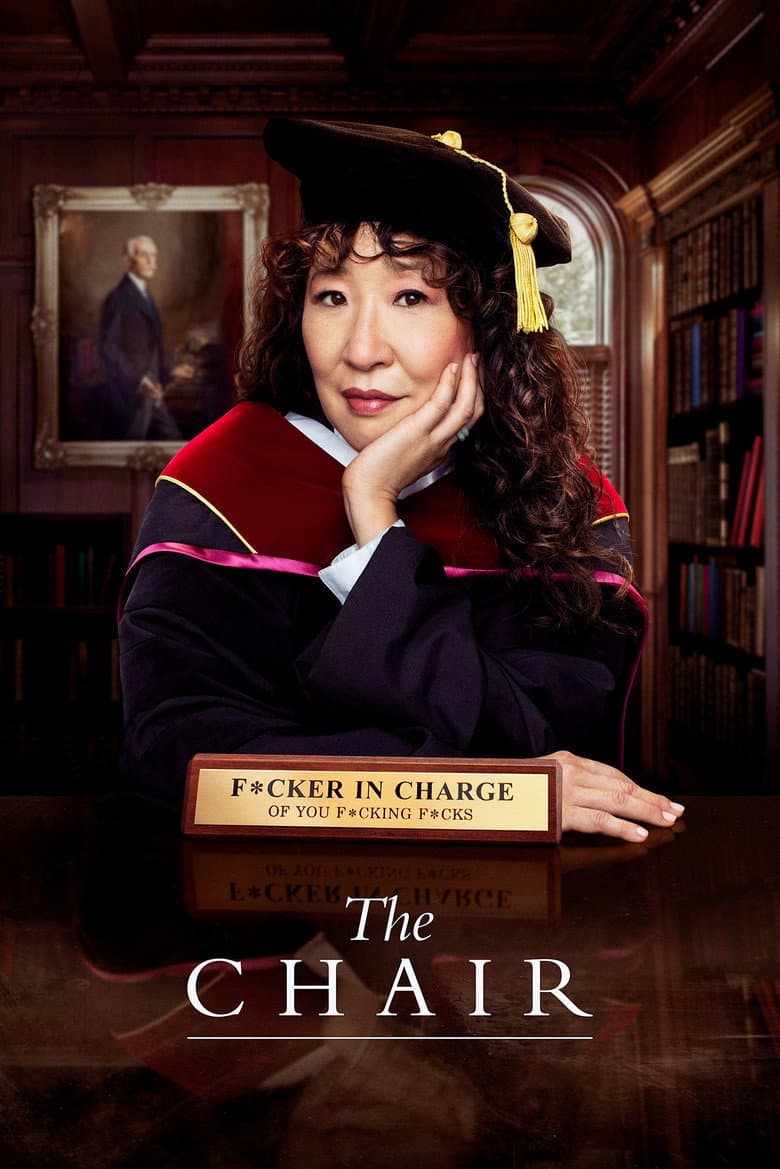
Started August 20, 2021 · Canceled · Based on 1 season, 6 episodes through August 20, 2021 · TV-MA
Ji-Yoon Kim becomes the first woman of color to lead the English department at Pembroke, a struggling private university. She must handle falling student numbers, budget cuts, difficult older teachers, and a dean who cares about money and public image. She also raises her adopted daughter while dealing with her close friend Bill, a grieving professor who makes a reckless Nazi salute in class. The show mixes workplace comedy with tense arguments about free speech, teaching, and who gets to stay in the department.
The show makes race and gender part of the main story from its opening premise. Ji-Yoon says the department is 87 percent white and tries to give Yaz McKay, a gifted black professor, a major honor before the dean gives it to a famous white man. Yaz's fight for a permanent faculty job and Bill's punishment keep diversity, unfair treatment, privilege, and campus cancellation in view across the season. The show supports more women of color in the department, but it also mocks student outrage and shows that Bill's careless act has real consequences.
Community feedback
Was our 71% Woke rating accurate?
Breakdown
These are the editorial factors and ratings behind our score for The Chair.
Woke representation / casting
The show places Sandra Oh's Korean American Ji-Yoon in the top job and calls her the first woman of color to hold it. The department also gives Yaz, a gifted black professor, a major teaching honor and a long tenure plot. The season says 87 percent of the faculty is white and jokes that Ji-Yoon's photo is used as the school's diversity image. These repeated, prominent choices make representation a visible design goal.
45%
Woke political dialogue
The characters repeatedly talk about racism, white supremacy, feminist scholarship, critical race theory, homophobia, and the need for more women of color. Students chant against Nazis after Bill's gesture, and the season spends several episodes on whether the protest is justice or an unfair campus mob. Ji-Yoon also questions why the university protects rankings and money while the world faces larger problems. The dialogue is direct and recurring, but it is mixed with jokes and debate.
50%
Identity-driven story themes
Ji-Yoon's race and sex shape the main conflict, not just her background. The story shows her as the first woman of color chair and says the university uses her picture as proof of diversity. Yaz's bid for tenure drives a long subplot about who gets heard and rewarded. The show treats these barriers as real and asks viewers to favor change, while still giving older teachers and Bill some sympathy.
64%
Western institutional / cultural critique
The show criticizes a university where older white men hold much of the power and managers care about money, rankings, and public image. The dean uses Ji-Yoon as a public face while making her solve a crisis and blocking her choice of Yaz. The story treats these patterns as unfair barriers tied to race and gender. It also mocks student mobs and shows Bill's punishment can be both unfair and partly deserved, so the critique is not one-sided.
52%
Woke character or canon changes
Not relevant. The series is an original story about the fictional Pembroke University. No established character, source, or historical figure is changed.
0%
Anti-woke backlash and complaints
NewsBusters said the series was trying to be woke and attacked its focus on white supremacy, critical race theory, and women of color. A Forbes opinion piece called it a strained woke spoof and said it ignored ageism while fighting racism and sexism. These complaints were limited to a small number of opinion writers and scattered forum posts. The separate X search found no anti-woke campaign or large pile-on.
16%
Creator track record context
The cached scores show a mixed creative team. Annie Julia Wyman is scored 58 for representation and gender politics, while Daniel Gray Longino is 72 and Sandra Oh is 74 for identity-focused work and public views. Jennifer Kim is scored 67 for race, gender, and institutional power themes. Amanda Peet and several other writers and producers have low scores, so the overall context is moderate.
55%
Production

TV Show · 2019
A paragliding mishap drops a South Korean heiress in North Korea -- and into the life of an army officer, who decides he will help her hide.

TV Show · 2016
Rebellious Mickey and good-natured Gus navigate the thrills and agonies of modern relationships.
TV Show · 2019
Burned out on life, Miles undergoes a strange procedure at a strip mall spa -- and wakes to find he's been replaced by a better version of himself.
TV Show · 2018
A hit man from the Midwest moves to Los Angeles and gets caught up in the city's theatre arts scene.

TV Show · 2019
To win back his ex-girlfriend, a nerdy teen starts selling ecstasy online out of his bedroom -- and becomes one of Europe's biggest dealers.

TV Show · 2020
New passions. New fashions. New Emily? A plucky American marketing whiz spreads her wings in life and love after landing her dream job in Paris.
TV Show · 2020
After being bullied and discriminated because of her ugly looks, a high school girl transforms herself into a gorgeous "goddess" and quickly rises to fame after mastering the art…

TV Show · 2023
The lives of a realtor, a plumber and a former tennis star unexpectedly collide, exposing America’s obsession with true crime, murder and the slow-close toilet seat.
