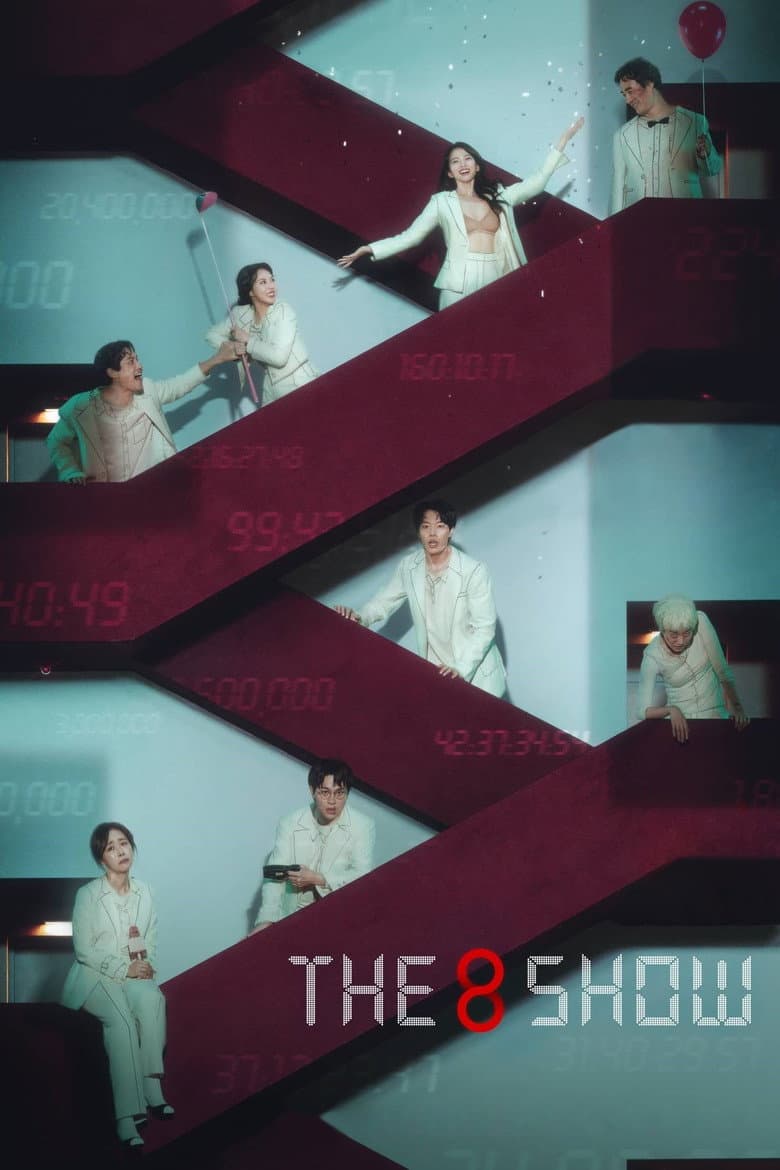
Started May 17, 2024 · Ended · Based on 1 season, 8 episodes through May 17, 2024 · TV-MA · Korean
Bae Jin-su is a broke young man who loses his savings and faces lenders. He joins seven strangers inside a sealed eight-story building where each passing minute earns money. The floor number controls each person's room size, pay, food, and power, so the group soon divides between higher and lower floors. The show uses black comedy, suspense, torture, and harsh violence as the contestants move from teamwork toward control and betrayal.
The clearest woke element is the show's repeated attack on capitalism and class power. The higher floors receive more money and comfort, while the lower floors work, suffer hunger, follow orders, and face punishment. The contestants copy this system by turning human pain into entertainment for unseen viewers, so the game becomes a picture of society. The story also places a skilled female fighter against a female ruler, while the adaptation changes one source character from male to female. These choices are easy to see, but the show does not present them as a diversity campaign.
Community feedback
Was our 58% Woke rating accurate?
Breakdown
These are the editorial factors and ratings behind our score for The 8 Show.
Woke representation / casting
The cast gives four of the eight main contestants to women. 8th Floor becomes the highest-earning and most powerful contestant. 2nd Floor becomes the strongest fighter and leads the resistance. These choices make female control and physical action easy to notice. The modern Korean setting and balanced cast keep the show from looking designed mainly around diversity.
32%
Woke political dialogue
The players repeatedly discuss unequal pay, room sizes, food supplies, and rules that favor the upper floors. 7th Floor explains that unseen viewers reward shocking behavior. The group debates whether to obey or resist the system. These ideas support a class and anti-capitalist reading across the season. The dialogue does not focus on race, gender identity, DEI, or party politics.
38%
Identity-driven story themes
The season makes class hierarchy the central story theme. The higher floors control money, space, food, and punishment. The lower floors face labor and suffering. The contestants copy this order and turn pain into a product for unseen viewers. This creates an extended attack on capitalist incentives. The female fighter and female ruler add a visible gender and power layer, but money and status remain the main focus.
61%
Western institutional / cultural critique
The show presents a made-up money system that turns debt, work, and human suffering into entertainment. The story repeatedly treats wealth rankings and the demand for more shocking content as harmful social forces. These ideas create a mild critique of modern institutions and culture. The show does not attack Christianity, family life, traditional gender roles, or Western political parties.
24%
Woke character or canon changes
The series changes 4th Floor from a male character in the Pie Game webtoon into a woman. This change alters the gender of an established source character. The series also combines and renumbers characters from Money Game and Pie Game. Those other changes do not involve identity. No title-related interview presents 4th Floor's gender as a political or representation goal.
18%
Anti-woke backlash and complaints
Not present. The supplied X pass found no anti-woke reaction, boycott, or review-bombing. Broader web discussions focused on violence, torture, plot logic, and the ending. Those discussions did not mainly focus on woke ideas, DEI, or identity politics.
0%
Creator track record context
Han Jae-rim and Bae Jin-soo repeatedly make stories about power, inequality, class, and capitalism. Those themes directly match The 8 Show. Kim Dae-seung has past work about gender, sexuality, and human rights. Those subjects are not the main focus of this title. The other listed writers and producers have little public activist or identity-focused record. This context supports a moderate score.
38%
Production

TV Show · 2026
The mayor of a New England town resolves to turn it into the next tourist hot spot, despite local warnings that it's cursed.

TV Show · 2026
The dynamic between the two contrasting personalities, a seasoned cop who prefers old-school methods and a tech-savvy cop who relies on modern technology for investigations, as…
TV Show · 2023
A disgraced cop in debt is forced to return to his home state of Florida for a shady mission only to get swept up in a wild — and deadly — treasure hunt.
TV Show · 2024
The life of an American woman living in Kyoto, Japan, is upended when her husband and son disappear in a mysterious plane crash.
TV Show · 2024
John Sugar is a dashing private eye navigating the dark corners of sunny LA. Though he sees only the good in humanity, Sugar is haunted by a secret too dangerous to expose.

TV Show · 2022
An anniversary trip puts a marriage to the test when a couple finds themselves embroiled in one of Yucatan's most bizarre unsolved mysteries.
TV Show · 2025
In the vast expanse of Yosemite National Park, a woman's death draws a federal agent into lawless terrain — where nature obeys no rules but its own.
TV Show · 2022
When a man wakes up in the Australian outback with no memory, he must use the few clues he has to discover his identity before his past catches up with him.
