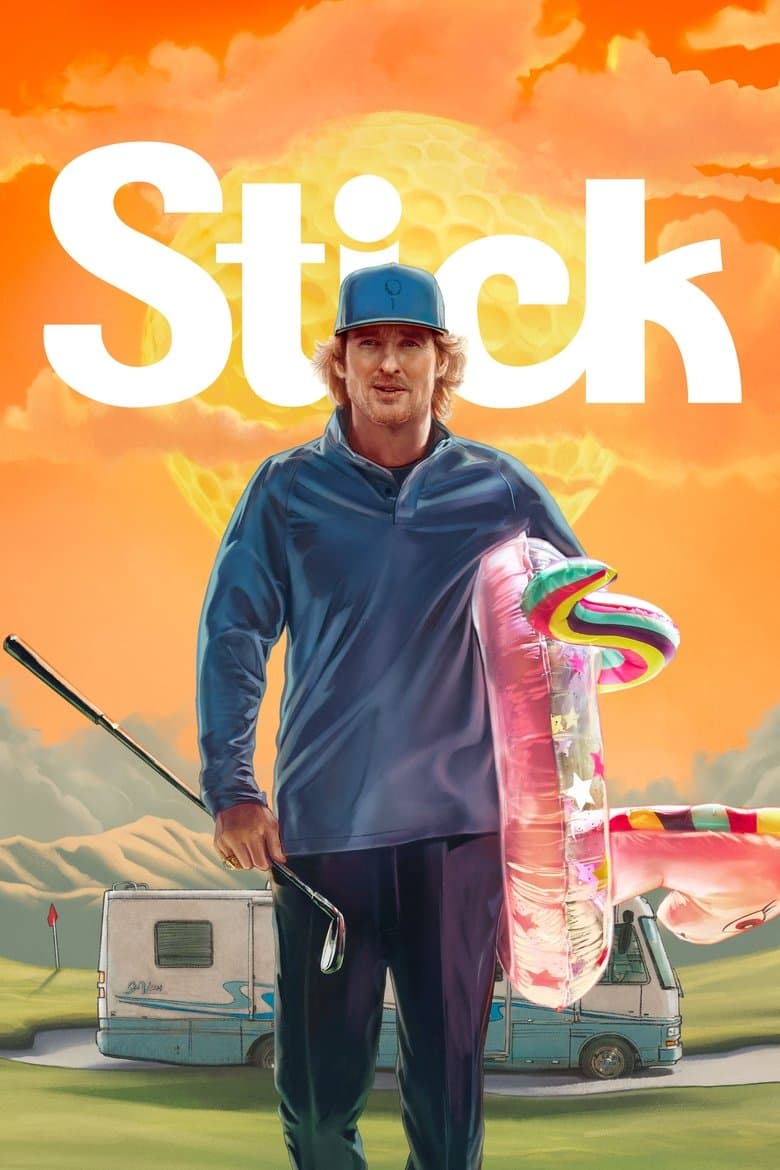
Started June 3, 2025 · Returning Series · Based on 1 season, 10 episodes through July 22, 2025 · TV-MA
Stick follows Pryce Cahill, a former golf star whose career ended after a public meltdown. He is broke, divorced, and still grieving the death of his young son. Pryce takes a bet on Santi, a gifted but angry 17-year-old golfer, and brings him on an RV trip with Santi’s mother Elena, his old friend Mitts, and a new caddy named Zero. The light comedy uses golf, road trips, family pain, and second chances to tell a warm story about people who slowly become a family.
Zero is gender-fluid and uses she/they pronouns. The show makes Zero Santi’s friend, love interest, and caddy, so this identity element stays visible through much of the middle of the season. Zero also says they are genderqueer, anti-capitalist, and a postcolonial feminist. Zero rejects industrial farming and criticizes golf as a sport for rich white men. These points create a clear activist layer, but the main story remains Pryce and Santi’s golf journey, grief, trust, and search for a better life.
Community feedback
Was our 56% Woke rating accurate?
Breakdown
These are the editorial factors and ratings behind our score for Stick.
Woke representation / casting
Zero is a recurring gender-fluid character in a visible supporting role. Zero joins the main RV group, becomes Santi’s caddy, and becomes his romantic partner. The show also gives Santi and Elena a Latino family identity that fits the present-day setting. The main representation signal comes from making Zero’s gender identity and pronouns part of the character’s introduction and ongoing role.
48%
Woke political dialogue
Zero openly uses she/they pronouns and calls themself genderqueer, anti-capitalist, and a postcolonial feminist. Zero says golf is bad for the environment and played by rich white men. Zero rejects industrial agriculture because of greenhouse gases and calls Pryce a capitalist pig. The show also has Zero question work, success, control, and manipulation, but these lines stay inside a secondary character arc.
40%
Identity-driven story themes
Zero’s gender identity shapes the middle of the season. The character asks others to use she/they pronouns, becomes Santi’s romantic partner, and challenges the older men in the group. Zero’s need for safety and trust links the identity story to the team’s problems. The season still gives most of its time to Pryce’s grief and Santi’s golf and family conflict.
39%
Western institutional / cultural critique
Zero calls golf bad for the environment and a sport for rich white men. Zero criticizes industrial agriculture and says its emissions harm the future. Zero also talks about the patriarchy, work, corporate greed, and harmful control by older coaches. Elena says she has spent her life listening to men, but the season does not turn these ideas into a broad attack on Western institutions.
31%
Woke character or canon changes
Not relevant. Stick is an original series and does not change an established character, canon, or real historical event.
0%
Anti-woke backlash and complaints
Viewers on X repeatedly called the show woke after Zero’s episode and objected to she/they pronouns. Other posts said the climate and anti-capitalist lines turned a golf comedy into activism, and some viewers said they quit watching. Some viewers defended the show and said Zero becomes more human after the introduction. The supplied X pass found no organized boycott, review-bomb drive, or large right-wing media pile-on, so the backlash was visible but scattered.
37%
Creator track record context
Stored profiles give most of the writers, directors, producers, and casting staff low or mild scores. Esti Giordani has the clearest identity-focused background through Vida, while Ben Silverman has socially liberal views and general charity work. Jason Keller’s Stick interviews focus on failure, found family, and understanding Gen Z, with Zero described as a gender-fluid challenge for him. The overall team context supports a mild score rather than a dominant one.
27%
Production
TV Show · 2019
Burned out on life, Miles undergoes a strange procedure at a strip mall spa -- and wakes to find he's been replaced by a better version of himself.

TV Show · 2019
A paragliding mishap drops a South Korean heiress in North Korea -- and into the life of an army officer, who decides he will help her hide.
TV Show · 2018
A hit man from the Midwest moves to Los Angeles and gets caught up in the city's theatre arts scene.
TV Show · 2023
The lives of a realtor, a plumber and a former tennis star unexpectedly collide, exposing America’s obsession with true crime, murder and the slow-close toilet seat.

TV Show · 2020
New passions. New fashions. New Emily? A plucky American marketing whiz spreads her wings in life and love after landing her dream job in Paris.
TV Show · 2020
The heartwarming and humorous adventures of a young country vet in the Yorkshire Dales in the 1930s. A remake of the 1978 series.
TV Show · 2019
To win back his ex-girlfriend, a nerdy teen starts selling ecstasy online out of his bedroom -- and becomes one of Europe's biggest dealers.
TV Show · 2026
The mayor of a New England town resolves to turn it into the next tourist hot spot, despite local warnings that it's cursed.
