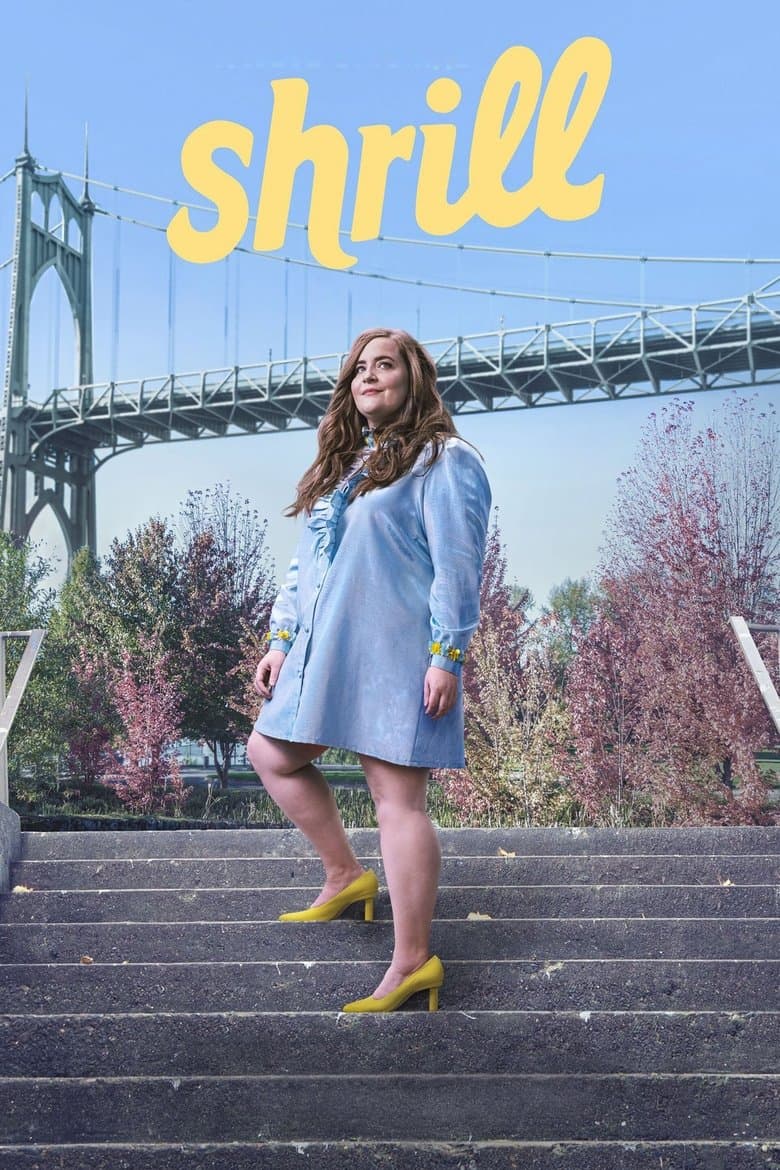
Started March 15, 2019 · Canceled · Based on 3 seasons, 22 episodes through May 7, 2021 · TV-MA · 25 min
Shrill follows Annie Easton, a young journalist in Portland, Oregon, who wants a fuller life without trying to become thin. She deals with a cruel boyfriend, online abuse, pressure from her boss, and her parents' problems while trying to earn respect at work. Her best friend Fran shares the house with her and helps her through dating, family stress, and career changes. The show mixes blunt jokes with warm friendship and serious talks about shame, sex, and self-worth.
Body acceptance is the show's main message in all three seasons. Annie gets an abortion, writes about being fat, attends a body-positive pool party, and fights people who treat weight as proof of bad character or poor health. The show also supports women's sexual choice and workplace rights, while Fran's story includes a lesbian relationship, her Nigerian family, and a nonbinary partner. Season three adds a story about Annie's article on white separatists and makes her face the harm caused by giving that group a friendly platform.
Community feedback
Was our 89% Woke rating accurate?
Breakdown
These are the editorial factors and ratings behind our score for Shrill.
Woke representation / casting
The series centers a fat woman, making body identity part of the lead casting. The main group also includes a black lesbian best friend, a black coworker who becomes a workplace leader, a gay editor and husband, and a nonbinary romantic partner in season 3. Portland can support a diverse cast, so the score does not rest on a setting mismatch alone. The show and its press framing clearly treat body and queer representation as part of its design.
72%
Woke political dialogue
The series repeatedly has characters name fatphobia, body acceptance, and pressure to lose weight. Characters treat Annie's abortion as a valid choice, and Annie calls out a doctor, a trainer, and editors who judge people by size. Season 2 adds a women's empowerment event and sexual harassment training, while season 3 discusses white separatism and the harm of giving it a friendly platform. These ideas appear in several major plots, but the show remains a comedy about personal life rather than a constant political debate.
63%
Identity-driven story themes
The series makes fat acceptance and self-love the main path of Annie's growth. Annie learns to reject the idea that a thin body is required for love, sex, health, or success. The story treats abortion as a valid choice and repeatedly supports women's control over dating, sex, work, and their bodies. Fran's lesbian life and her season 3 romance with nonbinary Em add a continuing queer identity story. The show sometimes admits Annie can be selfish or unfair, but it still places identity and social acceptance at the center.
84%
Western institutional / cultural critique
The show treats weight-based judgment as a problem in health care, dating, family life, and the workplace. Annie's boss shames her about exercise and her weight, and a doctor recommends weight-loss surgery without examining her wider health. The series also mocks male entitlement, sexual shame, and old ideas about how women should look or behave. Season 3 makes Annie answer for giving white separatists a friendly public face. The critique is strong and repeated, but it is not mainly about Christianity or capitalism.
67%
Woke character or canon changes
Not relevant. The series adapts Lindy West's memoir but does not change an established fictional character or real historical figure through race, gender, sexuality, or leadership.
0%
Anti-woke backlash and complaints
The Federalist described the show as woke and attacked its female-empowerment message. Some Reddit commenters rejected the idea that obesity should be treated as harmless or praised. A small discussion about season 3 questioned why Annie had to apologize for writing about white separatists. Mainstream reviews and fan posts were mostly supportive, so the backlash was limited and scattered.
35%
Creator track record context
Lindy West brings a strong record of feminism, fat acceptance, abortion rights, and public activism. Aidy Bryant repeatedly supports body acceptance and women's self-determination in her work. Alexandra Rushfield has made feminist and body-positive stories, including Shrill and Santa Inc. Ally Pankiw describes her work through a queer perspective, while Andrew DeYoung has no notable activist record. The key creators have a strong identity-focused pattern, although the producer group also includes people with little public political activity.
66%
Production

TV Show · 2026
The mayor of a New England town resolves to turn it into the next tourist hot spot, despite local warnings that it's cursed.

TV Show · 2019
A paragliding mishap drops a South Korean heiress in North Korea -- and into the life of an army officer, who decides he will help her hide.
TV Show · 2019
Burned out on life, Miles undergoes a strange procedure at a strip mall spa -- and wakes to find he's been replaced by a better version of himself.
TV Show · 2020
The heartwarming and humorous adventures of a young country vet in the Yorkshire Dales in the 1930s. A remake of the 1978 series.
TV Show · 2016
In his funky California beach enclave, Chip's the go-to guy for personal insights. But he isn't quite as enlightened when it comes to his own baggage.
TV Show · 2019
Tony had a perfect life. But after his wife Lisa suddenly dies, Tony changes. After contemplating taking his own life, he decides instead to live long enough to punish the world…

TV Show · 2020
New passions. New fashions. New Emily? A plucky American marketing whiz spreads her wings in life and love after landing her dream job in Paris.
TV Show · 2019
In a city of coaching centers known to train India’s finest collegiate minds, an earnest but unexceptional student and his friends navigate campus life.
