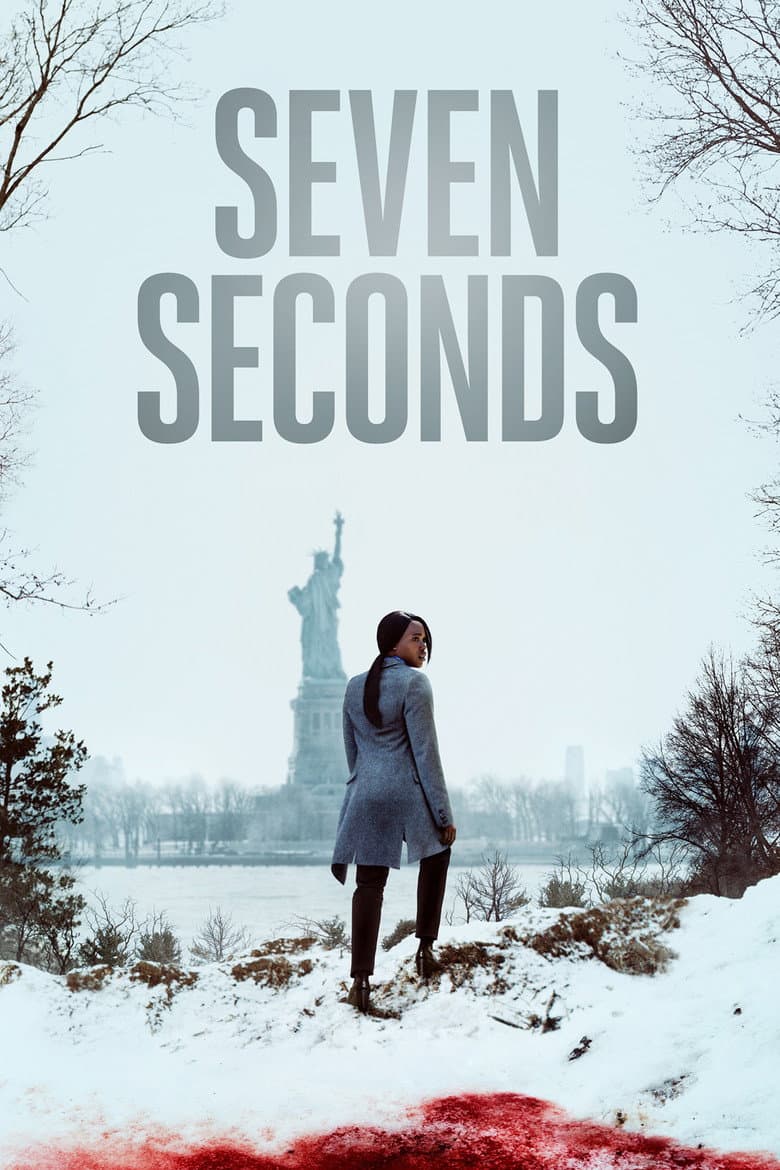
Started February 23, 2018 · Ended · Based on 1 season, 10 episodes through February 23, 2018 · TV-MA · 55 min
Seven Seconds follows KJ Harper, a troubled assistant prosecutor in Jersey City, New Jersey. A white police officer hits Brenton Butler, a black teenager on a bicycle, and leaves him in the snow. The officer’s fellow cops hide what happened, while KJ, police detective Fish Rinaldi, and Brenton’s parents search for the truth. The season is a slow, dark crime story about grief, fear, guilt, and a court case that reaches far beyond one family. Race and police power drive the story from the first episode to the last. The police unit protects its own, and the show presents the justice system as willing to ignore or excuse harm done to Black citizens. KJ adds a hate-crime charge and argues that Brenton’s death belongs to a larger pattern, while protests set Black Lives Matter against Blue Lives Matter. The show also reveals Brenton’s same-sex relationship with Kadeuce and uses the family’s pain to examine homophobia and the struggle for acceptance.
Community feedback
Was our 83% Woke rating accurate?
Breakdown
These are the editorial factors and ratings behind our score for Seven Seconds.
Woke representation / casting
The show puts two black women, Latrice Butler and KJ Harper, at the center. KJ is the lead prosecutor and the main truth seeker, while Latrice drives the family’s fight for answers. The story also gives major roles to a black family, a Latino detective, and a gay black teen. Sud and the cast framed the two women as women of color taking the hero’s mantle, so the casting carries a clear representation message.
38%
Woke political dialogue
The show repeatedly uses direct debate about race and policing. Police officers fear that the case will become another Ferguson, Chicago, or Baltimore story, while the defense calls KJ’s case a race-based campaign. KJ adds a hate-crime charge and links Brenton’s death to harm against black boys. The finale places “Black Lives Matter” and “Blue Lives Matter” protesters outside the trial.
50%
Identity-driven story themes
Race is the main story engine, not a side issue. A Black teenager’s death leads to a long cover-up, a grieving family’s fight, a prosecutor’s case, and public protests. The show treats the case as part of a wider pattern of racial harm in policing and the courts. Brenton’s hidden same-sex relationship adds a smaller story about homophobia and acceptance inside his family and community.
72%
Western institutional / cultural critique
The show presents the police department as a system that protects its own officers. Several cops hide the accident, pressure witnesses, block the investigation, and close ranks during the trial. The court case is shown as shaped by race, power, and public pressure rather than equal treatment. The show also uses protests and the failed verdict to argue that the system can deny justice to black families.
64%
Woke character or canon changes
The source film The Major is about a Russian police officer who hits and kills a child and helps hide it. Seven Seconds keeps that basic accident and cover-up but changes the victim into a black American teenager and makes race relations and police racism central. The series also expands the short film story into a ten-episode case with a black family, Black prosecutor, and protest conflict. These changes make identity and current racial politics much more important than in the source premise.
35%
Anti-woke backlash and complaints
One small Spanish-language X account called KJ’s push for a racism and hate-crime frame progressive or woke “insanity” and blamed it for sinking the case. The search pass found no broad English-language boycott, review-bomb, or anti-woke campaign. A small conservative media post made a similar complaint about the show’s portrayal of police, but the available reaction remained limited.
23%
Creator track record context
Veena Sud has a strong history of centering complex women, female agency, and feminist themes. Most writers have low or mild activist context, though Evangeline Ordaz has a strong representation and queer-advocacy record. Several directors have ties to feminist, racial, or representation-focused work, while others are known mainly for crime dramas. This gives the title moderate creator track record context.
48%
Production
TV Show · 2022
Bosch is now making a living as a private investigator two years after he quit the LAPD and finds himself working with one time enemy and top-notch attorney Honey “Money”…
TV Show · 2025
Two lifelong friends in Philadelphia pose as DEA agents to rob small-time drug dealers. It's a perfect grift—until they choose the wrong mark and become targets of a massive…
TV Show · 2019
Within the walls of an interrogation room, London investigators question suspects accused of grievous crimes until the truth comes to light.

TV Show · 2018
The stranger-than-fiction account of a prison break in upstate New York in the summer of 2015, which spawned a massive manhunt for two convicted murderers who were aided in their…
TV Show · 2017
Covert operative Tom Keen joins forces with Susan "Scottie" Hargrave, the brilliant and cunning chief of a covert mercenary organization that solves problems that are too…
TV Show · 2025
In the working-class suburbs of Philadelphia, an FBI agent heads a task force assembled to put an end to a string of violent robberies led by an unsuspecting family man.
TV Show · 2020
Picking up just days after the “Power” finale, this sequel series follows Tariq navigating his new life, in which his desire to shed his father’s legacy comes up against the…
TV Show · 2021
In a small Michigan town where the business of incarceration is the only thriving industry, the McClusky family are the power brokers between the police, criminals, inmates…
