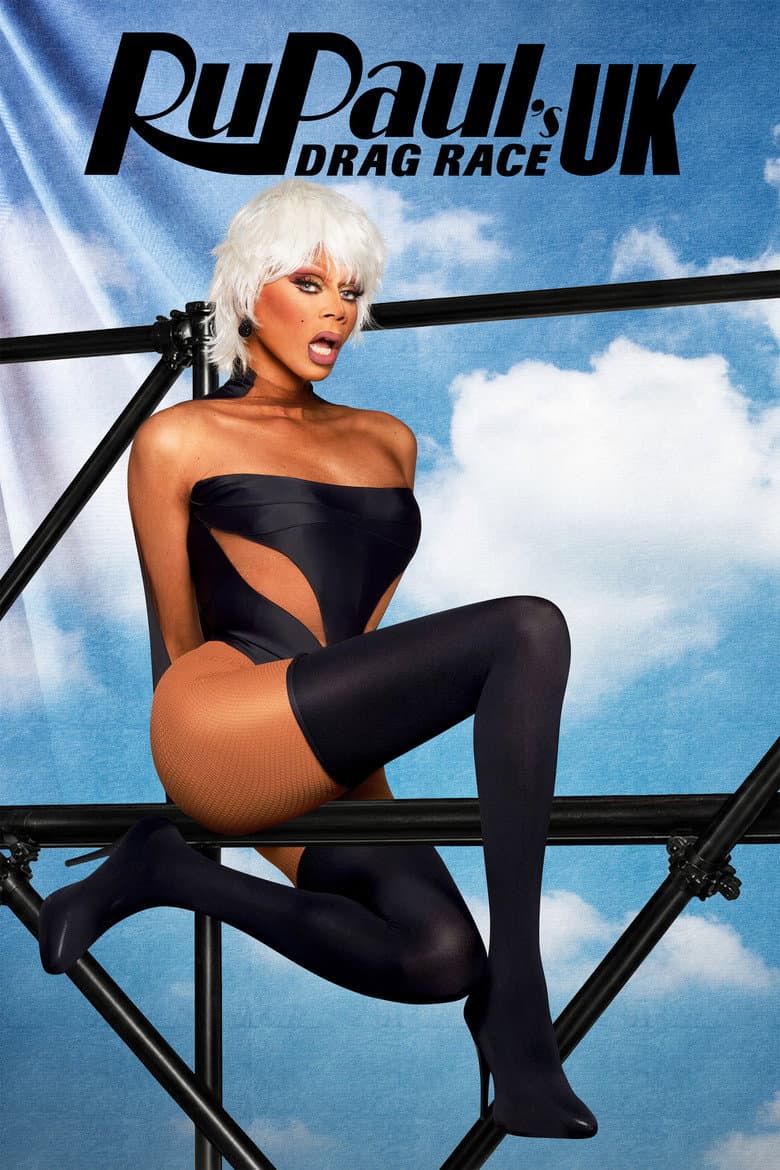
Started October 3, 2019 · Returning Series · Based on 7 seasons, 68 episodes through November 27, 2025 · TV-MA
RuPaul's Drag Race UK is a reality contest set in a television studio where drag performers from across the United Kingdom compete for a crown. RuPaul hosts the contest and judges the performers with Michelle Visage, Alan Carr, Graham Norton, and guest judges. Each episode gives the queens a comedy, acting, design, singing, dance, or makeover task before a runway show and a lip sync battle. The weakest performer leaves, while the strongest performers move toward the final crown. The tone is bright, rude, camp, funny, and often emotional.
The show makes queer identity and drag performance its central subject across all seven seasons. Contestants regularly discuss coming out, nonbinary identity, being trans, HIV, family rejection, bullying, and finding confidence through drag. The show presents those stories as brave and valuable, while its challenges and runways turn gender presentation into its main form of art and competition. Later seasons make trans and nonbinary visibility more direct, including Dakota Schiffer as the first openly trans woman on the UK edition and repeated identity talks in the work room. Most episodes still center on skills, jokes, costumes, and eliminations, so the message is built into the contest rather than delivered as a separate political plot.
Community feedback
Was our 93% Woke rating accurate?
Breakdown
These are the editorial factors and ratings behind our score for RuPaul's Drag Race UK.
Woke representation / casting
The cast is built almost entirely from drag performers whose public identities and gender expression are part of the show. The series highlights gay, trans, nonbinary, and later cis women contestants as visible community milestones. The show labels Dakota Schiffer's casting as the first openly trans woman on the UK edition, while season 7 includes a performer who describes her drag as black queer joy. The casting is representation-first because queer identity is the main reason this competition exists.
96%
Woke political dialogue
Contestants discuss gender and identity in spoken work-room scenes across the seasons. Bimini and Ginny talk about being nonbinary in season 2, and Charity Kase talks about HIV stigma and survival in season 3. Dakota Schiffer explains her trans identity in season 4, while Cara Melle discusses her trans journey in season 5. These talks recur but usually last for part of an episode instead of taking over the competition.
48%
Identity-driven story themes
The series makes queer identity and drag performance the main subject. Contestants use challenges, costumes, lip syncs, and personal talks to explore gender expression, self-acceptance, community, and visibility. The seasons repeatedly include coming-out stories, nonbinary identity, trans identity, HIV stigma, family rejection, and the idea that drag can help people live more freely. The message stays central through season 7 even when an episode focuses on comedy or fashion.
98%
Western institutional / cultural critique
The show often presents rigid ideas about men and women as something to mock or break. Contestants describe bullying, homophobia, family rejection, and pressure to fit a fixed gender role. The show usually answers those conflicts with queer community, self-acceptance, and drag. The series does not make a sustained attack on churches, capitalism, or Western government, so this factor stays moderate.
38%
Woke character or canon changes
Not relevant. The show is an original reality contest, not an adaptation of characters or a historical story. The queens use celebrity impersonations in Snatch Game, but those are challenge performances rather than canon changes.
0%
Anti-woke backlash and complaints
Some right-leaning posts call the show's queer casting and BBC launch a woke or DEI push. Breitbart described UK cast members' replies to the Supreme Court sex ruling as trans activism linked to the franchise. Small X accounts also attacked the use of “their/her” for The Vivienne and called the BBC's drag output a licence-fee obsession. The reaction is repeated but mostly fringe, and there is no strong title-wide boycott or review-bomb.
37%
Creator track record context
RuPaul's career is built around queer visibility and opposition to anti-drag and anti-LGBTQ laws. Fenton Bailey and Randy Barbato built World of Wonder around drag and LGBTQ-focused shows and have called visibility a mission. The director and producers also have repeated work on Drag Race and Pride-related projects. The record shows a strong queer-focused creative pattern, while it shows less evidence of wider party politics or personal campaigning.
82%
Production
TV Show · 2022
Strangers play the ultimate game of detection, backstabbing and trust in the hope of winning up to £120,000. But hidden amongst the players are three Traitors, who secretly…
TV Show · 2020
On the shores of paradise, gorgeous singles meet and mingle. But there’s a twist. To win a $100,000 grand prize, they’ll have to give up sex.
TV Show · 2022
The family you know and love is here with a brand new series, giving an all-access pass into their lives. Kris, Kourtney, Kim, Khloé, Kendall, and Kylie bring the cameras back to…
