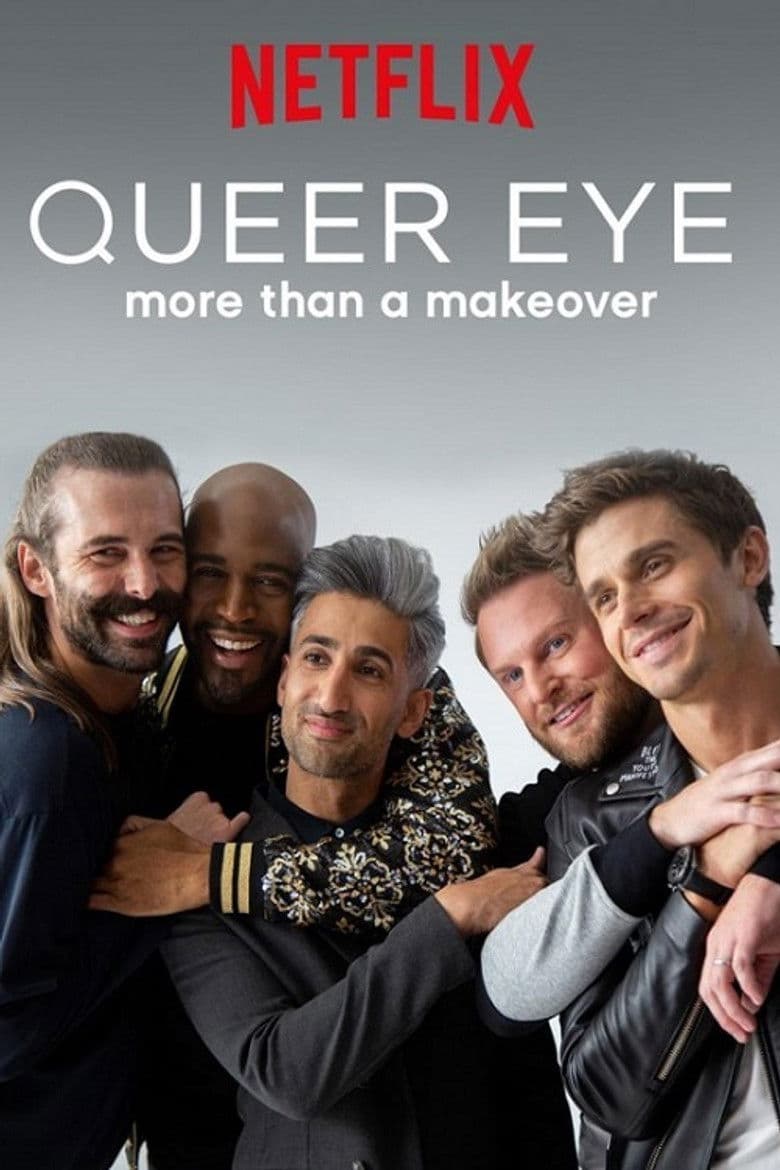
Started February 7, 2018 · Ended · Based on 10 seasons, 80 episodes through January 21, 2026 · TV-14 · 50 min
Queer Eye follows five queer lifestyle experts who help people rebuild confidence through clothes, grooming, food, homes, and honest talks. Each episode takes place in a hero’s home or community, from Georgia and Texas to New Orleans, Las Vegas, and Washington, D.C. The heroes face grief, loneliness, family strain, work stress, or fear of being seen. The tone is warm, funny, emotional, and built around a makeover and a final reveal.
Queer identity is not a side detail because the five hosts are openly gay or queer, and Jonathan Van Ness is nonbinary. The show repeatedly presents coming out, trans identity, lesbian identity, chosen family, same-sex love, and acceptance of queer people as good and needed. It also asks men to reject emotional silence and rigid ideas about masculinity, while some episodes discuss race, police trust, religion, disability, and social justice. These messages become more visible in episodes about AJ coming out, Skyler’s legal identity, a gay pastor, a trans powerlifter, a lesbian hero, and a D.C. woman whose story is placed in LGBTQ history.
Community feedback
Was our 88% Woke rating accurate?
Breakdown
These are the editorial factors and ratings behind our score for Queer Eye.
Woke representation / casting
The central team is queer-centered and made up of five highly visible lifestyle experts. Jonathan Van Ness is nonbinary, while the group also includes Black, South Asian, and Polish-born hosts. The show repeatedly selects women, queer people, trans people, and people from minority backgrounds as heroes. Representation is a defining part of what viewers see in every episode.
90%
Woke political dialogue
Karamo’s talks make race, police encounters, trust, and personal fear part of the show’s dialogue. Other episodes show AJ coming out, Skyler changing his legal identity, a gay pastor leading a church, and a trans powerlifter discussing public confidence. Season 10 adds a lesbian woman’s history and a queer archive in Washington, D.C. The talks recur across the run, but most episodes still focus on makeovers, family, work, and self-confidence.
45%
Identity-driven story themes
The show’s main idea is that people should accept their identity and show it without shame. The Fab Five repeatedly help heroes handle coming out, gender identity, queer relationships, chosen family, faith, and fear of rejection. The series also challenges old ideas that men should hide feelings or avoid beauty and care. These themes drive the makeover stories across all ten seasons, including the final season’s black lesbian family story.
93%
Western institutional / cultural critique
The show often treats rigid masculinity, emotional silence, and narrow gender roles as problems that men must leave behind. Karamo’s police-stop talk asks viewers to face fear and race-related mistrust, while other episodes challenge church rejection, prison stigma, and social barriers. A former nun turned social justice lawyer and people serving homeless or poor communities appear in later seasons. This critique recurs, but the series usually turns toward personal growth instead of a full attack on Western institutions.
43%
Woke character or canon changes
The Netflix reboot drops the words “for the Straight Guy” from the title and changes the makeover subject from mostly straight men to a wider group. Later seasons center women, lesbians, a trans man, a trans woman, and other queer heroes. The format still keeps the five-expert makeover structure, so the identity-driven change is important but not a total rewrite.
46%
Anti-woke backlash and complaints
A few small online accounts called the Netflix reboot woke and said it betrayed the original makeover show. Other scattered right-leaning posts treated the series as LGBT or cultural propaganda. The X search found no sustained boycott, review-bombing push, or organized campaign against the show. Boycott talk about JVN-linked hair products was separate from complaints about the series.
12%
Creator track record context
David Collins has no documented activist record. Most directors, producers, casting leaders, and writers also have no documented identity-politics record. Writer James Barker is a queer artist whose work explores identity and self-discovery. The wider creative record gives limited support compared with the show’s strong on-screen focus.
10%
Production
TV Show · 2022
The family you know and love is here with a brand new series, giving an all-access pass into their lives. Kris, Kourtney, Kim, Khloé, Kendall, and Kylie bring the cameras back to…
TV Show · 2022
Strangers play the ultimate game of detection, backstabbing and trust in the hope of winning up to £120,000. But hidden amongst the players are three Traitors, who secretly…
TV Show · 2020
On the shores of paradise, gorgeous singles meet and mingle. But there’s a twist. To win a $100,000 grand prize, they’ll have to give up sex.
