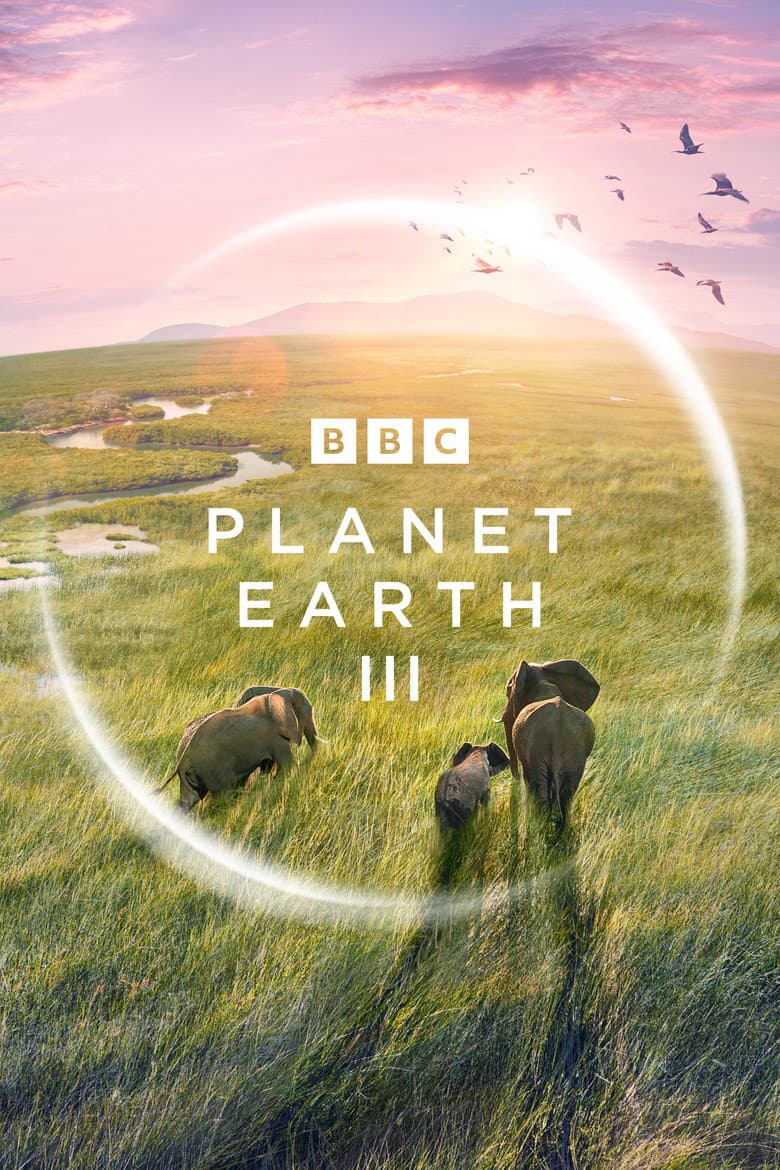
Started October 22, 2023 · Ended · Based on 1 season, 8 episodes through December 10, 2023 · TV-PG
Planet Earth III follows wild animals as they hunt, breed, migrate, and survive in coasts, oceans, forests, deserts, cities, and other harsh places. Sir David Attenborough narrates the eight episodes, but the animals provide the main characters and conflicts. The main characters face hunger, weather, predators, and illness. The cameras travel from crowded towns to deep seas and remote caves. The tone moves from thrilling and funny scenes to sad scenes about injury, death, and the damage caused by people. The series repeatedly connects animal problems to human pressure on nature. Several episodes show climate change, plastic waste, habitat loss, farming, fires, fishing, and the spread of towns harming animals. Episode seven directly supports moving away from meat and dairy toward a plant-based diet, and it presents new farms as a way to return land to wildlife. Episode eight praises conservation workers and local Amazon groups, follows climate talks, and urges leaders and voters to make faster environmental choices. These messages are important to the late episodes, but most of the running time still follows animal behavior, family bonds, and predator hunts rather than human politics.
Community feedback
Was our 45% Woke rating accurate?
Breakdown
These are the editorial factors and ratings behind our score for Planet Earth III.
Woke representation / casting
Not present. The series shows real scientists, conservation workers, farmers, and local people from many places. It does not present their mix of sex or ethnicity as a diversity message.
0%
Woke political dialogue
Attenborough repeatedly links animal losses to climate change, farming, plastic, and human use of land. Episode 7 tells viewers that moving from meat and dairy toward plant-based food could free land for nature. Episode 8 urges countries to cut fossil fuels and asks viewers to vote for environmental action. These lines appear most strongly in the final two episodes.
38%
Identity-driven story themes
The show makes human harm to nature a repeated story problem across the season. Several episodes show climate change and habitat loss hurting wildlife. Episode 7 presents plant-based eating and new farms as ways to change how people live. Episode 8 treats conservation workers, Amazon land defenders, and climate negotiators as heroes. The animals still carry most of the running time.
40%
Western institutional / cultural critique
The narrator says human choices are changing habitats and putting animals at risk. Episode 7 presents farming, land use, and meat and dairy production as major problems. Episode 8 blames mining, logging, fossil fuels, and weak political action for damage to the Amazon and the climate. The episode calls on powerful people to take responsibility and asks viewers to vote for the planet. The criticism targets institutions and consumption, but it does not attack religion, family life, or traditional gender roles.
44%
Woke character or canon changes
Not relevant. The series has no fictional characters or source-story roles that it changes.
0%
Anti-woke backlash and complaints
Some Reddit and forum viewers called the climate material political, activist, or a lecture. Other viewers objected to the plant-based diet message in Episode 7. Climate-skeptic coverage linked to The Telegraph and Net Zero Watch called the warnings doom-heavy and overstated. The complaints stayed small and did not produce a major boycott, review-bombing campaign, or broad news cycle.
27%
Creator track record context
The directors and producer mainly make wildlife and conservation programs. Their known work includes environmental education, and Mike Gunton has backed more female directors in wildlife filmmaking. The title-specific interviews stress human impact, climate change, conservation, hope, and lower consumption. The available record does not show a strong DEI, queer, or identity-politics pattern.
10%
Production
TV Show · 2019
Millions of years ago, incredible forces ripped apart the Earth’s crust creating seven extraordinary continents.
TV Show · 2020
This nature series’ new technology lifts night’s veil to reveal the hidden lives of the world’s creatures, from lions on the hunt to bats on the wing.
TV Show · 2020
Applying the laws of life on Earth to the rest of the galaxy, this series blends science fact and fiction to imagine alien life on other planets.
TV Show · 2019
Professor Brian Cox explores the dramatic lives of the eight majestic planets/worlds that make up our solar system.
TV Show · 2023
Life's extraordinary journey to conquer, adapt and survive on Earth across billions of years comes alive in this groundbreaking nature docuseries.

TV Show · 2022
Bumbling dad Trevor tries to get the best of a cunning bee while house-sitting a posh mansion — but only unleashes more chaos in this comedy series.
TV Show · 2020
There is a ranch in northern Utah. It is considered the epicenter of the strangest, and most disturbing occurrences on Earth: For two decades, the federal government investigated…

TV Show · 2016
In 1935, financially strapped widow Louisa Durrell, whose life has fallen apart, decides to move from England, with her four children (three sons, one daughter), to the island of…
