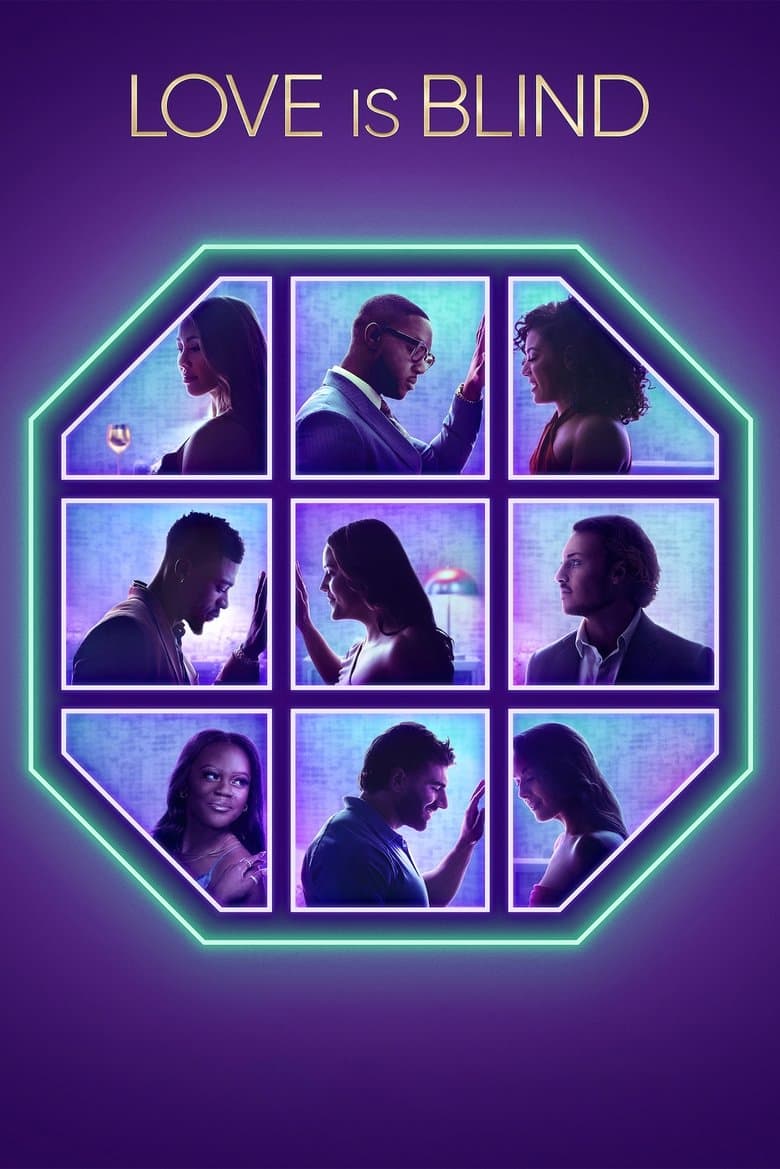
Started February 13, 2020 · Returning Series · Based on 10 seasons, 135 episodes through March 4, 2026 · TV-MA
Love Is Blind follows changing groups of single men and women in American cities who date through walls called pods. The couples talk for days, get engaged without seeing each other, and then test marriage in the real world. Nick and Vanessa Lachey guide the experiment as the cast faces family visits, sex, money, faith, and wedding choices. The tone mixes romance, tears, humor, and sharp reality-show conflict.
The show repeatedly makes race, religion, gender roles, abortion, and LGBTQ rights part of serious dating talks. Season 7 gives a long debate about military service, religion, birth control, and the meaning of politics in a relationship. Season 8 centers two breakups on social values, including Black Lives Matter, LGBTQ rights, and activism. Season 9 adds talks about race and raising LGBTQ children, while Season 10 gives Jessica’s strong politics and activism a visible place in the story.
Community feedback
Was our 56% Woke rating accurate?
Breakdown
These are the editorial factors and ratings behind our score for Love Is Blind.
Woke representation / casting
The show repeatedly casts Black, Asian, Latino, and interracial singles in central relationship stories across its city seasons. The show also gives race and ethnicity direct screen time, including Lauren and Cameron’s interracial relationship, Taylor’s choice to delay revealing that she is half Asian, and Patrick’s Chinese and Cambodian background. Netflix and participants describe the casting as intentionally inclusive. The modern American settings make much of this mix plausible, so the pattern is visible but not a strict one-of-each lineup.
36%
Woke political dialogue
Season 3 gives a major argument about abortion between Nancy and Bartise. Season 7 repeatedly shows talks about Trump, military service, birth control, religion, and gender roles, including a long debate between Marissa and Ramses. Season 8 makes politics a major relationship test when Sara rejects Ben over Black Lives Matter, LGBTQ rights, and social movements. Season 10 shows Jessica saying that politics and activism are central to her identity, although some of her conflict with Chris was reported as happening off camera.
46%
Identity-driven story themes
The format asks whether emotional connection can overcome looks, race, and other surface traits. The cast repeatedly discusses race, religion, gender roles, abortion, LGBTQ rights, and family values before marriage. Season 8 turns those identity and social questions into the main reason for two altar breakups. Season 9 adds racial identity and a talk about raising LGBTQ children, but most episodes still focus on attraction, trust, sex, and marriage drama.
35%
Western institutional / cultural critique
Season 7 presents the U.S. military, the Mormon church, and traditional religious teaching as subjects of strong criticism in Marissa and Ramses’s long talk. That season also questions older gender roles through arguments about birth control and what men owe women. Season 8 often frames conservative Christian views and male indifference to social issues as poor matches for women who value Black Lives Matter and LGBTQ rights. The show still treats marriage and family as normal goals, so the critique is recurring but mixed.
34%
Woke character or canon changes
Not relevant. The show uses new reality-show participants rather than established fictional characters or historical figures. It does not change an existing canon.
0%
Anti-woke backlash and complaints
Season 8 drew strong right-leaning coverage after Sara ended her relationship with Ben over Black Lives Matter, LGBTQ issues, and his lack of political interest. New York Post and other conservative voices called Sara woke and said Ben had dodged a bullet. High-reach posts mocked wealthy woke cast members, and reunion comments about privilege were called peak woke rhetoric. Season 10 also drew posts about politics and a liberal woman choosing activism over a partner, but there was no organized boycott or franchise-wide campaign.
38%
Creator track record context
Chris Coelen is the main creator behind the format and Kinetic Content. The cached creator record links him to a queer version of The Ultimatum and to public statements about telling diverse stories, including sexual identity. The other listed producers are reality television workers with no known activist record. This gives the title moderate creator track record context, not a dominant one.
35%
Production
TV Show · 2022
Strangers play the ultimate game of detection, backstabbing and trust in the hope of winning up to £120,000. But hidden amongst the players are three Traitors, who secretly…
TV Show · 2022
The family you know and love is here with a brand new series, giving an all-access pass into their lives. Kris, Kourtney, Kim, Khloé, Kendall, and Kylie bring the cameras back to…
TV Show · 2020
On the shores of paradise, gorgeous singles meet and mingle. But there’s a twist. To win a $100,000 grand prize, they’ll have to give up sex.
