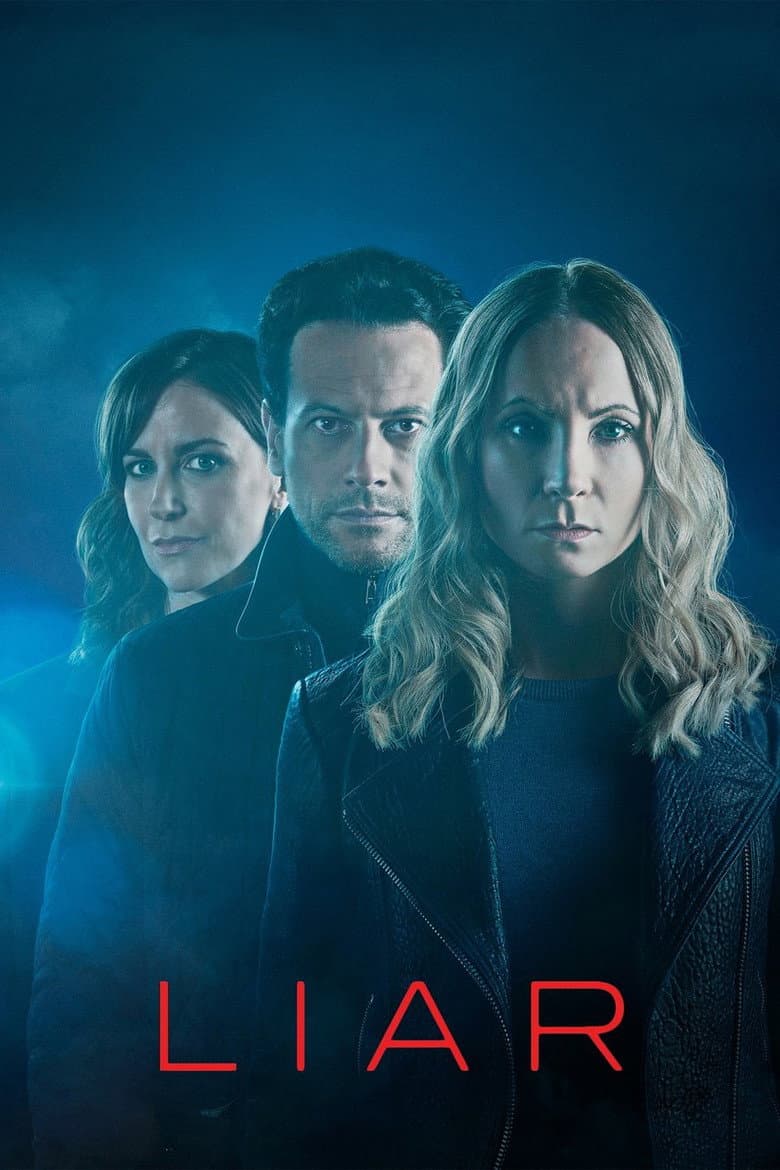
Started September 11, 2017 · Ended · Based on 2 seasons, 12 episodes through April 6, 2020 · TV-14 · 46 min
Laura Nielson is a secondary school teacher living on the Kent coast. After a date with Andrew Earlham, a surgeon and the father of one of her pupils, Laura wakes with no clear memory and believes he raped her. Andrew says the sex was consensual, so the first season makes the viewer question both accounts before Laura finds proof that he attacked other women. The second season begins after Andrew is found dead and follows the police hunt for his killer while Laura tries to rebuild her life. The tone is tense, bleak, and twist-heavy, with lies, secrets, and broken trust driving the plot.
The strongest woke element is the show's repeated focus on sexual assault, consent, victim-blaming, and the difficulty women face when they report a crime. Laura is a determined lead who investigates Andrew after the police struggle to help her, and the story later confirms that he is a serial rapist. The show also includes Vanessa Harmon, a woman detective who becomes one of Andrew's victims, and her wife Jennifer, making a same-sex marriage part of the supporting story. These themes matter to the plot, but the series stays focused on a crime mystery instead of wider party politics or a broad activist campaign.
Community feedback
Was our 41% Woke rating accurate?
Breakdown
These are the editorial factors and ratings behind our score for Liar.
Woke representation / casting
The show gives a recurring police role to Vanessa Harmon, played by a mixed-race woman, and it shows her wife Jennifer. The main family also includes Liam, played by a black actor, while women lead the teacher and police parts of the story. These choices fit a present-day English crime drama and are not sold as a diversity campaign.
16%
Woke political dialogue
The show repeatedly discusses consent, rape reports, and why people doubt women. Laura faces questions about her memory, drinking, and past, while the police debate whether the evidence is enough. Online users call her a slut and say she deserved the attack, so public victim-blaming becomes part of the story. Season two keeps the focus on survivor accounts and police questioning, but it has little party politics or slogan-like activist speech.
24%
Identity-driven story themes
Laura's trauma and fight to be believed shape the whole show. The story shows Andrew drugging and assaulting women, while other survivors help expose him as a serial rapist. The plot links female credibility, victim-blaming, male entitlement, and revenge to its main mystery. Season two keeps these themes through Laura's trauma, the many victims, and Vanessa's recovery, but the series remains a crime thriller rather than a broad identity-politics story.
48%
Western institutional / cultural critique
The police first fail to build Laura's case and later treat her as a murder suspect. The show also depicts online abuse, public doubt, and weak trust in law enforcement. These scenes criticize parts of the police system and social behavior, but they do not attack Western culture, Christianity, family life, or capitalism. Season two keeps this focus through a police murder inquiry.
32%
Woke character or canon changes
Not relevant. The series is an original crime story. It does not change an established character, canon, or historical figure.
0%
Anti-woke backlash and complaints
Not present. Public reaction focused on the rape mystery, the handling of sexual violence, and the season two ending. No clear anti-woke complaint about DEI, identity politics, or activist messaging was found.
0%
Creator track record context
Jack Williams and Harry Williams have stored scores of 10/100 each and no notable activist record. James Strong and Sam Donovan have stored scores of 15/100 and 14/100, while Eliza Mellor has 8/100. Chris Sweeney is the one higher-scored name at 41/100 because he co-hosts the LGBTQ-focused Homo Sapiens podcast, but he directed only two episodes. The overall creator context is low.
18%
Production
TV Show · 2022
A prisoner on death row in the US, a vicar in a quiet English town, and a maths teacher trapped in a cellar cross paths in the most unexpected way.

TV Show · 2021
Facing an existential threat that could bring down the Crime Lab, a brilliant team of forensic investigators must welcome back old friends and deploy new techniques to preserve…
TV Show · 2018
A troubled war veteran is assigned to protect a controversial politician who may be the target of a terror plot.

TV Show · 2024
A rising politician and his mute wife's tense marriage begins to unravel after a call from a kidnapper turns their lives upside down.
TV Show · 2025
A brash but brilliant cop becomes head of a new police department, where he leads an unlikely team of misfits in solving Edinburgh's cold cases.
TV Show · 2020
When an insidious supernatural force edges its way into a seemingly straightforward investigation into the gruesome murder of a young boy, it leads a seasoned cop and an…
TV Show · 2020
Grace and Jonathan Fraser are living the only lives they ever wanted. Overnight a chasm opens in their lives: a violent death and a chain of terrible revelations.

TV Show · 2020
Zoe Walker leaves her quiet life behind to investigate her brother's disappearance in Ibiza, where she quickly heads down a decadent and dangerous path.
