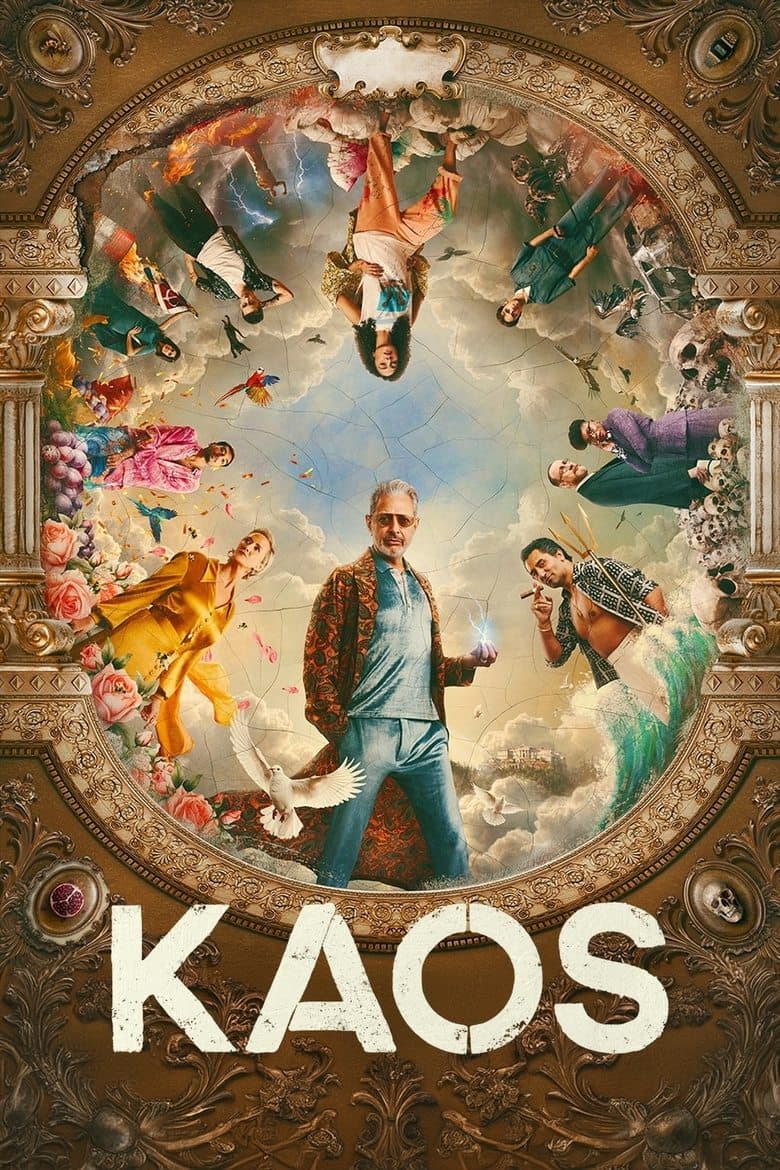
Started August 29, 2024 · Canceled · Based on 1 season, 8 episodes through August 29, 2024 · TV-MA
KAOS follows three people who are tied to a prophecy about the fall of Zeus and his family. Riddy dies after trying to leave her famous singer husband, while Ari fights her cruel father, President Minos, and Caeneus works among dead souls in the Underworld. Zeus rules a modern version of Crete from Mount Olympus, but his fear of losing power makes him more violent and reckless. The season mixes dark comedy, family drama, romance, and a rebellion against the gods.
Caeneus is a trans man whose identity shapes his history, his conflict with the all-female Amazons, his romance with Riddy, and his new power over dead souls. The show also includes a male same-sex relationship, sexually fluid gods, and several women who lead the fight against powerful men. The story treats rigid gender rules, forced worship, and male control as harmful while presenting personal freedom as a path to change. These ideas return across most of the eight episodes and help drive the prophecy and the final revolt.
Community feedback
Was our 85% Woke rating accurate?
Breakdown
These are the editorial factors and ratings behind our score for KAOS.
Woke representation / casting
The show places a black woman at the center as Riddy and gives another woman of color a major role as Ari. The gods and other leading figures also come from several ethnic backgrounds, and a trans actor plays the important role of Caeneus. The modern alternate setting can support a mixed cast, so the signal comes from repeated identity choices in major roles rather than one historical mismatch.
38%
Woke political dialogue
The show repeatedly presents the gods as corrupt rulers who use humans and hide the truth about death. The rebels and the Trojan 7 speak about freedom, unequal power, and resistance to a ruling family. The dialogue has little direct modern identity or party politics, so this factor is present but not dominant.
31%
Identity-driven story themes
Caeneus is a main prophetic hero whose trans identity shapes his past, exile, death, and return. The show gives him a romance with Riddy and makes him the person who can renew dead souls at the end. The season also includes a male same-sex relationship and gods who treat sexual rules as flexible. The story presents freedom from strict gender and sexual rules as part of the change that will defeat the old order.
78%
Western institutional / cultural critique
The show presents the gods as a wealthy family that uses human souls to keep its own power and long life. The worship system keeps ordinary people obedient and hides the truth about what happens after death. The story also attacks Zeus’s male control and makes Riddy, Ari, Hera, Persephone, and Medusa active forces of change. The Amazon society is also shown as unjust when it rejects Caeneus, so the criticism targets rigid power systems rather than only men.
50%
Woke character or canon changes
KAOS turns the ancient Caeneus story into a modern trans identity story. The show says Caeneus was born female, knew he was a boy, and was killed by the Amazons after they rejected him. The show also gives Theseus a male lover and presents several mythic figures through queer or gender-fluid choices. Other changes, such as making Orpheus a pop star and placing Minos in a modern state, are ordinary updates.
62%
Anti-woke backlash and complaints
A few small social-media accounts called the show too gay, woke, or typical liberal woke, and some Greek posts said Netflix mocked Greece with its queer gods. A mid-size culture-war TV account described the series as packed with LGBT plotlines and female-empowerment messaging. The reaction stayed fringe, with no large boycott, review-bombing drive, or major anti-woke campaign.
17%
Creator track record context
Charlie Covell is the main creative voice and has a strong queer and identity-focused record. Their earlier work addressed homophobia and transphobia, and their public comments support queer and trans representation in KAOS. The listed directors and producers have lower or less clear activist records. Covell raises this score, but the wider team does not show the same pattern.
57%
Production
TV Show · 2024
Jason Dessen is abducted into an alternate version of his life. To get back to his true family, he embarks on a harrowing journey to save them from the most terrifying foe…
TV Show · 2016
Hundreds of years from now, the last surviving humans discover the means of sending consciousness back through time, directly into people in the 21st century.

TV Show · 2022
The intricate and magical love story of Clare and Henry, and a marriage with a problem… time travel.
TV Show · 2018
Two strangers are drawn to a mysterious pharmaceutical trial that will, they're assured, with no complications or side-effects whatsoever, solve all of their problems…
TV Show · 2022
Gary is an emotional wreck and struggles to provide for his daughter since the death of his wife. Mary has a secret she can't bring herself to share with anyone.

TV Show · 2016
In his quest for a bride to break his immortal curse, a 939-year-old guardian of souls meets a grim reaper and a sprightly student with a tragic past.

TV Show · 2023
At the brink of going to hell, Yee-jae must cycle through twelve separate lives and twelve separate deaths in this reincarnation drama.
TV Show · 2016
An aging police sheriff who has recently lost his position due to an angry outburst begrudgingly joins an alliance with new sheriff, Evie Barret to battle angry demons haunting…
