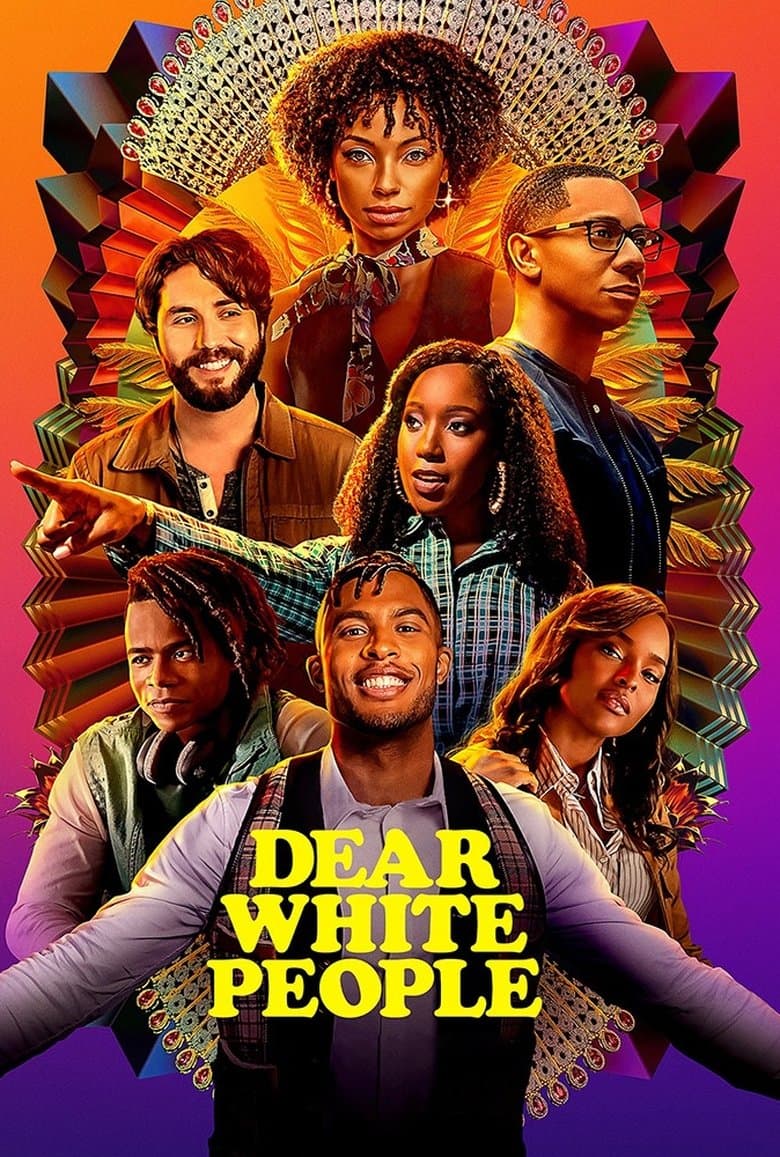
Started April 28, 2017 · Ended · Based on 4 seasons, 40 episodes through September 22, 2021 · TV-MA
Samantha White is a sharp film student at Winchester University, an elite college that says it has moved beyond racism. She hosts a radio show called “Dear White People” and challenges classmates, school leaders, and friends who excuse unfair treatment. Her friends include Troy, Coco, Joelle, Reggie, Lionel, and Gabe, and each faces a different fight over school, love, family, or identity. The show mixes jokes, romance, campus drama, and serious scenes about fear and anger.
Race is not a side issue because a blackface party, police threats, campus protests, and fights over a historically black dorm drive the story from the first season through the fourth. The show presents white privilege, racism inside the university, police bias, colorism, and the limits of student activism as real forces that shape the characters' choices. Lionel's coming out and life as a gay black man add a recurring queer story, while Sam, Coco, and Joelle face pressure tied to race, gender, faith, and color. Later seasons widen the message to online white nationalism, sexual misconduct, Trump-era politics, Black leadership, and a final season that uses a 1990s musical to revisit race and protest.
Community feedback
Was our 93% Woke rating accurate?
Breakdown
These are the editorial factors and ratings behind our score for Dear White People.
Woke representation / casting
The main cast is mostly Black because the story follows black students at a mostly white college, so the setting supports that choice. The show also puts a gay black man, several black women, and an interracial couple in major roles. Netflix presents the group as students of color facing bias and social injustice. The pattern makes representation easy to notice, but it is not a major mismatch with the story world.
32%
Woke political dialogue
Sam's radio show openly talks about racism, white privilege, blackface, and campus power. Students debate protest, police bias, free speech, colorism, sexual misconduct, and activism across all four seasons. Season 2 adds an alt-right troll, a rival “Dear Right People” show, and a secret group tied to the school's history. Season 3 targets Trump-era politics, and season 4 returns to protest and race through its campus show.
88%
Identity-driven story themes
The story is built around black students asking who they are and how much of that identity comes from other people's labels. Sam, Coco, Reggie, Troy, Joelle, and Lionel each face race-based pressure in school, family, work, or dating. Lionel's coming out and life as a gay black man form a continuing story, while colorism and interracial love shape other arcs. The final season still treats race, protest, Black leadership, and identity as the main subjects, even when it uses a 1990s musical style.
91%
Western institutional / cultural critique
Winchester is shown as a wealthy American institution that hides old racial power behind polite language. The university, its police, donors, dorm rules, and secret Order are repeatedly blamed for protecting white privilege. The show also attacks online conservatism, Trump supporters, and people who call racism a finished problem. It sometimes questions activist tactics, but its main picture of the institution is a system that must be exposed and changed.
79%
Woke character or canon changes
Not relevant. The series expands the 2014 film with new episodes and story lines. No established character or historical figure is changed in a specifically woke way.
0%
Anti-woke backlash and complaints
The launch trailer led right-leaning and alt-right accounts to call the show anti-white or racist and to push #NoNetflix. Some posts claimed it promoted “white genocide,” and some viewers said they canceled Netflix. News reports also described a flood of race-baiting complaints around the release. Later critics attacked season 3 for mocking Trump supporters as racist or linked to the KKK, and later posts called the show woke propaganda. The backlash was notable but scattered, with no clear organized campaign.
43%
Creator track record context
Cached context rates creator Justin Simien at 78/100 and links his work to black identity, activism, and being black and gay. Co-showrunner Yvette Lee Bowser is rated 90/100, while writer Jaclyn Moore is rated 69/100 and directors Barry Jenkins and Tina Mabry are rated 78/100 and 87/100. Several other listed writers and directors also have recurring race, gender, sexuality, or representation-focused work. This gives the creative team a strong track record context score, but it remains supporting evidence.
80%
Production
TV Show · 2019
Tony had a perfect life. But after his wife Lisa suddenly dies, Tony changes. After contemplating taking his own life, he decides instead to live long enough to punish the world…
TV Show · 2016
Rebellious Mickey and good-natured Gus navigate the thrills and agonies of modern relationships.
TV Show · 2023
The lives of a realtor, a plumber and a former tennis star unexpectedly collide, exposing America’s obsession with true crime, murder and the slow-close toilet seat.

TV Show · 2019
In a city of coaching centers known to train India’s finest collegiate minds, an earnest but unexceptional student and his friends navigate campus life.

TV Show · 2020
New passions. New fashions. New Emily? A plucky American marketing whiz spreads her wings in life and love after landing her dream job in Paris.
TV Show · 2016
Set nearly a decade after the finale of the original series, this revival follows Lorelai, Rory and Emily Gilmore through four seasons of change.
TV Show · 2016
In his funky California beach enclave, Chip's the go-to guy for personal insights. But he isn't quite as enlightened when it comes to his own baggage.
TV Show · 2019
A group of working-class friends finding unconventional ways to win at life in suburban northern England. These lads have dealt, scammed, bribed and conned their way through…
