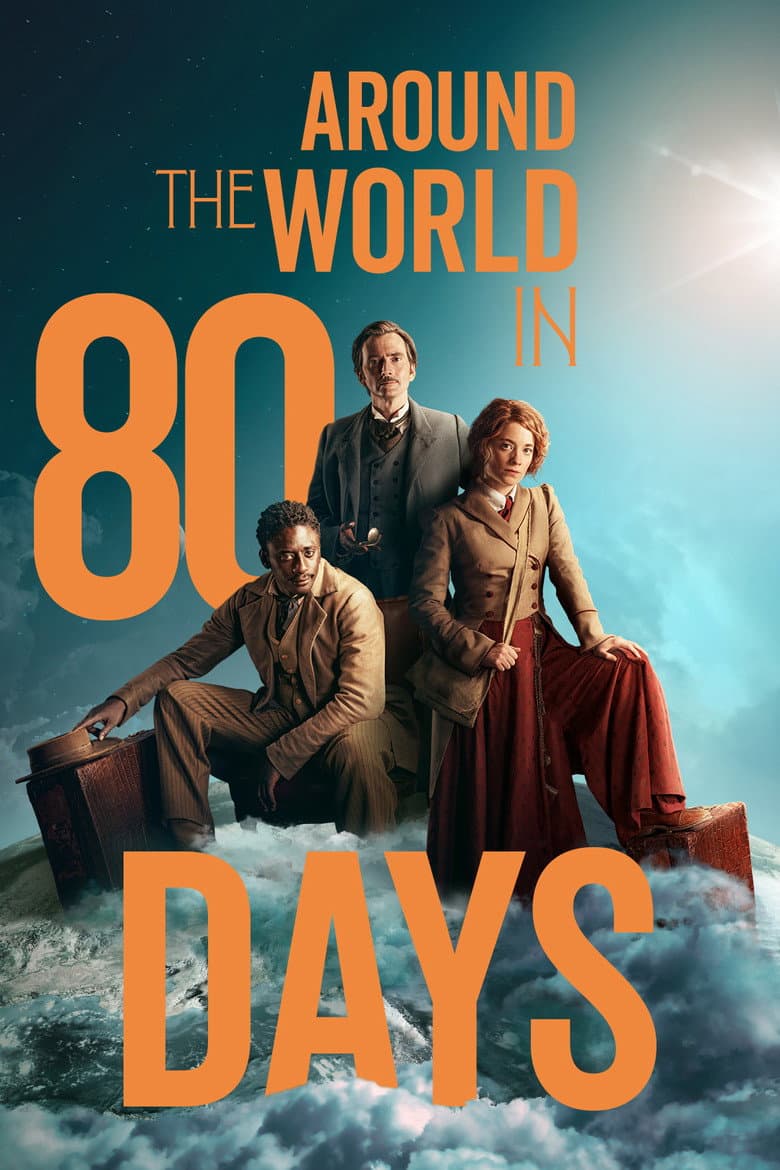
Started December 5, 2021 · Ended · Based on 1 season, 8 episodes through December 26, 2021 · TV-14 · 50 min
Phileas Fogg is a wealthy and nervous Englishman who has spent most of his life hiding in a London club. After a newspaper story and a risky bet, he sets out to travel around the world in 80 days. His clever French valet Passepartout and Abigail Fix, a young reporter, join him. Their route moves through Europe, the Middle East, India, Hong Kong, the Pacific, and the American West before they race back to London. The tone is a colorful family adventure with danger, jokes, romance, and a strong focus on personal change.
The show gives the journey a modern social edge through its three-person team. Passepartout is a Black French man whose family history, work, and treatment by others shape several episodes. Abigail is a woman trying to earn her own name as a journalist while her father and other men limit her choices. The story also questions British empire, class power, army rule in India, the Klan, and racism in America, but these ideas share space with trains, deserts, storms, theft, and the race against time. The main message is that travel changes Fogg from a fearful rich man into a more caring and open companion.
Community feedback
Was our 63% Woke rating accurate?
Breakdown
These are the editorial factors and ratings behind our score for Around the World in 80 Days.
Woke representation / casting
The main group combines a white British man, a Black French valet, and a female journalist. The story gives all three major roles and lets each person drive important parts of the journey. Passepartout’s casting changes the novel’s white French servant into a Black French man. The show also presents itself as a modern and international version of the classic.
40%
Woke political dialogue
Several episodes speak clearly about British power and racial violence. In India, Aouda says the British were looking for places to plant tea, and Fogg challenges an army officer. In America, Bass Reeves speaks about civil rights, Black killings, and the Klan. These ideas recur, but they remain inside the period adventure instead of becoming present-day speeches.
33%
Identity-driven story themes
Abigail’s story repeatedly centers on a woman seeking a byline and control over her work. Passepartout’s story adds a Black French lead whose family history and treatment by white people matter to the plot. Episode 7 makes race and civil rights central through Bass Reeves and a Klan prisoner. The series also asks its British hero to face the harm linked to empire, while adventure remains the main focus.
45%
Western institutional / cultural critique
The show questions elite British power and old social rules across the season. The Reform Club men mock Fogg and assume that people should stay in their place. Abigail’s father blocks her byline because she is his daughter, and the story supports her demand for a career. The American episode condemns the Klan through a black law officer. These ideas matter, but the trip and character growth remain the main story.
38%
Woke character or canon changes
The series changes the book’s white French servant into a Black French man named Passepartout. It replaces Scotland Yard detective Fix with Abigail Fix, a young journalist who becomes a lead traveler. It removes Aouda’s original journey with Fogg and gives the woman traveler role to Abigail instead. It also makes Fogg timid and troubled, but that change is ordinary character updating rather than an identity change.
55%
Anti-woke backlash and complaints
A small group of viewers called the series “woke nonsense” after its premiere. Their complaints focused on the Black casting of Passepartout, the female version of Fix, and changes from Verne’s book. Right-leaning coverage also attacked Tennant’s comments about British Empire traditions. The wider reaction was mixed, and no large campaign developed.
18%
Creator track record context
David Tennant is a producer and public LGBTQ+ and trans-rights ally. Ashley Pharoah has described the series as a way to show other cultures, food, and languages after a period of British isolation. Caleb Ranson and most of the stored writing and directing profiles have low scores and no clear activist pattern. The context gives the title some creator-related weight, but one strong public voice does not define the whole team.
32%
Production
TV Show · 2019
The life of Christ through the eyes of those who encountered him.
TV Show · 2016
In 1935, financially strapped widow Louisa Durrell, whose life has fallen apart, decides to move from England, with her four children (three sons, one daughter), to the island of…

TV Show · 2024
Knuckles embarks on a hilarious and action-packed journey of self-discovery as he agrees to train Wade as his protégé and teach him the ways of the Echidna warrior.
TV Show · 2017
The orphaned Baudelaire children face trials, tribulations and the evil Count Olaf, all in their quest to uncover the secret of their parents' death.

TV Show · 2022
Lightning McQueen and his best friend Mater head east from Radiator Springs on a cross-country road trip to meet up with Mater’s sister.
TV Show · 2021
A Deputy Marshal inherits an unruly dog who helps him solve crimes and investigate a family mystery.
TV Show · 2018
The Boss Baby brings his big brother Tim to the office to teach him the art of business in this animated series sprung from the hit film.

TV Show · 2022
When an explosive battle with Dr. Eggman shatters the universe, Sonic races through parallel dimensions to reconnect with his friends and save the world.
