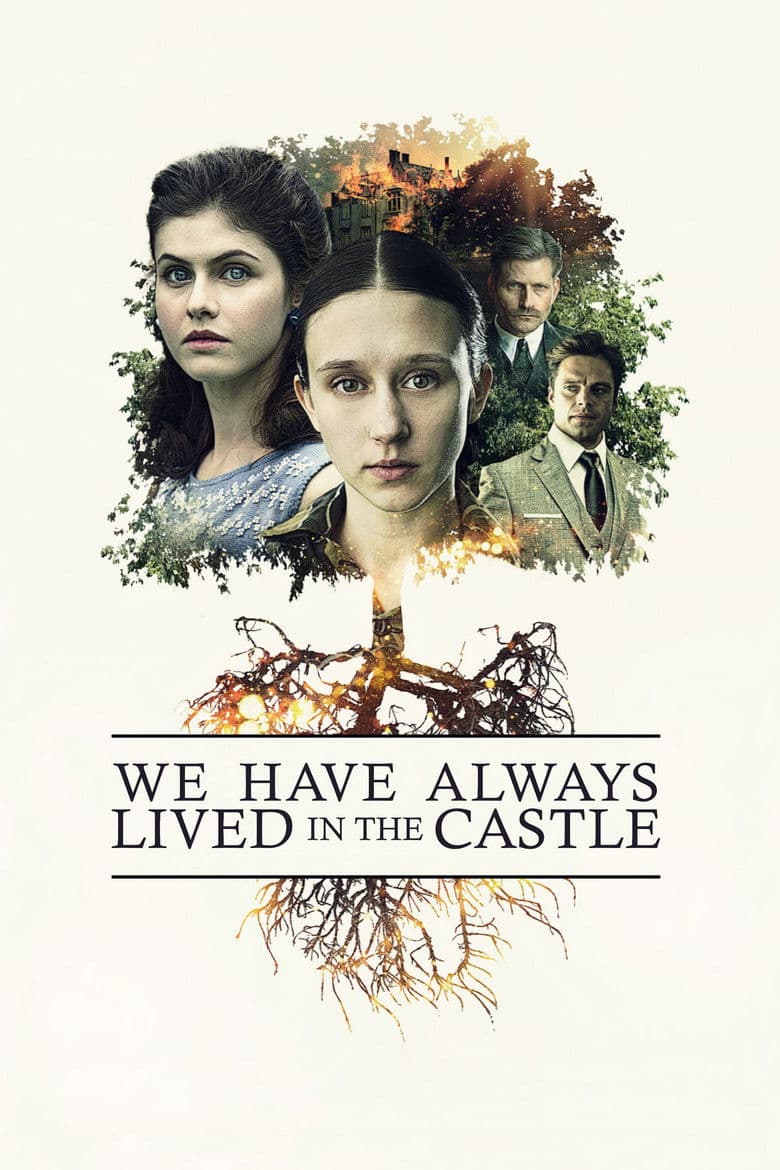
Merricat Blackwood lives with her older sister Constance and their sick uncle Julian in a large house above a small Vermont town. Six years after most of the family died from poison, the sisters stay away from town because people still blame Constance. Merricat uses strange spells, hidden objects, and strict routines to guard the house and keep her sister close. Their quiet life turns dangerous when cousin Charles arrives and starts looking for the family money. The movie has a slow, eerie, and dark fairy tale tone.
The main woke element is a strong female-centered story about control and escape. Merricat protects Constance, while Charles tries to control the house, the money, and Constance’s choices. The sisters reject his authority, and Merricat kills him after he attacks Constance. The town also shames and punishes the women through gossip and a violent mob. The film supports the sisters’ bond and shows male control as a threat, but it uses a Gothic family mystery instead of modern political speeches or identity campaigns.
Community feedback
Was our 33% Woke rating accurate?
Breakdown
These are the editorial factors and ratings behind our score for We Have Always Lived in the Castle.
Woke representation / casting
Not present. The main cast is white and fits the story’s Vermont setting. The sisters’ leading roles come from the 1962 novel, not from a diversity-first casting message.
0%
Woke political dialogue
Not present. The film has no modern identity, DEI, or activist speeches. Its spoken conflict concerns family secrets, gossip, control, and survival.
0%
Identity-driven story themes
Merricat acts as the main protector of the home and Constance. Charles tries to control the house, the money, and Constance, and he uses the role of the male helper to do it. The sisters reject his authority, and Merricat kills him after he attacks Constance. This gives the story a clear female-versus-male-control shape, but the movie presents it as a dark family mystery rather than a current activist message.
38%
Western institutional / cultural critique
The film shows the townspeople shunning the sisters, mocking them, and destroying their home. It also shows the dead father and Charles using male authority to control women. These scenes criticize social pressure and men who believe they should rule the family. The movie does not turn that criticism into a broad attack on modern Western institutions.
20%
Woke character or canon changes
Not relevant. The movie adapts Shirley Jackson’s novel without a reported race, gender, sexuality, or hero-role swap.
0%
Anti-woke backlash and complaints
Not present. The separate X research found no anti-woke posts, boycott talk, or review-bombing. Web reviews and audience comments focused on pace, tone, and the adaptation rather than claims that the film pushes DEI or identity politics.
0%
Creator track record context
Stacie Passon has a cached score of 73/100 because her work includes lesbian relationships and prominent queer storylines. Shirley Jackson and Mark Kruger have cached scores of 16/100 and 9/100, with no strong modern activist record. Michael Douglas has a cached score of 42/100 because of his progressive political work, while the other producers and casting director score low. This creates moderate background context, but it does not prove that this movie carries a modern identity message.
45%
Production

Movie · 2020
A fur trapper leaves his wife and daughter behind to kill a rogue wolf in the remote wilderness, but they soon become increasingly worried when their peaceful existence is…
Movie · 2016
A psychologist who begins working with a young boy who has suffered a near-fatal fall finds himself drawn into a mystery that tests the boundaries of fantasy and reality.

Movie · 2025
Violet, a widowed mother on her first date in years, arrives at an upscale restaurant where she is relieved that her date, Henry, is more charming and handsome than she expected.
Movie · 2021
A psychiatrist, whose client commits suicide, finds his family life disrupted after introducing her surviving brother to his wife and daughter.
Movie · 2018
Following the death of the Leigh family matriarch, Annie and her children uncover disturbing secrets about their heritage.
Movie · 2022
When the CIA discovers one of its agents leaked information that cost more than 100 people their lives, veteran operative Henry Pelham is assigned to root out the mole with his…
Movie · 2022
Stranded at a rest stop in the mountains during a blizzard, a recovering addict discovers a kidnapped child hidden in a car belonging to one of the people inside the building…

Movie · 2019
Newcomer Evan joins a group of teens on a getaway in Joshua Tree. While exchanging ghost stories around the campfire, Evan reads aloud a mysterious chant from an internet site.
