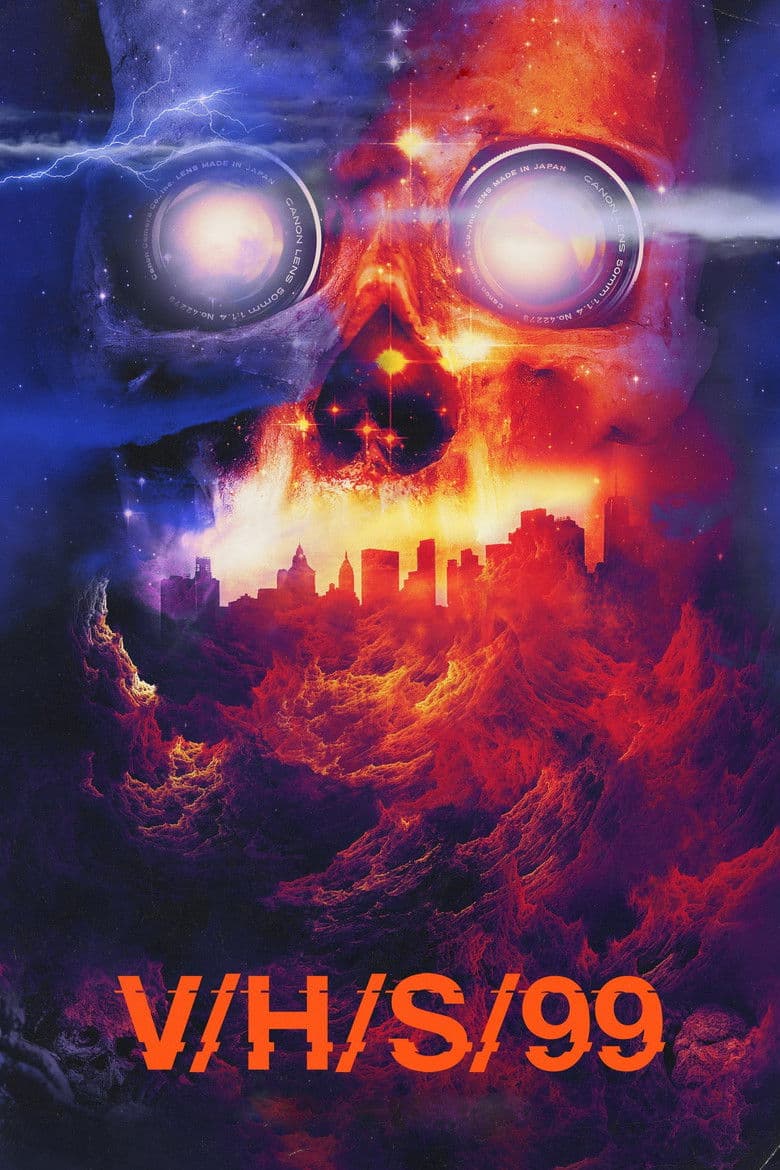
V/H/S/99 is a horror anthology set in the last days of 1999, when home video, punk clips, teen pranks, and Y2K fear shape the world. The movie has no single hero, so each short follows new people as they make bad choices and face a new danger. A punk group enters a burned club, a college student accepts a cruel sorority test, and a girl is hurt on a brutal children's game show, while two other stories follow spying boys and filmmakers who fall into Hell. The tone is loud, bloody, crude, and often comic, and many endings turn bad behavior into revenge.
The clearest identity-driven element appears in “The Gawkers,” where teenage boys use cameras and spyware to watch a woman because they treat her as a sexual object. The movie makes their male entitlement the reason for the attack that follows, but this idea stays inside one short segment. “Shredding” also centers on an all-girl punk band, and “Ozzy’s Dungeon” follows a black girl whose family seeks a wish after a television show leaves her badly injured. These parts add female-centered revenge, child exploitation, and a mixed cast, but the anthology still focuses more on shock horror, crude jokes, and period nostalgia than on a broad political message.
Community feedback
Was our 34% Woke rating accurate?
Breakdown
These are the editorial factors and ratings behind our score for V/H/S/99.
Woke representation / casting
The movie repeatedly puts women in visible roles, including an all-girl punk band, a sorority pledge, a female gorgon, a black girl and her mother, and a female demon guide. The movie also gives the black family a major segment and makes women central to several threats and revenge plots. The roles come from each segment’s setting and horror plot rather than a direct diversity message.
18%
Woke political dialogue
Not present. The dialogue uses crude jokes, sexual talk, Y2K fears, and game-show banter. It does not push identity, DEI, or activist ideas.
0%
Identity-driven story themes
The Gawkers makes teenage boys’ sexual spying and objectification of a woman the cause of their deaths. The woman becomes a Medusa-like monster and punishes the boys after they use binoculars and spyware against her. Ozzy’s Dungeon also shows a television show using children for dangerous spectacle, while a girl’s family seeks revenge after she is badly hurt. These ideas matter in two segments, but the anthology presents them as short revenge-horror plots instead of a wide political message.
34%
Western institutional / cultural critique
Ozzy’s Dungeon shows a children’s television show that treats injured contestants as disposable and sells an impossible promise of a wish. The Gawkers treats male entitlement and sexual spying as behavior that deserves a violent answer. These criticisms appear in two short stories and do not grow into a wider attack on family, religion, capitalism, or Western institutions.
24%
Woke character or canon changes
Not relevant. The movie uses original anthology stories and a loose Medusa reference, but it does not change a known character, franchise canon, or historical person.
0%
Anti-woke backlash and complaints
A small cluster of Reddit posters warned before release that V/H/S/99 might repeat the “woke” wraparound and militia material from V/H/S/94. Other posters objected to claimed anti-fascist or anti-Trump views among the production team and used “go woke go broke.” The complaints were fringe, came from one pre-release thread, and did not point to a specific scene in V/H/S/99.
18%
Creator track record context
The stored scores for the directors and writers are mostly low to modest, and their public work is mainly horror and genre entertainment. Flying Lotus has the highest director score at 37 because of black representation work and public opposition to Trump-era politics. Maggie Levin is scored 27 and Zoe Cooper 27, with some women-centered or identity-focused work in their backgrounds. The producers and casting directors are mostly low-scoring genre professionals, so creator context raises the score only slightly.
22%
Production
Movie · 2017
Two sisters on Mexican vacation are trapped in a shark observation cage at the bottom of the ocean, with oxygen running low and great whites circling nearby, they have less than…
Movie · 2026
College student Lucy and her friends spend their vacation at her family's home in Hawaii, which includes her pet chimpanzee, Ben.
Movie · 2025
Four years after defeating The Grabber, Finney Blake is struggling with life after captivity. When his younger sister Gwen begins receiving calls in her dreams from the Black…
Movie · 2019
When a huge hurricane hits her hometown in Florida, Haley ignores evacuation orders to look for her father. After finding him badly wounded, both are trapped by the flood.
Movie · 2019
A rebellious teenage boy, struggling with his parents' imminent divorce, encounters a terrifying evil after his next-door neighbor becomes possessed by an ancient witch that…
Movie · 2024
A group of criminals kidnap a teenage ballet dancer, the daughter of a notorious gang leader, in order to obtain a ransom of $50 million, but over time, they discover that she is…
Movie · 2025
When Polly receives a mysterious box, it comes with one rule: place inside something she needs, something she hates, and something she loves.
Movie · 2025
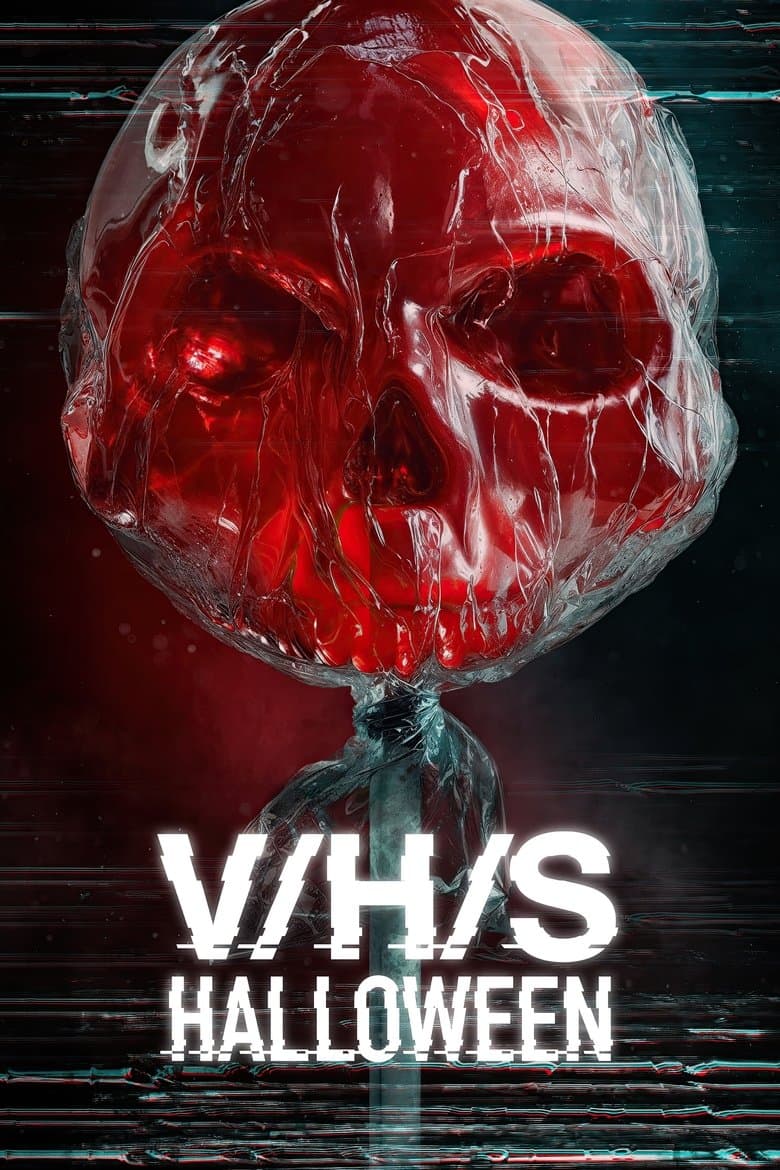
A collection of Halloween-themed videotapes unleashes a series of twisted, blood-soaked tales, turning trick-or-treat into a struggle for survival.
