Movie review
December 18, 2017 · 160 min · PG-13 · Hindi · Action · Thriller · Adventure
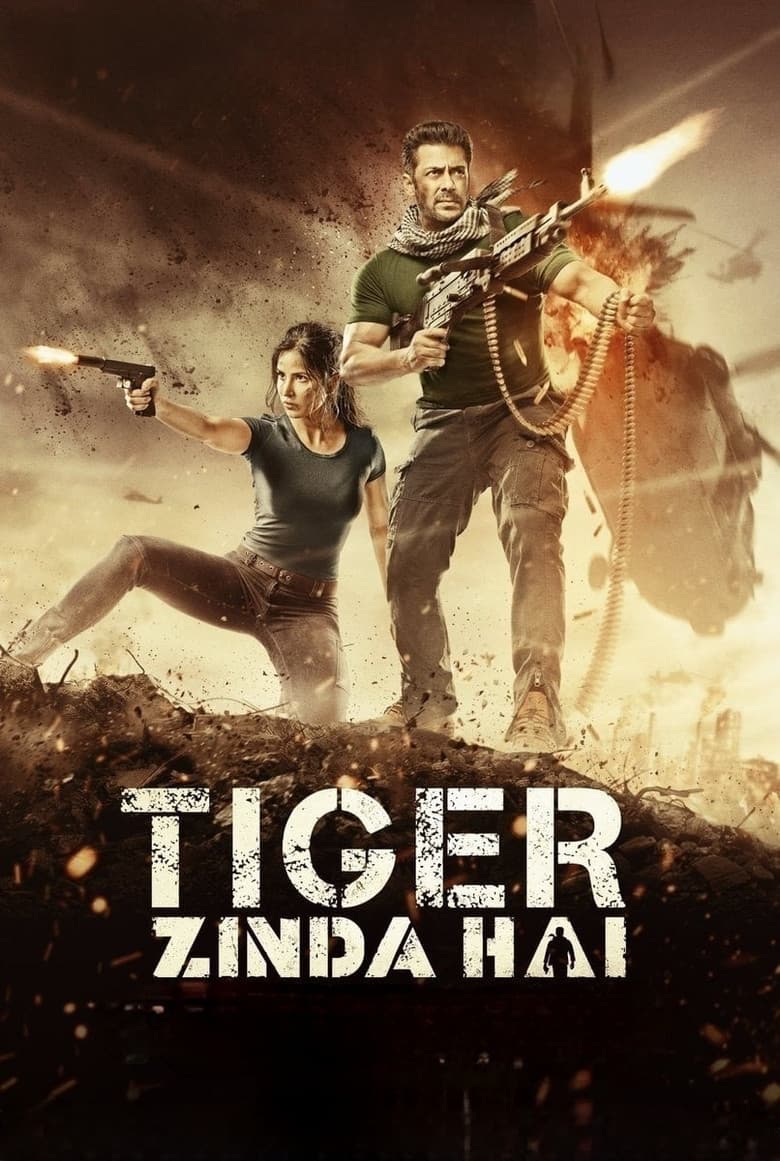
Tiger is a retired Indian intelligence agent who lives quietly in the Austrian Alps with Zoya, his wife and former Pakistani intelligence agent. He returns when an Iraqi terrorist group takes Indian and Pakistani nurses hostage in a hospital. The rescue team has seven days before an American airstrike destroys the building and everyone inside. Tiger and Zoya lead a loud, emotional spy adventure filled with gunfights, jokes, romance, patriotism, and huge action scenes.
The clearest woke elements come from the film’s repeated message that Indian and Pakistani agents should work together for humanity. The story treats ordinary people on both sides as worth saving and ends with Indian and Pakistani flags raised together. Zoya is a major action hero who fights armed men, saves Tiger more than once, and shares the rescue mission with him. One short scene calls a woman’s victory “women’s empowerment,” while the film still keeps Tiger as the main hero and presents patriotism as a strong virtue.
Community feedback
Was our 52% Woke rating accurate?
Breakdown
These are the editorial factors and ratings behind our score for Tiger Zinda Hai.
Woke representation / casting
The film gives Zoya, a Pakistani ISI agent, a major heroic spy role beside Tiger. Zoya repeatedly fights armed men and saves people during the rescue. The nurses are mostly women and remain central to the hostage story. The Indian, Pakistani, Iraqi, Iranian, and American casting fits the international setting, so the visible gender signal is clear but the wider diversity pattern is limited.
34%
Woke political dialogue
Tiger says the two countries may never solve every problem, but the rescue is about humanity. Zoya says ordinary Pakistanis want peace. The agents repeat ideas about brotherhood and working together across the border. A short scene calls a woman’s victory “women’s empowerment,” while the film also repeats patriotic lines about India.
36%
Identity-driven story themes
The rescue treats Indian and Pakistani lives as equally worth saving. The story makes cross-border teamwork the moral answer to national rivalry. Zoya is repeatedly shown as a skilled fighter rather than a helpless wife, and the film links her strength to a small argument about cooking at home. Tiger remains the main hero, so the identity messaging is important but not dominant.
44%
Western institutional / cultural critique
Not present. The CIA airstrike creates a plot deadline, but the film does not make a sustained attack on Western culture or institutions.
0%
Woke character or canon changes
Not relevant. The sequel keeps Tiger as a RAW agent and Zoya as an ISI agent. It adds a new mission but does not change their established identities.
0%
Anti-woke backlash and complaints
Right-leaning Indian users repeatedly called the RAW-ISI alliance Aman-ki-Asha or leftist propaganda because the film treats Pakistani agents as partners. Some posts also accused the film of softening Pakistan and helping terrorists look better. Pakistan’s censor board refused permission to screen the film after saying it damaged the image of Pakistan and its agencies. The complaints had some repeated reach but no organized boycott, and the main 2017 audience reaction was positive.
38%
Creator track record context
Ali Abbas Zafar has a repeated pattern of capable women and socially inclusive stories. Aditya Chopra and Mukesh Chhabra have backed women-centered projects or wider entry to major roles. Neelesh Misra focuses on ordinary people and public-interest stories, while Abdul Rafay Chandio Baloch and Shanoo Sharma add little activist signal. The group suggests a moderate representation-aware context rather than a strong partisan or activist persona.
44%
Production
Movie · 2018
Framed and on the run, a former FBI agent must save his family from a blazing fire in the world's tallest building.
Movie · 2025
Ethan Hunt and team continue their search for the terrifying AI known as the Entity — which has infiltrated intelligence networks all over the globe — with the world's governments…
Movie · 2016
The most dangerous former operative of the CIA is drawn out of hiding to uncover hidden truths about his past.
Movie · 2018
Thomas leads his group of escaped Gladers on their final and most dangerous mission yet. To save their friends, they must break into the legendary Last City, a WCKD-controlled…
Movie · 2023
After a heroic job of successfully landing his storm-damaged aircraft in a war zone, a fearless pilot finds himself between the agendas of multiple militias planning to take the…
Movie · 2022
The blood-soaked land of Kolar Gold Fields (KGF) has a new overlord now - Rocky, whose name strikes fear in the heart of his foes.
Movie · 2019
Shown from the perspective of a young submariner with unusually sensitive hearing and uncannily precise sound recognition.
Movie · 2016
A young civil war veteran is forced on a desperate journey to save his kidnapped wife.
