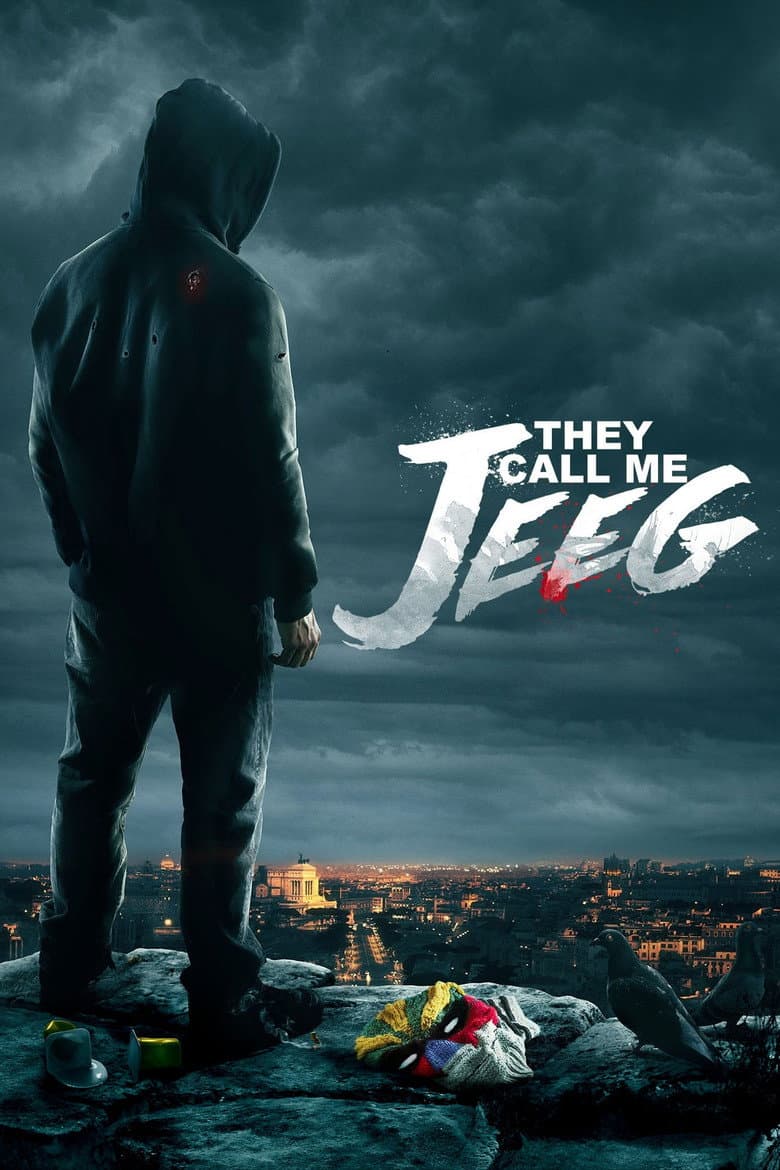
Enzo Ceccotti is a lonely thief who lives in Tor Bella Monaca, a rough area on the edge of Rome. After he falls into the polluted Tiber, radioactive waste gives him great strength and a body that can heal from serious harm. Enzo first uses his power to steal money, but a violent gangster soon hunts him for a larger crime. The film mixes bloody action, dark jokes, crime drama, and a strange love story.
Alessia is a troubled woman who has survived abuse, and she believes that Enzo is the hero from her favorite Steel Jeeg cartoon. Her belief in him pushes Enzo to care about another person and to protect people he once hated. The story gives much of its attention to two lonely outsiders and to the broken neighborhood around them. The villain also uses makeup, performs songs by female singers, and has a brief sexual scene with Marcellone, a trans woman. The film shows a brutal sexual assault and uses Alessia's pain to complete Enzo's change, which makes the romance and hero story deeply uncomfortable.
Community feedback
Was our 40% Woke rating accurate?
Breakdown
These are the editorial factors and ratings behind our score for They Call Me Jeeg.
Woke representation / casting
The film includes Marcellone, a transgender woman, in a short but visible supporting role. She lends money to the male villain and appears in a sexual scene before the crime plot turns violent. The film also gives Nunzia a leadership role as a feared crime boss. These choices add some visible gender and sexuality variety, but the movie does not frame them as a wider diversity message.
25%
Woke political dialogue
Not present. The film has background news about terrorism, budget cuts linked to the IMF, an economic crisis, and emergency laws. Characters do not give speeches about gender, race, DEI, or identity politics. The queer wording in one insult is crude abuse, not a positive identity message.
0%
Identity-driven story themes
The film repeatedly centers people who live outside ordinary social life. Alessia has serious mental health problems and past abuse, and her belief in a male hero drives Enzo’s moral change. Zingaro uses makeup, performs songs by female singers, and has a sexual encounter with Marcellone, a trans woman. The story makes these outsider and gender themes visible, but it does not present a modern activist program or a girlboss message.
40%
Western institutional / cultural critique
The film opens with news about an economic crisis, budget cuts linked to the IMF, emergency laws, and violence in Rome. The story also shows a neglected suburb where gangs and public corruption shape daily life. These details give the film a mild social critique. The movie does not attack capitalism, Christianity, family life, or conservative beliefs.
18%
Woke character or canon changes
Not relevant. The film uses Steel Jeeg as a reference, but it does not recast or change the anime’s established characters. Enzo is a new character who is mistaken for Hiroshi Shiba.
0%
Anti-woke backlash and complaints
Not present. No anti-woke complaints were found on X. Web searches found mostly praise and some detailed criticism of Alessia’s abuse and gender portrayal, but those complaints did not say the movie was too woke. One isolated reviewer praised the film by contrasting it with “woke” Marvel films, which is approval rather than backlash.
0%
Creator track record context
Mainetti and writers Guaglianone and Menotti often center outsiders, prejudice, and people treated as different. Their wider work connects that focus to belonging, social exclusion, and changing stereotypes. Menotti has also criticized rigid American-style identity rules and mandatory diversity programs. This film matches their outsider focus but does not use modern identity slogans.
55%
Production
Movie · 2018
Earth is peaceful following the Tournament of Power. Realizing that the universes still hold many more strong people yet to see, Goku spends all his days training to reach even…
Movie · 2016
Scientist turned Entrepreneur Dr. Sethuraman tries to safeguard his newly invented time travel device from falling into the hands of his Evil Twin Brother Aathreya.

Movie · 2018
An astronomer becomes obsessed with searching the cosmos for signs of life beyond Earth which leads to a shocking discovery.
Movie · 2022
An endearing outlier, Brian lives alone in a Welsh valley, inventing oddball contraptions that seldom work. After finding a discarded mannequin head, Brian gets an idea.
Movie · 2018
Struggling to find his place in the world while juggling school and family, Brooklyn teenager Miles Morales is unexpectedly bitten by a radioactive spider and develops…
Movie · 2018
All the major DC superheroes are starring in their own films, all but the Teen Titans, so Robin is determined to remedy this situation by getting over his role as a sidekick and…
Movie · 2024
Gru and Lucy and their girls—Margo, Edith and Agnes—welcome a new member to the Gru family, Gru Jr., who is intent on tormenting his dad.

Movie · 2020
Powered with incredible speed, Sonic The Hedgehog embraces his new home on Earth. That is, until Sonic sparks the attention of super-uncool evil genius Dr. Robotnik.
