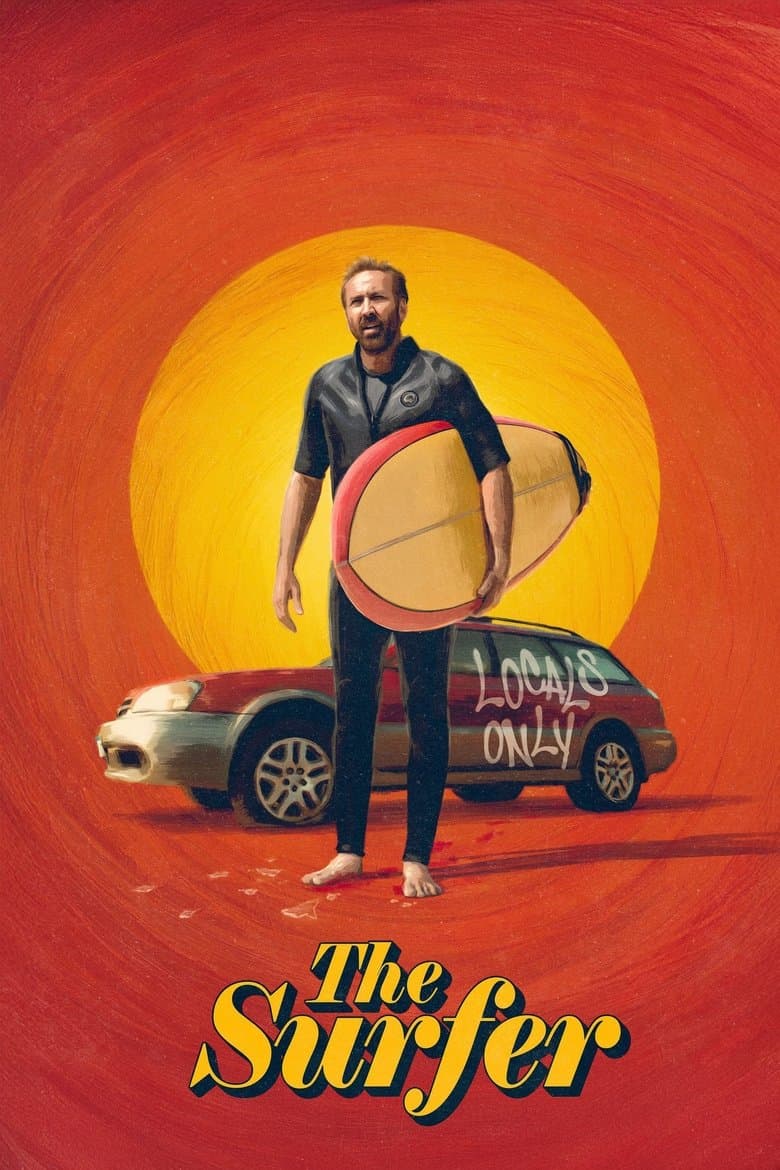
An unnamed Australian-born man returns to Luna Bay with his teenage son to surf at the beach where he grew up. He also wants to buy back his late father’s house and rebuild his broken family. A local gang blocks him from the water, steals his board, damages his car, and turns the car park into a trap. Heat, hunger, humiliation, and old pain push him into a strange fight for his memory, his pride, and his grip on reality.
The film makes male pride and aggressive male group behavior part of the main conflict. Scally, a rich self-help leader, sells a harsh idea of manhood built on pain, loyalty, and control. His followers use hazing, threats, and violence against people who do not belong, while a police officer protects the group. The story also questions the man’s wish to fix his family and identity by buying a house, but it stays a surreal thriller instead of becoming a broad political speech.
Community feedback
Was our 41% Woke rating accurate?
Breakdown
These are the editorial factors and ratings behind our score for The Surfer.
Woke representation / casting
Not present. The film does not make race, sex, or other identity a casting message. Its supporting roles include different Australian backgrounds, but the story gives no repeated representation-first pattern or identity-based hero role.
0%
Woke political dialogue
Scally tells men that modern life has made them soft and that pain, loyalty, and inner strength will make them whole. His speeches help recruit and control the beach gang. The film presents this as a harmful social creed, but it does not argue about elections, parties, or public policy.
18%
Identity-driven story themes
The film makes male pride, belonging, and violence central to the story. The Surfer tries to recover his family and his place by proving himself to a hostile group of men. Scally sells an aggressive model of manhood through hazing, loyalty tests, and control. The story treats that model as harmful and links it to trauma, but it does not center race, sexuality, or DEI politics.
42%
Western institutional / cultural critique
The film repeatedly attacks a local culture that treats a public beach as male property. The gang uses hazing and violence to keep outsiders out, and a police officer protects its power. The story presents Scally as a rich self-help figure who sells male dominance as a life lesson. These ideas shape the main conflict, although the film stays focused on one strange beach fight.
46%
Woke character or canon changes
Not relevant. The Surfer is an original story with unnamed fictional characters. It does not change an established character, canon, or real historical figure.
0%
Anti-woke backlash and complaints
Not present. Searches found no meaningful anti-woke campaign or large complaint. A small conditional concern about the film feeling preachy did not become a clear complaint about woke or DEI content.
0%
Creator track record context
Lorcan Finnegan’s stored record shows mild social criticism about money, business power, and male violence, with no known DEI activism. Robert Connolly has a stronger progressive record through anti-corporate, anti-war, and environmental films. Thomas Martin and most other stored crew profiles have little or no activist record. The group gives mild supporting context rather than a strong identity-driven pattern.
25%
Production

Movie · 2021
A truffle hunter who lives alone in the Oregon wilderness must visit Portland to find the mysterious person who stole his beloved foraging pig.
Movie · 2021
A head chef balances multiple personal and professional crises at a popular restaurant in London.

Movie · 2025
Marty Mauser, a young man with a dream no one respects, goes to hell and back in pursuit of greatness.
Movie · 2016
Irish Commandant Pat Quinlan leads a stand off with troops against French and Belgian Mercenaries in the Congo during the early 1960s.

Movie · 2020
2038: George Almore is working on a true human-equivalent AI, and his latest prototype is almost ready. This sensitive phase is also the riskiest as he has a goal that must be…

Movie · 2021
An ambitious carnival man with a talent for manipulating people with a few well-chosen words hooks up with a female psychologist who is even more dangerous than he is.

Movie · 2016
An American Ambassador is killed during an attack at a U.S. compound in Libya as a security team struggles to make sense out of the chaos.
Movie · 2024
While awaiting the next fuel truck at a middle-of-nowhere Arizona rest stop, a traveling young knife salesman is thrust into a high-stakes hostage situation by the arrival of two…
