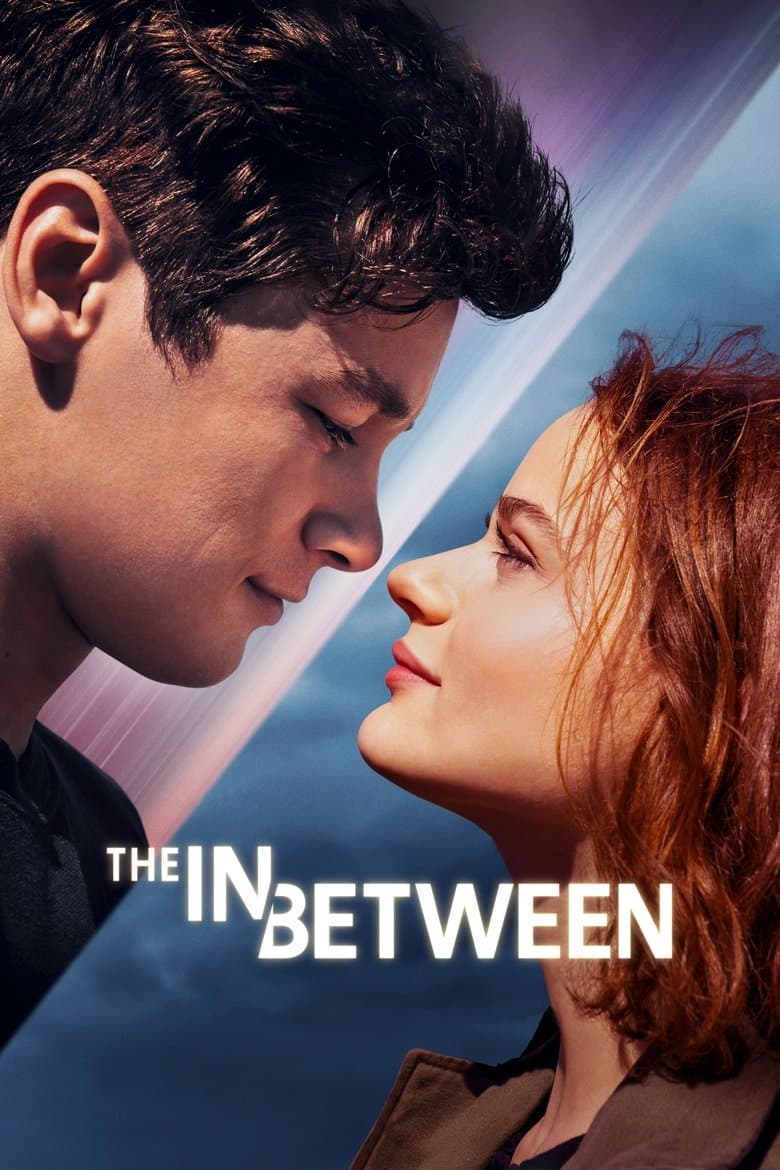
The In Between follows Tessa, a teenage photographer who has spent much of her childhood moving through foster homes. She lives in a coastal American town and keeps people at a distance because she expects love to end badly. She meets Skylar at a French movie screening, and their short romance grows through dates, family talks, and shared interests. A car crash kills Skylar and badly injures Tessa, so the film follows her grief as she tries to reach him in a strange space between life and death. The tone is soft, romantic, sad, and sometimes supernatural, with a hopeful ending about healing and choosing to keep living.
The main audience-visible woke element is brief LGBTQ+ representation outside the central romance. Two high school boys kiss in a hot tub, and a woman says that she has loved a woman. These moments are clear but short, and they do not drive Tessa's choices, her bond with Skylar, or the main conflict. The story mainly supports love, memory, family support, artistic growth, and moving past fear after a sudden death.
Community feedback
Was our 9% Woke rating accurate?
Breakdown
These are the editorial factors and ratings behind our score for The In Between.
Woke representation / casting
Not present. The film has a mixed supporting cast, but it does not make that mix an identity statement. The casting fits a modern American teen story and does not clearly go beyond what the setting allows.
0%
Woke political dialogue
Not present. The dialogue deals with grief, love, family trouble, school, and the afterlife. It does not argue for a political program or use activist slogans.
0%
Identity-driven story themes
A brief scene shows two high school boys kissing in a hot tub. Another line has a woman say that she has loved a woman. These moments are visible LGBTQ+ content, but they are side details and do not shape Tessa’s central romance, grief, or decision to live.
10%
Western institutional / cultural critique
Not present. The film shows Tessa’s foster care past, family separation, and reckless behavior, but it does not turn them into a critique of men, family, religion, capitalism, or Western institutions. Its adult characters mostly guide and support her.
0%
Woke character or canon changes
Not relevant. The movie is an original story adapted from Marc Klein’s novel. No established franchise character or real historical figure is changed for an identity message.
0%
Anti-woke backlash and complaints
Not present. The reviewed news, viewer, and review coverage did not show a meaningful anti-woke complaint about DEI, identity politics, or activist messaging. Public comments focused on the romance, grief, acting, and whether the story was too cheesy.
0%
Creator track record context
Joey King has publicly supported LGBTQ youth, Black Lives Matter, and gun-control activism. Robbie Brenner produced Barbie and other projects with social themes. Arie Posin and Marc Klein have no high-confidence activist or DEI record in the cached context. This mixed record is background and is not echoed in the film’s story.
20%
Production
Movie · 2025
Morgan Grant and her daughter Clara explore what's left behind after a devastating accident reveals a shocking betrayal and forces them to confront family secrets, redefine love…
Movie · 2016
Set during the last days of the Ottoman Empire, a love triangle develops between Mikael, a brilliant medical student, the beautiful and sophisticated artist Ana, and Chris, a…
Movie · 2022
A young couple's relationship clashes with the harsh realities of the California Gold Rush of 1850. Angel, experiencing love for the first time and facing demons unsurmountable…
Movie · 2023
Hadley and Oliver begin falling in love on a flight from New York to London, but when they lose each other at customs, can they defy all odds to reunite?
Movie · 2023
Set in 1889 France, Dodin Bouffant is a chef living with his personal cook and lover Eugénie. They share a long history of gastronomy and love but Eugénie refuses to marry Dodin…
Movie · 2016
A father and son go on the run after the dad learns his child possesses special powers.
Movie · 2020
Young musician Zach Sobiech discovers his cancer has spread, leaving him just a few months to live. With limited time, he follows his dream and makes an album, unaware that it…
Movie · 2018
A family is forced to live in silence while hiding from creatures that hunt by sound.
