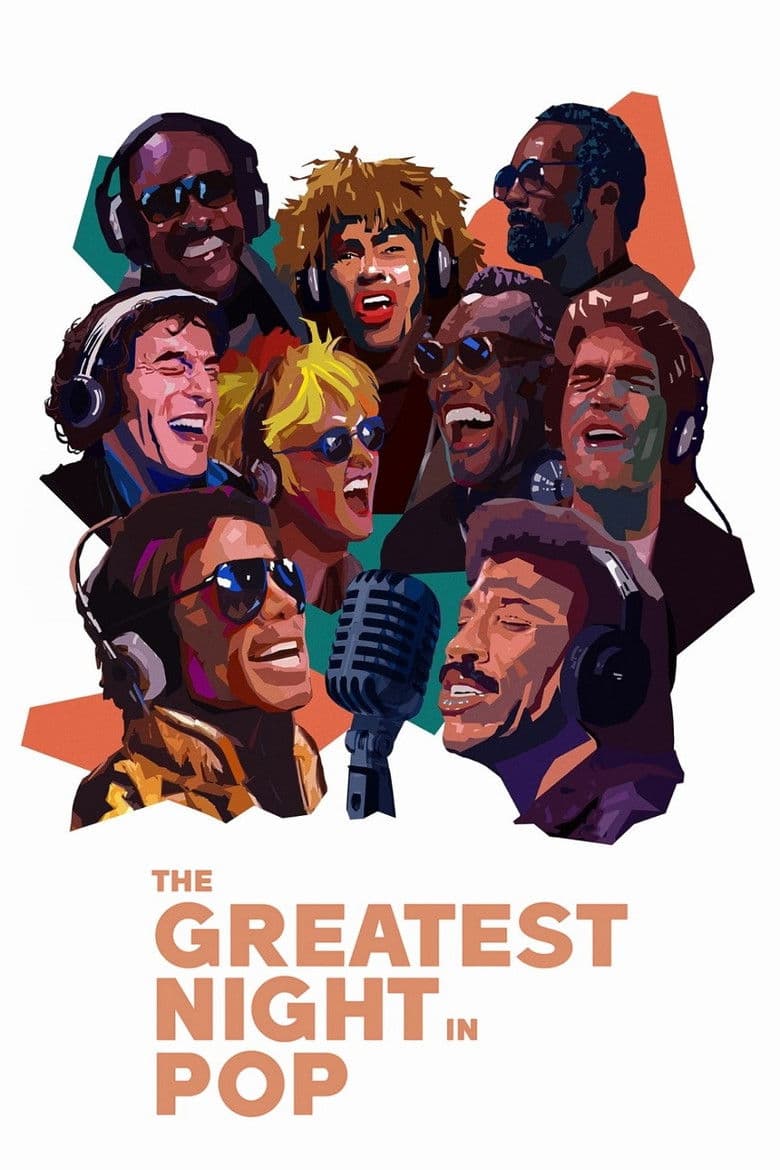
In January 1985, after the American Music Awards, dozens of top U.S. pop and rock stars met in a Los Angeles studio for one long night. Their goal was to record “We Are the World,” a charity song written by Lionel Richie and Michael Jackson to raise money for famine relief in Africa. Producer Quincy Jones asked them to leave their egos outside. The film feels like a fun, tense “heist” story about pulling off a huge secret recording session before sunrise.
The movie is mostly about famous singers working together, fighting tiredness, and making a hit song for a good cause. Viewers do hear the origin idea from Harry Belafonte: he wanted black American stars helping people in Africa, not only white-led charity from overseas. That race-aware pitch shows up early and is easy to notice, but the rest of the film stays on music, egos, star moments, and teamwork. Charity and shared kindness are the main message, not modern identity politics. A normal viewer would see a warm music-history special more than a heavy social lecture.
Community feedback
Was our 24% Woke rating accurate?
Breakdown
These are the editorial factors and ratings behind our score for The Greatest Night in Pop.
Woke representation / casting
Real 1985 stars and later interviews with people who were there. Not modern identity casting or quota casting for a made-up story. Diversity is historical fact, not a casting signal.
0%
Woke political dialogue
Belafonte’s “white folks saving black folks / black folks saving black folks” pitch is stated clearly. Famine and charity talk run through the night. It is 1980s civil-rights and aid talk, not long modern activist speeches.
18%
Identity-driven story themes
Race-aware origin (black American stars helping Africa) is a real, visible setup beat. The core arc is still logistics, egos, and one song for hunger relief. Identity is part of the start, not the whole movie.
28%
Western institutional / cultural critique
Brief historical note on who leads charity for Africa. The film mostly praises U.S. stars and the song’s good results. Little modern attack on Western culture, gender norms, or conservatism.
12%
Woke character or canon changes
Not present in this title.
0%
Anti-woke backlash and complaints
No serious right-leaning or anti-woke wave calling the film woke, DEI, or identity propaganda. Talk is almost all nostalgia and star gossip.
0%
Creator track record context
Lead director Bao Nguyen has a moderate representation-and-identity pattern in other work. Most producers score near zero. Richie and a few others add only mild progressive or civil-rights-adjacent credits. Team overall is light-to-moderate, not activist-first.
22%
Production
Movie · 2021
Through exclusive interviews and archival footage, this documentary traces an intimate portrait of seven-time Formula 1 champion Michael Schumacher.

Movie · 2020
Record-shattering Korean girl band BLACKPINK tell their story — and detail the hard fought journey of the dreams and trials behind their meteoric rise.
Movie · 2019
Constructed from over 500 hours of never-before-seen footage, this documentary centers on the personal life and career of the controversial football player Diego Maradona who…

Movie · 2022
An enchanting making-of story told through all-new in-depth interviews and cast conversations, inviting fans on a magical first-person journey through one of the most beloved film…

Movie · 2023
The remarkable coming-of-age story of Stephen Curry—one of the most influential, dynamic, and unexpected players in basketball history—and his rise from an undersized college…
Movie · 2016
With stunning views of eruptions and lava flows, Werner Herzog captures the raw power of volcanoes and their ties to indigenous spiritual practices.
Movie · 2020
When Washington Post journalist Jamal Khashoggi disappears after entering Saudi Arabia’s consulate in Istanbul, his fiancée and dissidents around the world are left to piece…
Movie · 2023
His love of film began as an escape from a rocky childhood. From underdog to Hollywood legend, Sylvester Stallone tells his story in this documentary.
