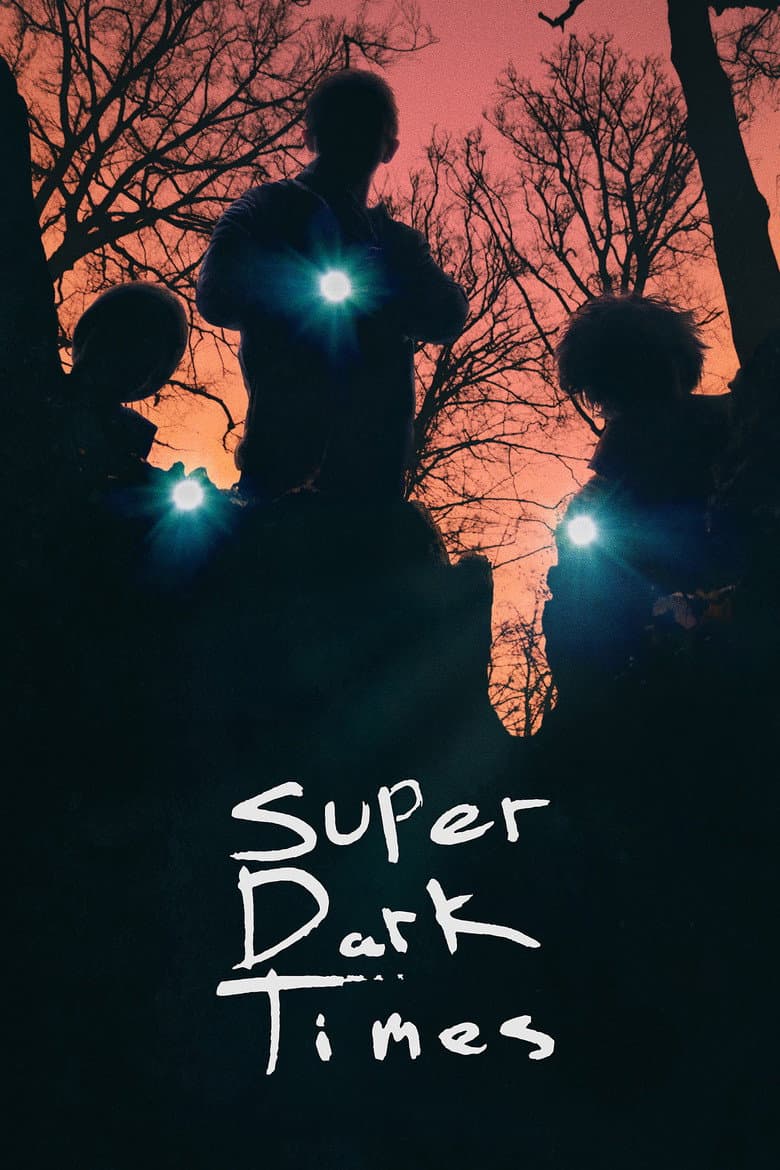
Super Dark Times follows Zach and Josh, two teenage best friends in a snowy New York suburb in the mid-1990s. The boys take a samurai sword into the woods with two younger friends, and a sudden accident kills Daryl. Zach tries to return to school while Josh hides the crime and grows more violent. The film turns their normal teenage friendship into a story about guilt and fear. Its quiet streets, cold weather, and strange dreams create a grim coming-of-age thriller.
The film shows boys judging girls by their looks and joking about sex. Josh turns shame and jealousy into more violence, while Zach faces guilt over helping hide the first death. Allison becomes a victim when Josh attacks her, and the last scenes show her returning to school with scars from what happened. These gender themes deepen the story’s study of teenage behavior, friendship, guilt, and violence.
Community feedback
Was our 25% Woke rating accurate?
Breakdown
These are the editorial factors and ratings behind our score for Super Dark Times.
Woke representation / casting
Not present. The main friend group is shown as a normal small-town group of teenagers in a mid-1990s upstate New York setting. The film does not present casting as a diversity or identity statement.
0%
Woke political dialogue
Not present. The boys use crude sexual jokes and insults, but the film contains no modern identity, DEI, activist, or political dialogue.
0%
Identity-driven story themes
The film repeatedly links teenage masculinity, sexual frustration, shame, and violence. Josh turns those pressures into murder, while Zach struggles with guilt and fear. Allison suffers because of the boys’ actions, and the ending briefly follows her return to school. Phillips described the film as examining fragile and toxic masculinity, but the movie does not turn that idea into a broad activist message.
28%
Western institutional / cultural critique
The film repeatedly shows boys judging girls by their looks, treating sex as a contest, and using violence to prove themselves. The story presents that behavior as destructive rather than admirable. Phillips also described the film as exploring fragile and toxic masculinity. The movie does not attack schools, families, police, Christianity, capitalism, or other Western institutions, so the cultural critique remains limited.
23%
Woke character or canon changes
Not relevant. The film is an original story about fictional teenagers, so it does not change established characters, source material, or real historical figures.
0%
Anti-woke backlash and complaints
A tiny X account praised Super Dark Times as an authentic 2017 movie without diversity quotas or forced agenda lines. The post contrasted it with “woke” Hollywood after 2010. The post had 8 views, and no wider anti-woke campaign, boycott, or review-bombing effort was found.
8%
Creator track record context
The stored creator record gives Kevin Phillips a mild score of 30, while Luke Piotrowski and Ben Collins each have scores of 8. Most producers, Susan Shopmaker, and Esha Kallianpur have low scores and no strong activist record. Lois J. Drabkin has a higher score of 56 because her wider casting work often supports social themes and representation. This gives the film mild creator track record context, not a strong signal.
15%
Production

Movie · 2016
A struggling painter is possessed by satanic forces after he and his young family move into their dream home in rural Texas.
Movie · 2017
A former rodeo star, now a motel manager, meets a young man who is responsible for the violence that suddenly has seized his small town.

Movie · 2016
Irish Commandant Pat Quinlan leads a stand off with troops against French and Belgian Mercenaries in the Congo during the early 1960s.

Movie · 2019
In 1933, Welsh journalist Gareth Jones travels to Ukraine, where he experiences the horrors of a famine. Everywhere he goes he meets henchmen of the Soviet secret service who are…

Movie · 2017
The story of the kidnapping of 16-year-old John Paul Getty III and the desperate attempt by his devoted mother to convince his billionaire grandfather Jean Paul Getty to pay the…

Movie · 2016
When Krisha returns to her estranged family for Thanksgiving dinner, past demons threaten to ruin the festivities.

Movie · 2024
A ride-share turns into a high-stakes game of cat and mouse after it follows a car fitting the description of an AMBER Alert.

Movie · 2019
A charismatic New York City jeweler always on the lookout for the next big score makes a series of high-stakes bets that could lead to the windfall of a lifetime.
