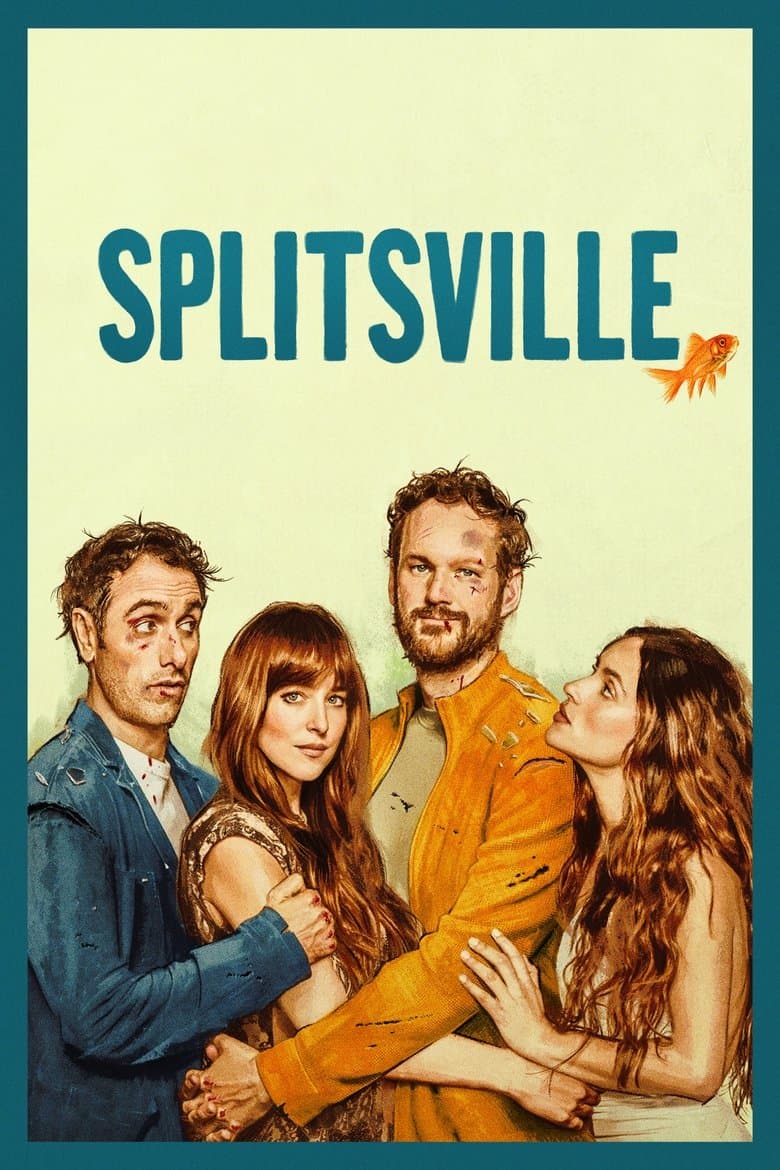
Carey is a kind but lost gym teacher whose wife, Ashley, suddenly asks for a divorce after admitting that she has been unfaithful. Carey travels to the lakeside home of his best friend, Paul, and Paul's wife, Julie, where four adults get trapped in a messy fight over sex, love, and jealousy. Paul and Julie say their open marriage keeps them happy, but Carey sleeps with Julie and breaks the trust that holds the group together. The movie moves between New York, a summer house, and a crowded apartment, using fast jokes, awkward talks, and wild physical fights.
Open marriage and partner swapping are the film's main modern social themes. Julie and Paul say that sex outside marriage can stay separate from love, while Carey and Ashley try to use the same idea to avoid a divorce. The story keeps showing jealousy, cheating, and changing partners, and it treats traditional marriage as one choice instead of the only safe answer. The comedy mocks male possessiveness and insecurity, but it also shows that sexual freedom does not remove pain, lies, or broken promises.
Community feedback
Was our 35% Woke rating accurate?
Breakdown
These are the editorial factors and ratings behind our score for Splitsville.
Woke representation / casting
Not present. The four central characters include two men and two women, with one Latina woman and three white leads. The film does not present its casting as a diversity or empowerment message.
0%
Woke political dialogue
Not present. The characters talk about divorce, sex, jealousy, and marriage. They do not give political or activist speeches.
0%
Identity-driven story themes
Open marriage is the central idea and stays in the story from beginning to end. Julie and Paul say sex outside marriage can coexist with love, and Carey and Ashley try to copy that plan after their breakup. The film treats this as a real adult choice, but it also makes the choice produce jealousy, lies, and chaos. The ending leaves broken marriages, shared parenting, and an ongoing sexual bond instead of restoring every couple to a traditional marriage.
43%
Western institutional / cultural critique
The film repeatedly makes male jealousy, possessiveness, and violent anger look foolish. Carey and Paul try to control women while claiming they are open-minded, and the story exposes that lie. The four adults also question the usual rules of marriage. The film does not attack churches, government, capitalism, or Western culture, so this is a moderate relationship-norm critique rather than a broad political message.
32%
Woke character or canon changes
Not relevant. The film is an original story about two couples. It does not change established characters, a known story, or real historical events.
0%
Anti-woke backlash and complaints
A few small X accounts called the movie pro-polyamory or complained about open-marriage ideas. A small promo network labeled the trailer “woke-free,” but the posts had almost no engagement. The Spectator grouped the film with a revival of R-rated “non-woke” comedies. No large boycott, review bomb, or coordinated anti-woke campaign appeared.
8%
Creator track record context
Writer Kyle Marvin and writer-director Michael Angelo Covino have no high-confidence activist record in the supplied creator notes. Producer Adria Arjona has publicly supported wider Latin American representation and more opportunities for women. Producer Dakota Johnson has supported women's safety, gender equality, and fluid gender identity. Most other listed producers have low or mixed scores, so the creator context is limited.
18%
Production

Movie · 2024
A mild-mannered professor moonlighting as a fake hit man in police stings ignites a chain reaction of trouble when he falls for a potential client.

Movie · 2023
After a disastrous first date, wild-child Nicole and socially-anxious Max vow to lose each other’s numbers until they learn that their dogs found a love match, and now puppies are…
Movie · 2022
Two strangers believe in love but never seem to be able to find its true meaning. In a wild twist of events, fate puts each in the other's path on one stormy New Year's Eve.
Movie · 2021
The story of Gary Valentine and Alana Kane growing up, running around and going through the treacherous navigation of first love in the San Fernando Valley, 1973.
Movie · 2023
On the brink of losing her childhood home, Maddie discovers an intriguing job listing: wealthy helicopter parents looking for someone to “date” their introverted 19-year-old son…

Movie · 2019
Oh, Ramona! seeks the transformation of Andrew from a teenager into an adult who lives candidly and selflessly his first love story, innocent and uninvolved, alternating with the…
Movie · 2020
An on-the-lam punk rocker and a young woman obsessed with a local band go on an unexpected and epic journey together through the decaying suburbs of the American Midwest.
Movie · 2023
Two twenty-somethings, both reeling from bad break-ups, connect over the course of an eventful day in South London – helping each other deal with their nightmare exes, and…
