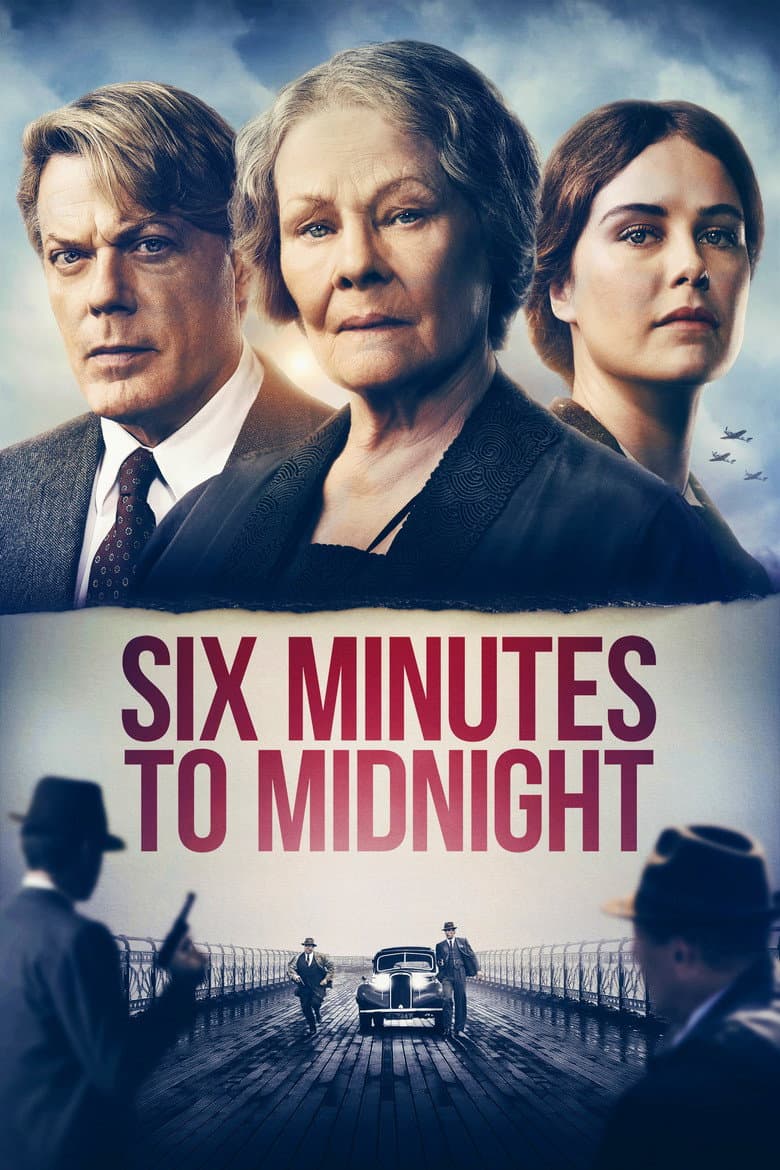
In the summer of 1939, Thomas Miller takes a teaching job at a girls’ school in Bexhill-on-Sea, an English seaside town. The students are daughters and goddaughters of Nazi leaders, and British agents fear that the school hides a secret plan. After the former teacher is found dead, Miller is blamed for murder and must run while he tries to uncover the truth. The film moves between calm lessons, seaside walks, police chases, and the threat of a war that is only days away.
Miss Rocholl wants to protect the girls, while Ilse Keller wants to take them back to Germany and save a list of British spies. The students hear Hitler’s speeches, salute him, and learn how Nazi leaders want them to behave. Miller sees the girls as frightened children, but the British government sees them as possible prisoners and tools against Germany. The story treats fear, loyalty, and the loss of childhood as more important than grand battle scenes.
Community feedback
Was our 21% Woke rating accurate?
Breakdown
These are the editorial factors and ratings behind our score for Six Minutes to Midnight.
Woke representation / casting
The film gives its central role to Suzy Eddie Izzard, a publicly gender-fluid performer, as Thomas Miller, a male teacher and spy. That choice can create a mild identity signal outside the period story, especially because Izzard also co-wrote the role. The film presents Thomas as male and uses a mostly white British and German cast that fits the setting. The female headmistress, sports teacher, and all-girls school also follow the story’s history rather than a diversity plan.
18%
Woke political dialogue
Not present. The film includes Nazi slogans, anti-Jewish teaching, and wartime patriotism. Those lines belong to the 1939 Nazi setting and do not present modern woke political ideas.
0%
Identity-driven story themes
Not present. The story follows spies, Nazi indoctrination, loyalty, and the danger facing schoolgirls. It does not build its main conflict around modern gender, race, sexuality, or DEI themes.
0%
Western institutional / cultural critique
Not present. The film shows British officials making harsh wartime plans and a Nazi-friendly officer betraying his country. These events serve the historical spy plot and do not become modern activist criticism of Western institutions or family and gender norms.
0%
Woke character or canon changes
Not relevant. The film is a fictional spy story inspired by a real school, not a retelling with a race, gender, or sexuality swap. Its invented murders, spies, and escapes are ordinary plot additions.
0%
Anti-woke backlash and complaints
Not present. The supplied X research found no anti-woke reaction, and broader coverage did not show a title-specific complaint that the film pushes woke or DEI ideas. Small comments about Izzard or the film’s quality do not count as backlash against the title.
0%
Creator track record context
Suzy Eddie Izzard brings the strongest creator track record signal through sustained transgender visibility, progressive activism, and Labour Party work. Her public identity is central to the film’s casting context because she co-wrote the script and plays the lead. Celyn Jones adds a milder pattern of Welsh identity and representation-focused work. Andy Goddard has little known activist or identity-driven history, and interviews about this film stress local history and Nazi indoctrination instead.
62%
Production

Movie · 2024
A ride-share turns into a high-stakes game of cat and mouse after it follows a car fitting the description of an AMBER Alert.

Movie · 2018
After David Kim's 16-year-old daughter goes missing, a local investigation is opened and a detective is assigned to the case.

Movie · 2017
A former rodeo star, now a motel manager, meets a young man who is responsible for the violence that suddenly has seized his small town.
Movie · 2025
Seasoned deep-sea divers battle the raging elements to rescue their crewmate trapped hundreds of feet below the ocean's surface.
Movie · 2018
A geologist races against time to save his estranged wife and two children when a devastating earthquake strikes Oslo, Norway.
Movie · 2023
In 1988, American video game salesman Henk Rogers discovers the video game Tetris. When he sets out to bring the game to the world, he enters a dangerous web of lies and…

Movie · 2016
While surfing on a secluded beach, Nancy finds herself in the feeding grounds of a great white shark. Though stranded only 200 yards from shore, survival proves to be the ultimate…
Movie · 2019
In New York, former convict Pete Koslow, related to the Polish mafia, must deal with both Klimek the General, his ruthless boss, and the twisted ambitions of two federal agents…
