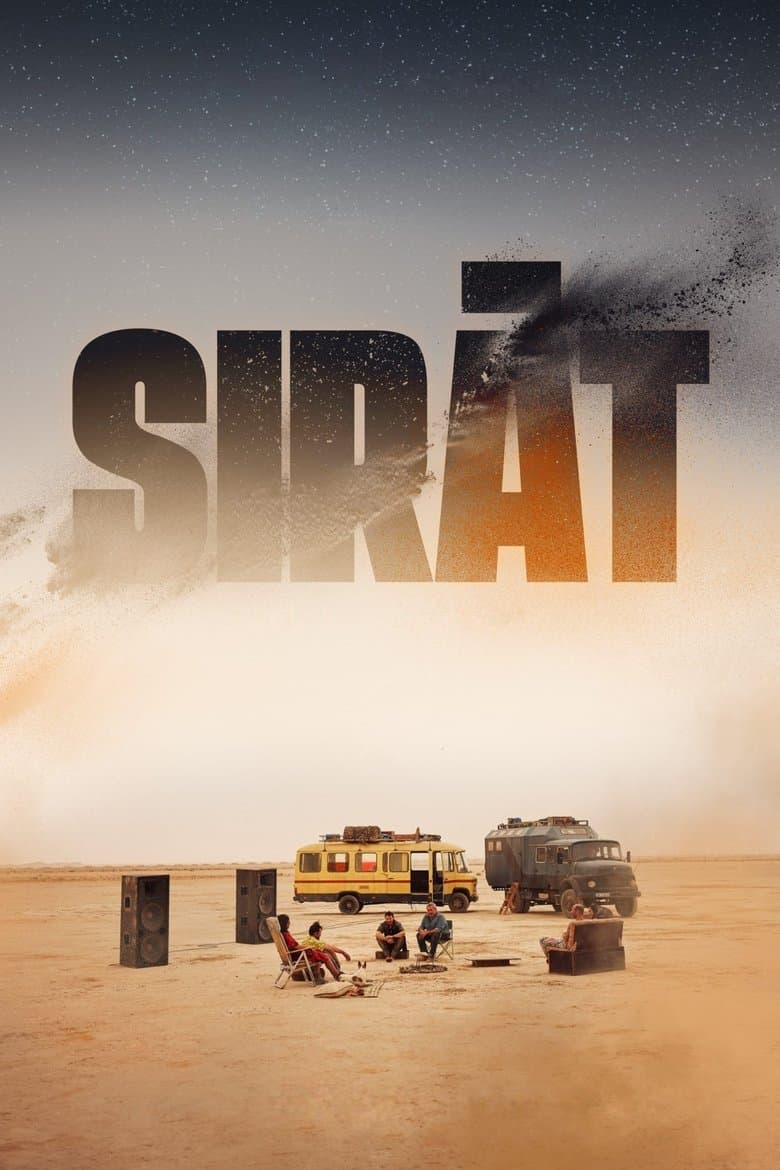
Sirāt is a Spanish-French drama movie set in the Moroccan desert. A worried father and his young son search for their missing daughter among alternative European ravers. The movie features a prominent group of gender-nonconforming and disabled characters who form a chosen family. There are also brief, quiet hints that the missing daughter might be transgender, though the film keeps its focus on a tragic, spiritual journey.
Community feedback
Was our 48% Woke rating accurate?
Breakdown
These are the editorial factors and ratings behind our score for Sirāt.
Woke representation / casting
The film features a highly visible group of real-life alternative and disabled actors playing European ravers. This includes gender-nonconforming people who form a 'chosen family' in the desert. The casting is based on real free partiers. It is not a corporate checklist. Still, the clear presence of gender-nonconforming and alternative people gives the casting a strong identity-focused feel. It stands out to the viewer as a clear choice to show people who live outside normal society.
45%
Woke political dialogue
Dialogue is kept to a absolute minimum. Large parts of the film have no talking at all. There is no direct, preachy activist lecturing. The only political dialogue is a brief, gentle anti-war song sung by a raver. There is also vague talk of a global war on the radio. Politics are treated as unwanted noise. The characters try to escape this noise rather than lecture the audience.
Production
0%
Identity-driven story themes
The film touches on identity themes through the idea of a 'chosen family'. The alternative and gender-nonconforming characters create their own community away from normal society. There are also subtle, brief hints that the missing daughter, Mar, may have run away because she is transgender. This represents a rejection of traditional family structures. However, these themes are mostly symbolic and poetic. They are not preachy or activist-driven.
30%
Western institutional / cultural critique
The film presents a background critique of Western society. It shows a group of European youth escaping a vague war to seek refuge in the desert. It critiques the empty, hollow escapism of these Western ravers. However, the film avoids turning this into a preachy activist sermon about capitalism or colonialism. It keeps the focus on a more spiritual struggle for survival in a harsh landscape.
35%
Woke character or canon changes
Not relevant. The movie is an entirely original work.
0%
Anti-woke backlash and complaints
There is no organized anti-woke campaign or major backlash against the film. Most complaints focus on its very slow pace and bleak, tragic ending. Some viewers have noted that the movie's praise is tied to its association with alternative lifestyles and leftist Spanish production houses. However, actual complaints accusing the film of pushing a direct, aggressive woke agenda are extremely rare.
5%
Creator track record context
The creative team has a mixed to strong progressive track record. Director Oliver Laxe resists political messages and focuses on spiritual poetry. However, the film is produced by Pedro Almodóvar, Agustín Almodóvar, and Esther García. These producers have a long history of championing queer, transgender, and feminist cinema in Spain. They also support left-wing political causes publicly, adding a strong progressive context.
55%
Movie · 2024
During the 1972 Munich Olympics, an American sports broadcasting crew finds itself thrust into covering the hostage crisis involving Israeli athletes.

Movie · 2016
When Krisha returns to her estranged family for Thanksgiving dinner, past demons threaten to ruin the festivities.
Movie · 2023
In 1988, American video game salesman Henk Rogers discovers the video game Tetris. When he sets out to bring the game to the world, he enters a dangerous web of lies and…

Movie · 2025
Marty Mauser, a young man with a dream no one respects, goes to hell and back in pursuit of greatness.

Movie · 2020
2038: George Almore is working on a true human-equivalent AI, and his latest prototype is almost ready. This sensitive phase is also the riskiest as he has a goal that must be…

Movie · 2025
When intelligence agent Kathryn Woodhouse is suspected of betraying the nation, her husband – also a legendary agent – faces the ultimate test of whether to be loyal to his…

Movie · 2017
After a botched bank robbery lands his younger brother in prison, Connie Nikas embarks on a twisted odyssey through New York City's underworld to get his brother Nick out of jail.

Movie · 2021
A head chef balances multiple personal and professional crises at a popular restaurant in London.
