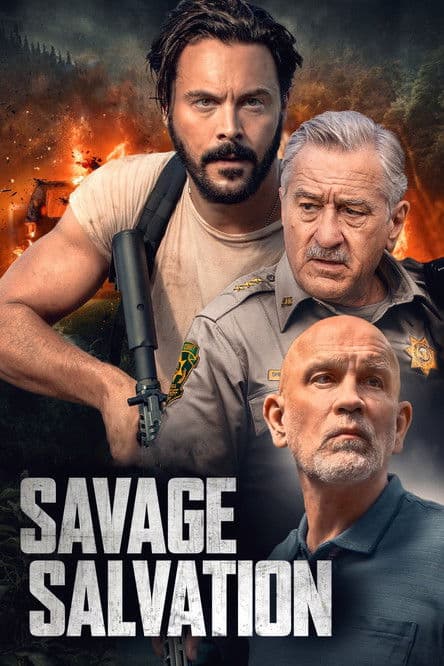
Shelby John is a former soldier and recovering opioid addict who wants to build a clean life with his fiancée, Ruby Red. The couple live in a small Georgia town where church life and drug dealing sit side by side. Ruby dies after being tricked into using drugs again, and Shelby blames the dealers who supplied her. Shelby turns a nail gun into his main weapon while Sheriff Mike Church tries to stop him. The film is a grim, bloody revenge thriller with a strong thread about grief, sin, and redemption.
The film treats addiction as a force that damages couples, families, and the whole town. Shelby calls his killings a way to protect others, but the sheriff warns that revenge will not bring Ruby back. The story uses baptism, Bible verses, and Christian ideas about sin, mercy, and a new life. Peter twists the story of Abraham to defend his drug business, so the film links false faith with greed and harm. The final river scene gives Shelby a tragic chance at spiritual cleansing after his violent choices.
Community feedback
Was our 1% Woke rating accurate?
Breakdown
These are the editorial factors and ratings behind our score for Savage Salvation.
Woke representation / casting
Not present. The film uses a female lieutenant and a black crime boss as plot characters. Their identities are not treated as the point of the story.
0%
Woke political dialogue
Not present. The dialogue deals with addiction, crime, family, sin, and mercy. It does not present current identity politics or activist politics.
0%
Identity-driven story themes
Not present. The central arc follows Shelby’s grief, addiction, family ties, faith, and revenge. The social concern is the local drug trade rather than identity or diversity politics.
0%
Western institutional / cultural critique
Not present. The sheriff and police struggle to control the drug trade as part of the crime plot. The film does not attack Christianity, family life, traditional gender roles, or Western institutions.
0%
Woke character or canon changes
Not relevant. The film has no established franchise characters, canon, or historical figures that it reworks.
0%
Anti-woke backlash and complaints
Not present. Public comments mainly criticize the film’s writing, pace, acting, faith scenes, and graphic violence. No notable anti-woke complaints about DEI or identity politics were found.
0%
Creator track record context
The creator profiles describe Randall Emmett and the writers as commercial genre filmmakers with no activist or identity-driven pattern. Most producers are also described as business-focused and apolitical. Producer Alana Crow has a public animal-rights activism record, which is a mild social-cause signal.
5%
Production
Movie · 2023
During the war in Afghanistan, a local interpreter risks his own life to carry an injured sergeant across miles of grueling terrain.
Movie · 2021
Hutch Mansell, a suburban dad, overlooked husband, nothing neighbor — a "nobody." When two thieves break into his home one night, Hutch's unknown long-simmering rage is ignited…
Movie · 2025
Newly released from prison and marked for death by unrelenting enemies, Nate must now protect his estranged 9-year-old daughter, Polly, at all costs.
Movie · 2021
Rescued as a child by the legendary assassin Moody and trained in the family business, Anna is the world’s most skilled contract killer.
Movie · 2020
A reformed hunter becomes involved in a deadly game of cat and mouse when he and the local sheriff set out to track a vicious killer who may have kidnapped his daughter years ago.
Movie · 2024
As storm season intensifies, the paths of former storm chaser Kate Carter and reckless social-media superstar Tyler Owens collide when terrifying phenomena never seen before are…
Movie · 2025
When the girl of his dreams is kidnapped, everyman Nate turns his inability to feel pain into an unexpected strength in his fight to get her back.
Movie · 2026
A man takes justice into his own hands, hunting down criminals. His vigilante crusade makes him a social media star but puts him at odds with the local police chief.
