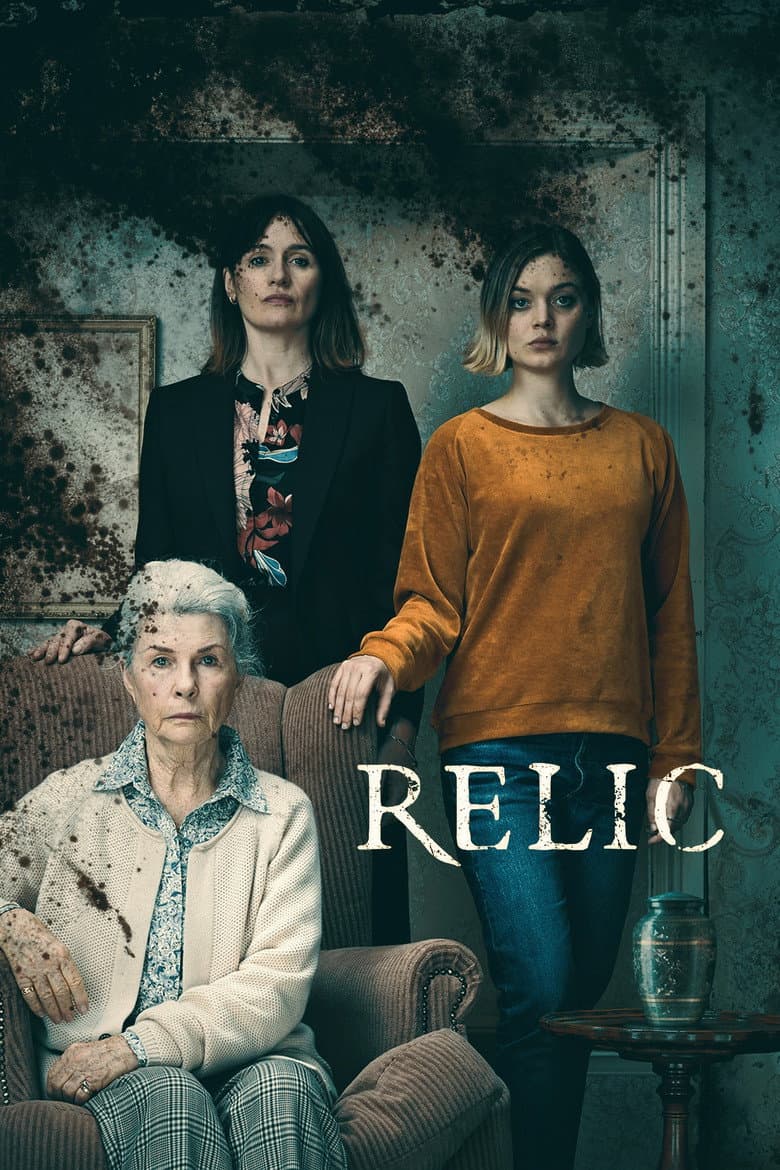
Relic follows Kay, a busy adult daughter who travels with her own daughter, Sam, to find Kay’s missing mother, Edna. The three women return to Edna’s old country house in rural Victoria, Australia, where signs of memory loss mix with strange changes in the building. Edna comes back, but her fear, anger, and confusion grow as the house becomes a dark maze. The film uses a slow, quiet horror style that turns aging, illness, and family guilt into dread.
Relic keeps its main attention on a grandmother, mother, and granddaughter, so care, family duty, and the fear of becoming like an older parent shape nearly every scene. The story shows women caring for women, and it presents this family line as a repeating cycle of birth, aging, illness, and death. The female focus comes from the family history behind the story, not from a political campaign or a lesson about social power. The main message is about compassion and the painful choice to stay close to someone who is losing control of her mind.
Community feedback
Was our 35% Woke rating accurate?
Breakdown
These are the editorial factors and ratings behind our score for Relic.
Woke representation / casting
The film places three generations of women in the main family roles, while men remain in smaller supporting parts. Interviews and festival material also present the movie as female-centric and highlight its all-female creative focus. The choice fits the family story and does not show a broad diversity pattern or a heroic identity quota.
18%
Woke political dialogue
Not present. The film’s spoken lines deal with memory loss, family strain, fear, and care. The dialogue does not promote modern identity politics, DEI ideas, or activist causes.
0%
Identity-driven story themes
The film makes three generations of women the center of its horror and connects the fear to motherhood, caregiving, and the cycle of aging. The story repeatedly shows women caring for an older woman and facing the fear that the same illness may reach the next generation. The director describes caregiving as something that often falls on women and says the film was shaped around a mother, daughter, and granddaughter. The theme is central, but the movie treats it as a personal family tragedy rather than a call for social change.
42%
Western institutional / cultural critique
Not present. The film shows the hard choice of placing Edna in a care home, but it does not turn that choice into a modern attack on family life, men, religion, capitalism, or Western institutions. The horror stays focused on illness, fear, and family duty.
0%
Woke character or canon changes
The feature grew from the short film Creswick, which followed a young woman and her aging father. Relic changes that pair into a grandmother, mother, and granddaughter. Interviews describe the change as a way to draw on James’s grandmother and family experience, not as a public political statement.
15%
Anti-woke backlash and complaints
Not present. The X research pass found no anti-woke reaction or specific complaints. Other reviews and audience posts mostly argued about the slow pace, level of scares, sadness, and ending rather than woke or DEI messaging.
0%
Creator track record context
Natalie Erika James has publicly identified as a feminist and says feminism is part of her filmmaking. Her work often centers women, motherhood, and family trauma, which matches this film’s focus. Christian White has no known record of identity-politics activism. The other cached creator profiles are mostly low or moderate and show no strong title-specific activist campaign.
31%
Production
Movie · 2023
Between the events of 'Saw' and 'Saw II', a sick and desperate John Kramer travels to Mexico for a risky and experimental medical procedure in hopes of a miracle cure for his…
Movie · 2022
After witnessing a bizarre, traumatic incident involving a patient, Dr. Rose Cotter starts experiencing frightening occurrences that she can't explain.
Movie · 2021
Reeling from the unexpected death of her husband, Beth is left alone in the lakeside home he built for her. Soon she begins to uncover her recently deceased husband's disturbing…
Movie · 2024
After the brutal murder of her twin sister, Darcy goes after those responsible by using haunted items as her tools for revenge.

Movie · 2023
After a Black Friday riot ends in tragedy, a mysterious Thanksgiving-inspired killer terrorizes Plymouth, Massachusetts - the birthplace of the holiday.
Movie · 2018
Following the death of the Leigh family matriarch, Annie and her children uncover disturbing secrets about their heritage.

Movie · 2025
Plagued by a violent recurring nightmare, college student Stefanie heads home to track down the one person who might be able to break the cycle and save her family from the grisly…
Movie · 2024
FBI Agent Lee Harker is a gifted new recruit assigned to the unsolved case of an elusive serial killer. As the case takes complex turns, unearthing evidence of the occult, Harker…
