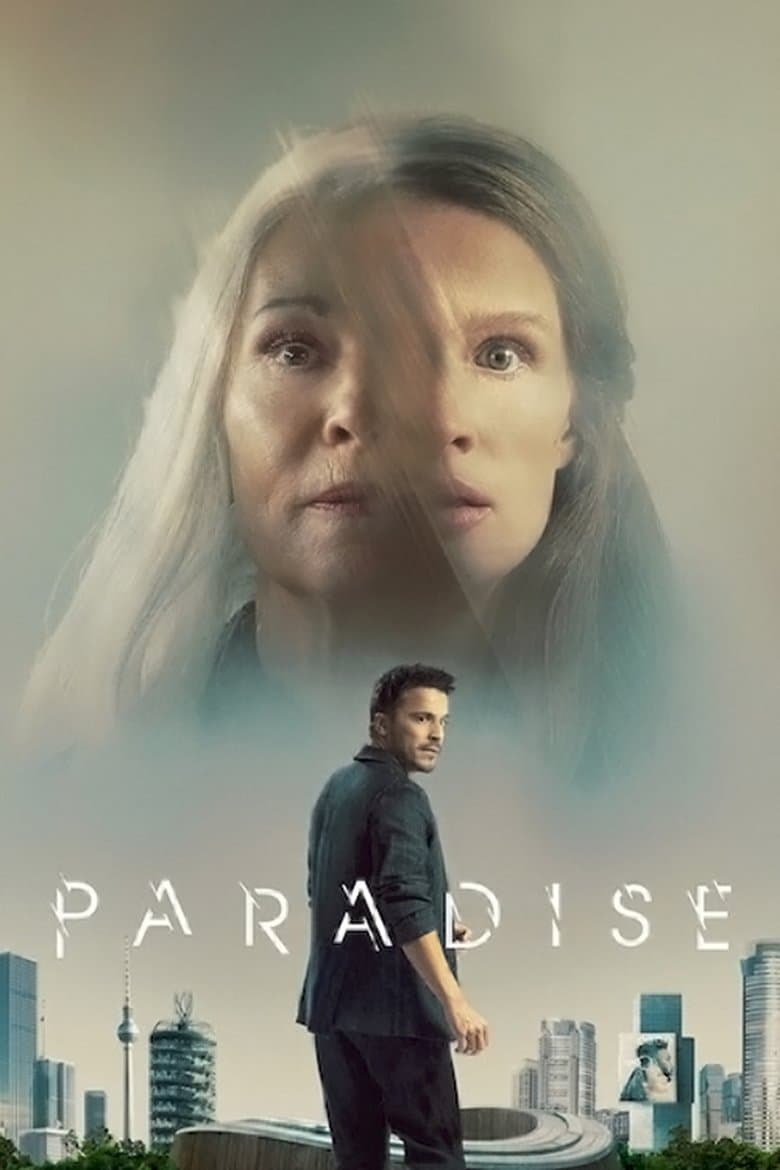
Paradise follows Max Toma, a successful worker for AEON, a company that buys years of life from people who need money and gives them to wealthy customers. Max and his wife Elena live in near-future Berlin until a fire leaves them with a crushing debt. Elena must give up almost forty years, which turns her into an old woman overnight. Max then turns against the company and travels through Germany and Lithuania to get her lost years back. The film mixes a tense chase with a bleak story about love, age, money, and hard choices.
Women carry much of the film's power because Sophie is AEON's founder and lead scientist, Elena is a doctor, and Kaya leads security. The story makes Elena's lost youth, wish for a child, and choice to take years from another person part of the main conflict. It also shows rich people becoming young while poor people, including refugees, sell years to survive. Max's late change from company salesman to violent rebel gives the film a clear message against a system where human life becomes a product. These ideas matter and repeat, but the film stays focused on the couple's thriller plot instead of giving a full political plan.
Community feedback
Was our 58% Woke rating accurate?
Breakdown
These are the editorial factors and ratings behind our score for Paradise.
Woke representation / casting
Paradise gives three major jobs to women: Sophie leads and created AEON, Elena is a doctor, and Kaya runs security. The cast also includes a black security chief and migrant characters, but that mix fits a near-future Berlin and is not sold as a diversity campaign. Boris Kunz said the key people in the life transfer were made women on purpose because aging is a bigger issue for women.
34%
Woke political dialogue
Paradise opens with an AEON ad that sells life years as personal choice. Protesters say their time belongs to them, and a news report says the trade weakens equality. Characters also call prison-time sales a private justice system and describe the practice as grave injustice. Max later says he was part of the system and urges people to fight it. The film repeats these ideas across the plot, but it does not make every scene political.
45%
Identity-driven story themes
Gender and age shape the central conflict because Elena loses her youth while Sophie seeks youth for herself. The director said making both key transfer roles women was deliberate because aging is a bigger issue for women. Elena's wish for a child and her later choice about whose years to take keep this theme active. Sophie and Kaya also hold major power, while Max carries much of the action. These themes matter, but the main message stays focused on money and life as a product.
42%
Western institutional / cultural critique
AEON turns human lifespan into a product and uses debt to take Elena's years. The film contrasts rich customers who grow younger with poor people and refugees who sell years to survive. Max calls himself a small cog in capitalism, and his final speech calls the system unjust. The resistance plot pushes him from loyal salesman toward violent rebellion. This modern critique of corporations and class power drives the story, although the film tells it through a personal thriller.
60%
Woke character or canon changes
Not relevant. Paradise is an original near-future story rather than an adaptation with established characters. No known real historical person or established character receives an identity change.
0%
Anti-woke backlash and complaints
Not present. No sustained anti-woke backlash, boycott, or review-bombing was found. X had no anti-woke complaints, and wider reviews mainly debated the plot and its social ideas. One isolated user review called Max a woke hero and disliked the women-focused story, but it did not spread.
0%
Creator track record context
Boris Kunz has a moderate record of stories about social systems and deliberately made the key life-transfer roles women. Producer Rafael Parente has a clear progressive background. Casting director Lisa Stutzky supports community casting and wider access for marginalized performers. The other listed writers, producers, and casting director have mixed or limited public political records, so the overall creator context is moderate rather than strongly activist.
35%
Production

Movie · 2025
When a mysterious brick wall encloses their apartment building overnight, Tim and Olivia must unite with their wary neighbors to get out alive.

Movie · 2017
Jimmy is a committed child psychologist who uses his own playbook, but when he is brought in to work with Ellie, he is completely unprepared for his subject—a 9-year-old…

Movie · 2026
On one last grueling mission during Army Ranger training, a combat engineer must lead his unit in a fight against a giant otherworldly killing machine.

Movie · 2018
In 1984, a young programmer begins to question reality as he adapts a dark fantasy novel into a video game. A mind-bending tale with multiple endings.

Movie · 2018
Held captive in a futuristic smart house, a woman hopes to escape by befriending the A.I. program that controls the house.

Movie · 2024
An elite trio of astronauts aboard a years-long, possibly compromised mission to Saturn's moon, Titan, gears up for a highly dangerous slingshot manoeuvre that will either…
Movie · 2021
A three-person crew on a mission to Mars faces an impossible choice when an unplanned passenger jeopardizes the lives of everyone on board.

Movie · 2024
With his wife out sick, a struggling father brings home a lifelike AI, only to have his self-aware new help want everything her new family has to offer...
