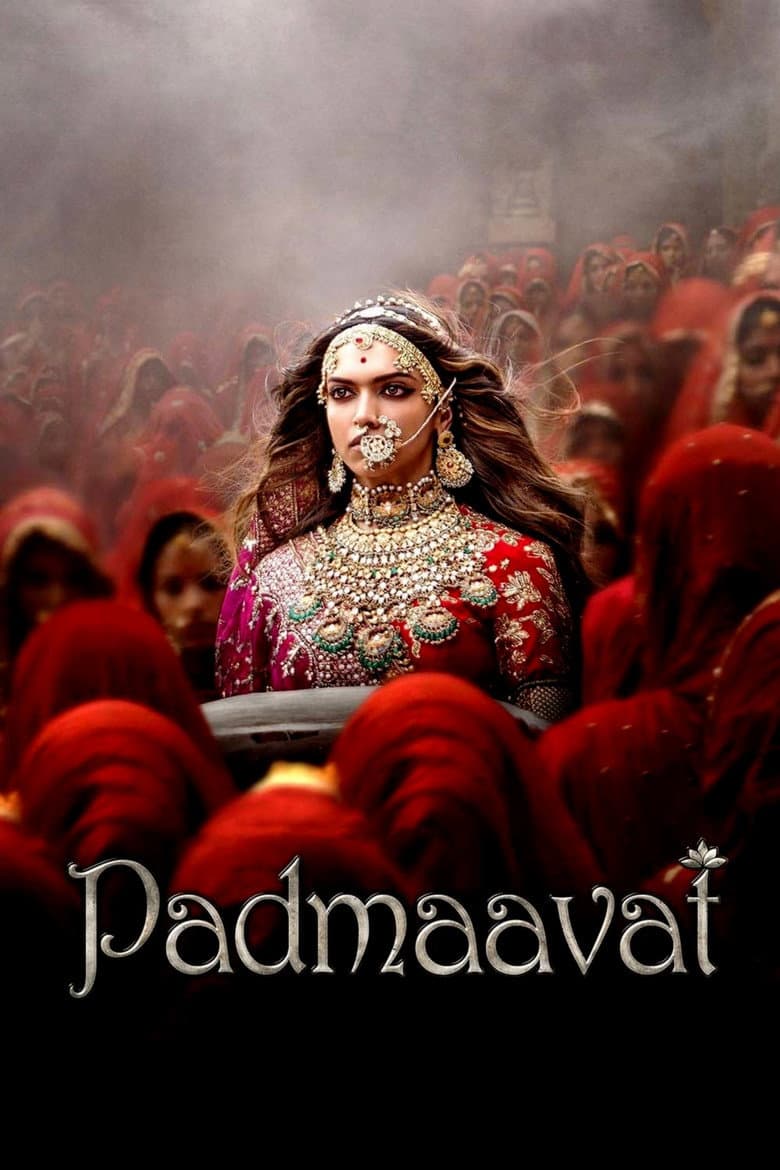
Padmaavat is a lavish Hindi period drama set in Rajputana during the 13th century. Queen Padmavati lives in Chittor with her husband, King Ratan Singh, when Alauddin Khilji, the Sultan of Delhi, hears of her beauty and wants to possess her. His desire leads to a siege that puts the kingdom and its people in danger. The film has a grand, romantic, and tragic tone.
Padmavati is shown as brave and sharp, and she helps rescue Ratan Singh before standing with the women of Chittor against Khilji. The story treats Rajput honor, loyalty, marriage, and sacrifice as noble values. Khilji is a cruel ruler whose hunger for power and women drives the war. The film also shows a suggestive same-sex bond between Khilji and his slave-general Malik Kafur, but that thread stays under the surface and is tied to Khilji's excess.
Community feedback
Was our 36% Woke rating accurate?
Breakdown
These are the editorial factors and ratings behind our score for Padmaavat.
Woke representation / casting
Deepika Padukone leads the film as Queen Padmavati, and the promotion highlighted the unusual scale of a film with a female protagonist. The role is tied to the legend's queen, so the casting itself fits the story world. The woman-power framing adds mild identity signaling, but the cast does not show a broad diversity pattern.
22%
Woke political dialogue
Not present. The dialogue centers on royal honor, war, loyalty, religion, and desire. The movie does not use modern identity, DEI, or activist talking points.
0%
Identity-driven story themes
Padmavati is given clear agency when she helps plan Ratan Singh's rescue and speaks for the women of Chittor. The film presents female courage and sacrifice as powerful answers to male violence. Khilji and Malik Kafur share repeated intimate moments, including the Binte Dil song, which gives the film a visible queer thread. The thread is tied to Khilji's excess and remains smaller than the main war and honor story.
35%
Western institutional / cultural critique
Not present. The movie shows Khilji's cruelty, sexual hunger, and abuse of power as part of a medieval ruler's villainy. The movie does not connect those actions to modern Western institutions, capitalism, Christianity, or present-day gender politics.
0%
Woke character or canon changes
The film gives historical Alauddin Khilji and Malik Kafur a repeated same-sex attraction. The film shows that bond through intimate service scenes, touch, and the Binte Dil song. Jayasi's source poem does not center this relationship, so the movie adds an identity-focused thread while adapting the legend. The thread is noticeable but remains secondary to Padmavati, Ratan Singh, and the siege.
32%
Anti-woke backlash and complaints
Not present. The major 2018 protests focused on Rajput honor, alleged history errors, and a rumored dream scene between the queen and Khilji. The X research pass found no anti-woke complaints, while other posts were isolated or supportive.
0%
Creator track record context
Sanjay Leela Bhansali has a repeated record of making women and people at the edge of society central to large films. Ajit Andhare has backed women-led and socially themed projects, while Shruti Mahajan often speaks about wider access and casting beyond type. Shikha Rahi has a human-rights advocacy history, but that work is separate from this film. The wider team has no strong shared record of modern identity campaigning.
35%
Production

Movie · 2018
German artist Kurt Barnert has escaped East Germany and now lives in West Germany, but is tormented by his childhood under the Nazis and the GDR regime.

Movie · 2016
Lou Clark, a directionless 26-year-old from the English countryside, takes a job at the local castle as a caregiver and companion to a wealthy young banker, Will Traynor.
Movie · 2021
A couple fights to hold their relationship together as a memory loss virus spreads and threatens to erase the history of their love and courtship.

Movie · 2025
Based on a true story, two down-on-their-luck musicians form a joyous Neil Diamond tribute band, proving it's never too late to find love and follow your dreams.

Movie · 2017
Addie Moore and Louis Waters, a widow and widower, have lived next to each other for years. The pair have almost no relationship, but that all changes when Addie tries to make a…

Movie · 2020
Young musician Zach Sobiech discovers his cancer has spread, leaving him just a few months to live. With limited time, he follows his dream and makes an album, unaware that it…

Movie · 2025
Two artistic souls find harmony through music despite their contrasting worlds. As feelings deepen, age and circumstances challenge their undeniable bond.
Movie · 2023
After decades apart, childhood friends Nora and Hae Sung are reunited in New York for one fateful weekend as they confront notions of destiny, love, and the choices that make a…
