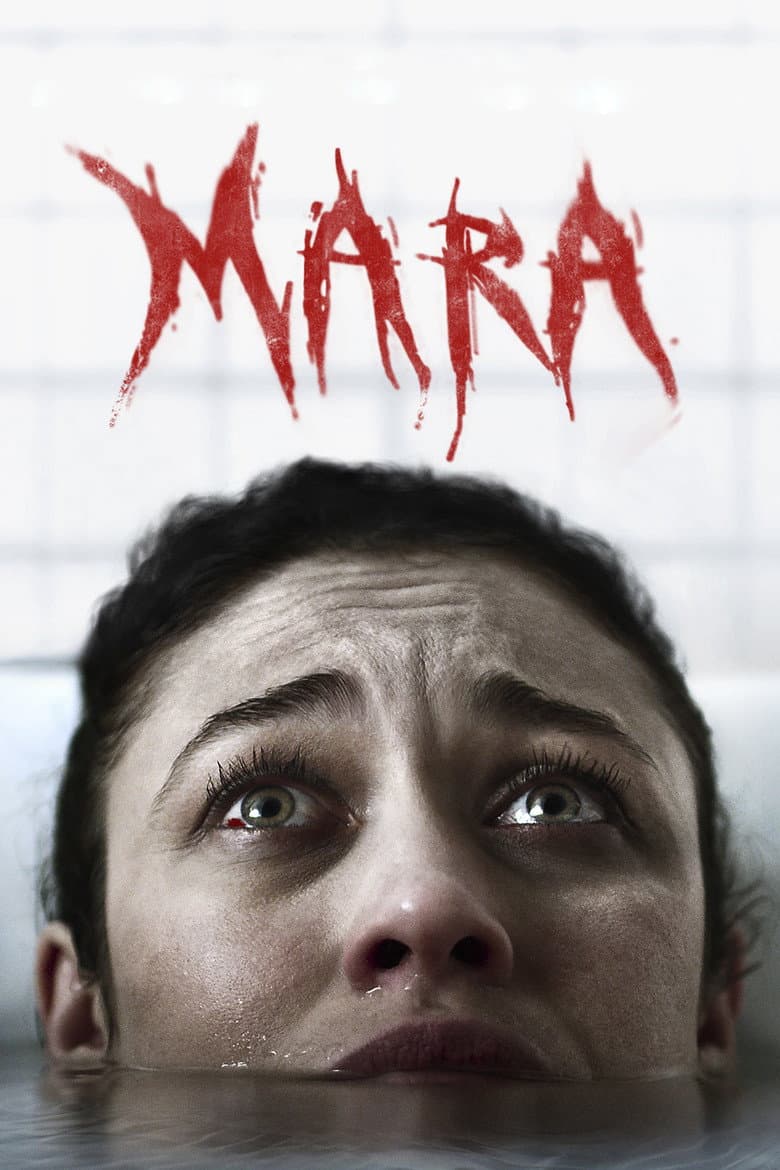
Mara follows Kate Fuller, a criminal psychologist who helps police investigate a man found strangled in his sleep. The man's wife says an ancient demon killed him, but Kate first thinks the family is facing mental illness and trauma. The case leads her to a sleep paralysis support group in Savannah, Georgia, where frightened people share stories about the same creature. Kate soon suffers the demon's attacks herself and races to protect the dead man's young daughter before she loses the ability to stay awake.
The film keeps its attention on fear, guilt, grief, and the uncertain line between illness and the supernatural. Kate's memories of her mother's mental illness explain why she tries to help the child, while the police and doctors mainly serve the mystery. The demon follows people linked to painful wrongdoing, so Kate must face her guilt after she sends Helena to a hospital. The tone stays grim and frightening, with a small focus on the stigma around mental illness.
Community feedback
Was our 2% Woke rating accurate?
Breakdown
These are the editorial factors and ratings behind our score for Mara.
Woke representation / casting
Not present. The film uses a modern Savannah setting with a woman psychologist, a black detective, and other mixed supporting roles. The story does not present those choices as a diversity message or make identity part of the conflict.
0%
Woke political dialogue
Not present. The dialogue covers sleep paralysis, mental illness, family guilt, police work, religion, and past violence. It does not promote modern identity, DEI, or activist ideas.
0%
Identity-driven story themes
Not present. Kate's guilt about her mother and her attempt to save Sophie drive the plot. The conflict stays focused on a demon and sleep paralysis rather than race, gender, sexuality, or social power.
0%
Western institutional / cultural critique
Not present. The police, hospital, and support group make mistakes as part of the mystery. The film does not turn those problems into a modern attack on Western institutions, family life, or religion.
0%
Woke character or canon changes
Not relevant. Mara is an original story by Clive Tonge and Jonathan Frank. It does not change a known character, franchise, book, or historical figure.
0%
Anti-woke backlash and complaints
Not present. No anti-woke or right-leaning complaints about the film were found in the reviewed coverage. Online discussion mostly debates the scares, slow pace, and use of sleep paralysis.
0%
Creator track record context
The supplied creator records give Clive Tonge 0/100 and Jonathan Frank 1/100. The Mara interviews describe a horror film built from sleep paralysis research and Japanese horror influences. Most producers have low scores and commercial genre careers. Craig Chapman's Karen and Michael Clofine's War Pony add mild social context, but neither project shapes Mara.
8%
Production
Movie · 2019
When a huge hurricane hits her hometown in Florida, Haley ignores evacuation orders to look for her father. After finding him badly wounded, both are trapped by the flood.
Movie · 2016
A deaf woman is stalked by a psychotic killer in her secluded home.
Movie · 2016
An evening of drunken prank calls becomes a nightmare for a pair of teenagers when a mysterious stranger turns their own game against them.
Movie · 2021
A young couple is pushed to the limits of sanity as they attempt to be reunited amid the chaos of a pandemic outbreak.
Movie · 2024
Nothing is what it seems when a twisted one-night stand spirals into a serial killer’s vicious murder spree.
Movie · 2025
A collection of Halloween-themed videotapes unleashes a series of twisted, blood-soaked tales, turning trick-or-treat into a struggle for survival.
Movie · 2024
A group of criminals kidnap a teenage ballet dancer, the daughter of a notorious gang leader, in order to obtain a ransom of $50 million, but over time, they discover that she is…
Movie · 2026
After a young couple witnesses a gruesome highway accident, they soon realize they did not leave the crash scene alone, as a demonic presence called the Passenger that won't stop…
