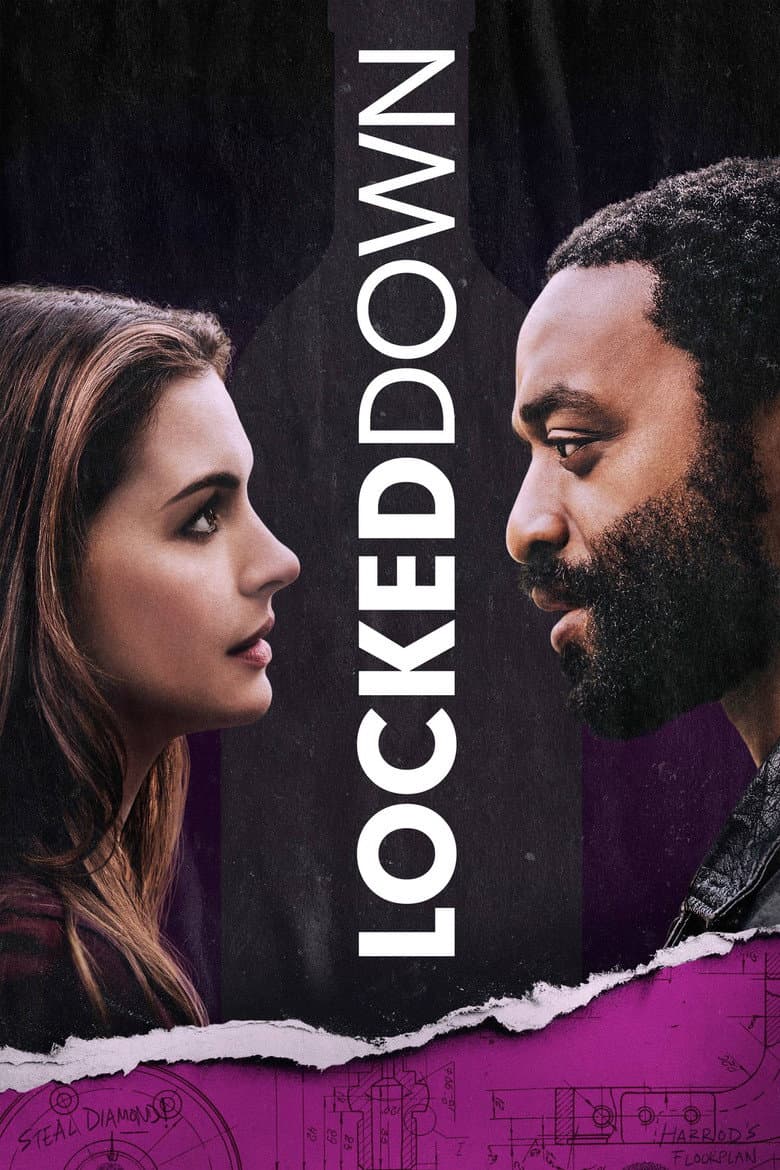
Locked Down follows Linda and Paxton, a London couple who are ready to split when COVID-19 rules force them to stay in the same home. Linda is a senior business leader who is tired of her job, while Paxton is a former criminal who now drives delivery vans and feels trapped by his past. Their anger slowly turns into a plan to steal a diamond worth three million pounds from Harrods during the empty-city lockdown. The film mixes tense relationship drama, odd jokes, romantic moments, and a late burst of heist action.
The film gives a visible but limited political message about work, wealth, and corporate power. Linda fires workers on a video call, and the couple say the diamond theft can hurt capitalism and help the NHS. Paxton also recites a poem about justice and a new social order, but these ideas support the heist and do not become a full political program. Linda briefly reveals a past sexual encounter with a married woman, yet the story does not center on same-sex identity or make it the main relationship conflict. The main message remains that lockdown exposes unhappy lives and may push people to recover lost freedom, purpose, and love.
Community feedback
Was our 39% Woke rating accurate?
Breakdown
These are the editorial factors and ratings behind our score for Locked Down.
Woke representation / casting
Not present. The lead and supporting identities fit a modern London setting. The film does not use casting as a diversity statement or make race and gender part of the story.
0%
Woke political dialogue
Paxton recites a poem that calls for justice and a new social arrangement. Linda and Paxton say the diamond theft can hurt capitalism and help the NHS. The couple also describe the robbery as taking back what life owes them. These lines appear during the planning scenes, but they do not form a large political speech and do not focus on identity or DEI.
31%
Identity-driven story themes
Linda reveals a past sexual encounter with Maria, a married woman. The film gives Linda the higher-ranking job and lets her lead the heist plan, while Paxton is the more troubled partner. These choices are visible, but the story does not turn them into a broad message about women or same-sex identity.
18%
Western institutional / cultural critique
Linda’s company lays off workers while it protects its business interests. Paxton’s job and past show how work and class can limit a person’s future. Linda and Paxton call the diamond buyer bad and say the theft can damage capitalism and help the NHS. The film repeats the idea that people were trapped by work and routine before lockdown, so the critique runs through the relationship and heist.
49%
Woke character or canon changes
Not relevant. The film is an original COVID-era heist story. It does not alter an established character, canon, or real historical figure.
0%
Anti-woke backlash and complaints
Not present. The supplied X pass found no anti-woke reaction, boycott talk, or right-leaning defense. Other audience and critic complaints focused on pacing, the timing of a COVID film, and its wealthy couple, not woke, DEI, or identity politics.
0%
Creator track record context
Doug Liman’s cached score is 25/100 and Steven Knight’s is 12/100. Liman has some work about government or institutional failure, while Knight often explores class and power. The producers’ cached scores are also low. This context gives only a mild signal for the film’s corporate and class themes.
18%
Production

Movie · 2025
Two down-on-their-luck hourly workers team up to rob a posh London department store on Christmas Eve. Will they steal each other's hearts along the way?

Movie · 2020
An on-the-lam punk rocker and a young woman obsessed with a local band go on an unexpected and epic journey together through the decaying suburbs of the American Midwest.
Movie · 2023
Two twenty-somethings, both reeling from bad break-ups, connect over the course of an eventful day in South London – helping each other deal with their nightmare exes, and…

Movie · 2016
A girl falls for the "perfect" guy, who happens to have a very fatal flaw: he's a hitman on the run from the crime cartels who employ him.

Movie · 2024
A mild-mannered professor moonlighting as a fake hit man in police stings ignites a chain reaction of trouble when he falls for a potential client.

Movie · 2023
After a disastrous first date, wild-child Nicole and socially-anxious Max vow to lose each other’s numbers until they learn that their dogs found a love match, and now puppies are…

Movie · 2018
Titu is going to marry a perfect woman named Sweety. Titu's best-friend Sonu doubts Sweety's character and tries to break the marriage while Sweety tries to do opposite and which…

Movie · 2019
A bullied teenage girl forms an unlikely friendship with a mysterious young man who protects her from her assailants, while she copes with the pressures of her final examinations.
