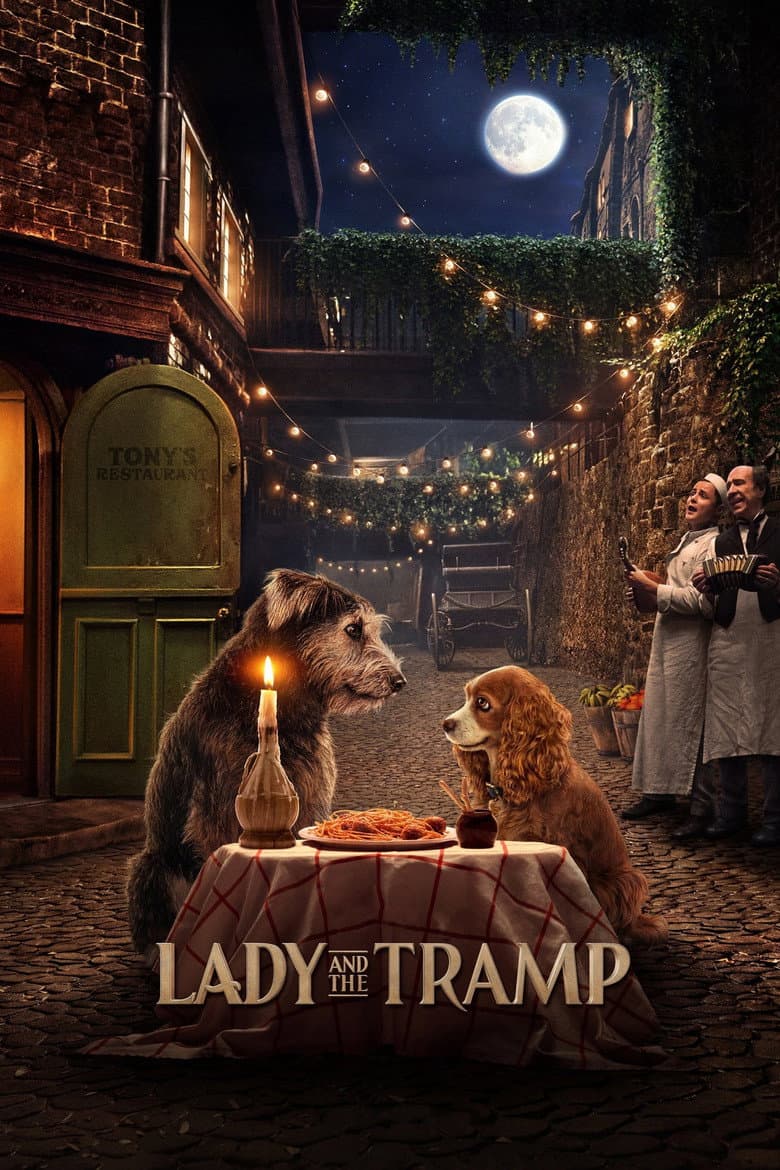
Lady is a pampered cocker spaniel who lives with Jim Dear and Darling in a comfortable home in a small American town around 1910. When the couple have a baby, Lady feels pushed aside and ends up on the streets. She meets Tramp, a stray dog who knows how to find food, avoid the dog catcher, and live without a home. The two dogs fall in love, but Lady still wants the safety and care of a family.
The movie makes the human family an interracial couple and places them in an early 1900s setting without making race part of the plot. It also changes Jock from a male dog to a female dog and replaces the old Siamese cats and their song with new cats and a new song. These choices are visible updates, but the story does not argue about race, gender, sexuality, or politics. The main message stays focused on love, loyalty, belonging, rescue, and the value of a home.
Community feedback
Was our 33% Woke rating accurate?
Breakdown
These are the editorial factors and ratings behind our score for Lady and the Tramp.
Woke representation / casting
The film places a black woman and a white man at the center of Lady’s comfortable early-1900s household. The film also uses a visibly diverse human and animal cast. The film changes Jock from a male dog into a female dog. These choices make representation visible, and the interracial household is not explained within the period story.
38%
Woke political dialogue
Not present. The characters do not use political or activist language. The dialogue centers on family changes, dogs, danger, and romance.
0%
Identity-driven story themes
Not present. The story is about love, home, loyalty, and adoption. Race, gender, and sexuality do not drive the plot or character arcs.
0%
Western institutional / cultural critique
Not present. The movie does not attack modern Western institutions or traditional family life. Tramp dislikes leashes and owners, but the ending supports family and belonging.
0%
Woke character or canon changes
The remake changes several character details linked to identity. It makes Jock female, replaces the Siamese cats with Devon and Rex, and removes the old song built around racial stereotypes. It also gives Lady a black mother in an interracial family in a circa-1910 setting. These changes are easy to see, but they mostly update side characters and remove old stereotypes instead of driving the main romance.
31%
Anti-woke backlash and complaints
The remake drew scattered anti-woke complaints in user reviews. Some reviewers called it woke or politically correct because of the interracial couple, the broad cast, the female Jock, and the removal of older stereotypes. Other viewers praised the diverse cast and the new cat song. Mainstream coverage noted the same changes, but no large organized anti-woke campaign was found.
27%
Creator track record context
Andrew Bujalski has a mild record of centering fully formed female characters. Charlie Bean, Kari Granlund, the producers, and Richard Hicks have little known activist context. The title-related interviews present the movie as a timeless dog romance and family story, not as an activist project. This gives the factor weak supporting weight.
12%
Production
Movie · 2020
Peter is thrilled that his Grandpa is coming to live with his family. That is, until Grandpa moves into Peter's room, forcing him upstairs into the creepy attic.
Movie · 2021
On Halloween night, Gonzo and Pepe are challenged to face their fears and stay in the Haunted Mansion until sunrise, encountering many frightening, funny, and perhaps a little…
Movie · 2016
The Minions need to raise $20 to purchase an as seen on TV banana blender. So they take up lawn mowing at an old folks home, with hilarious antics!
Movie · 2021
Buster and his new cast now have their sights set on debuting a new show at the Crystal Tower Theater in glamorous Redshore City.

Movie · 2017
The film follows a man with an unwanted gift for healing who meets a teenager with cancer who helps him to find himself.
Movie · 2016
A harried prehistoric bird mother entrusts her precious, soon-to-hatch egg to Sid. When she recommends him to her neighbours, business booms at his new egg-sitting service.

Movie · 2022
An engaged, spoiled hotel heiress finds herself in the care of a handsome, blue-collar lodge owner and his precocious daughter after getting amnesia in a skiing accident.
Movie · 2019
John Mulaney and his kid pals tackle existential topics for all ages with catchy songs, comedy sketches and special guests in a nostalgic variety special.
