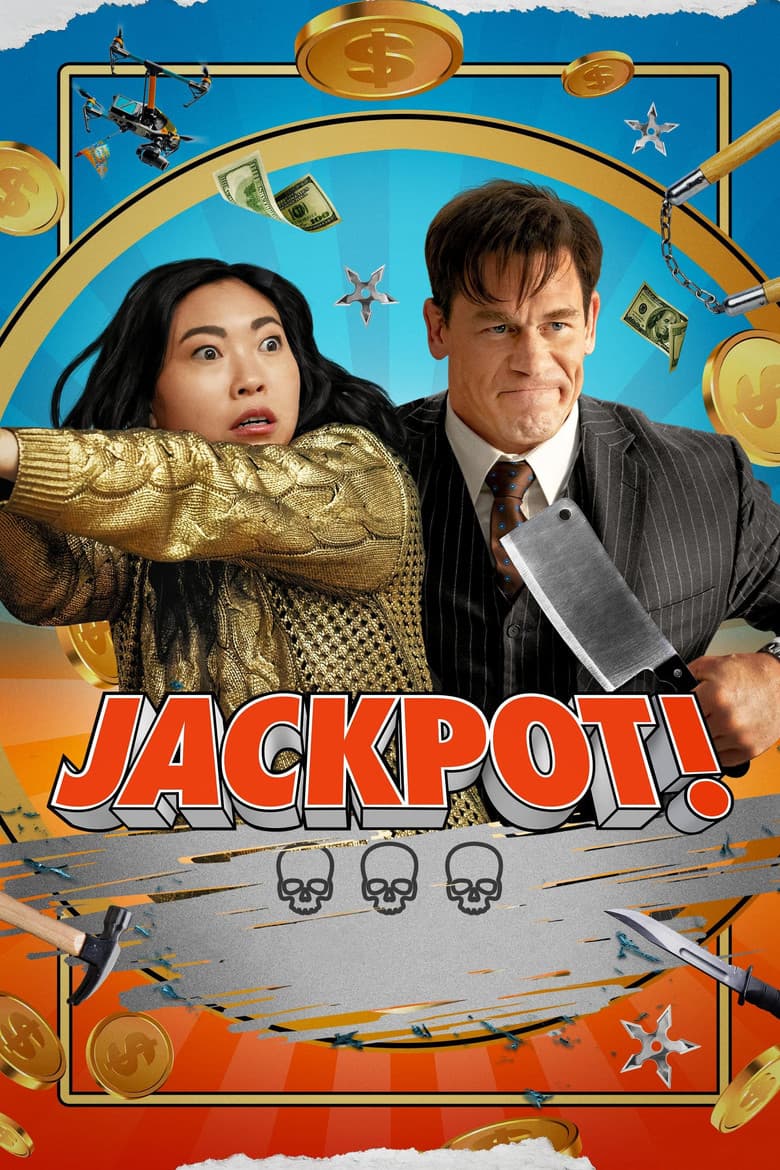
In 2030 Los Angeles, former child actress Katie Kim returns to acting after caring for her sick mother. Katie accidentally wins a $3.6 billion state lottery, but every losing player can legally hunt her and claim the money by killing her before sundown. Katie hires Noel Cassidy, a freelance lottery guard who wants a share of the prize, while his former partner Louis Lewis tries to take control of the job. The film uses R-rated violence, loud jokes, celebrity cameos, and fast chases to make a dark survival story feel like a silly action comedy.
The film places an Asian woman at the center and gives major roles to John Cena and Simu Liu, with Black and Filipino performers in visible supporting roles. That casting is easy to accept in modern Los Angeles, but it still creates a clear diversity signal because several key parts go to non-white performers. Louis briefly says he is proud to see Katie survive as an Asian man and jokes about their ancestors helping her. The bigger message attacks greed, money hunger, harsh Hollywood auditions, and the way public violence becomes entertainment. These ideas return through the lottery rules, news jokes, and show-business scenes, while survival, trust, and friendship guide the ending.
Community feedback
Was our 35% Woke rating accurate?
Breakdown
These are the editorial factors and ratings behind our score for Jackpot!.
Woke representation / casting
The film casts Awkwafina as the lead and places John Cena and Simu Liu in the other main roles. The film also gives visible supporting roles to Black and Filipino performers. The modern Los Angeles setting makes this mix believable, so it does not clash with the story world. Feig’s public comments about wanting audiences to see themselves on screen add a broader representation goal.
32%
Woke political dialogue
Not present. The dialogue focuses on lottery rules, survival, money, auditions, and jokes. The film does not feature recurring speeches about current politics or activist causes.
0%
Identity-driven story themes
Louis briefly tells Katie he is proud to see her survive “as an Asian man” and jokes that their ancestors are helping her. The line makes ethnic identity visible in one scene. Katie’s race does not drive the conflict, and the movie does not build a larger race, gender, or sexuality debate. Her arc focuses on surviving the lottery and choosing people over money.
10%
Western institutional / cultural critique
The film makes California’s government turn an economic crisis into a legal murder lottery. The news treats the killings as entertainment and celebrates new billionaires, while desperate people chase the prize. The story also mocks brutal Hollywood auditions and the pressure to win public attention. These repeated ideas criticize greed, inequality, and show-business culture, but the message stays broad and comic.
24%
Woke character or canon changes
Not relevant. The movie is an original story about the Grand Lottery. It does not change established characters, source material, or real historical people.
0%
Anti-woke backlash and complaints
One Rotten Tomatoes audience review called the film a “woke monstrosity” but gave no example. A small X account complained about the “woke roles” John Cena plays. A mid-size tech YouTuber said he was still boycotting Paul Feig over Ghostbusters 2016, which targets Feig’s earlier work rather than Jackpot!’s story. No repeated DEI, race-swap, girlboss, anti-male, LGBT, review-bomb, or organized-boycott reaction was reported. The backlash is fringe.
12%
Creator track record context
Paul Feig has a cached score of 60/100 and a record of female-led comedy projects, including the all-female Ghostbusters reboot. Laura Fischer has a cached score of 57/100 because Powderkeg promotes women, LGBTQ people, and filmmakers of color. John Cena has a cached score of 25/100 from public inclusion and racial-justice support. Rob Yescombe has a cached score of 0/100, and the other listed crew have little known activist history. This gives the title a moderate creator track record signal.
44%
Production

Movie · 2025
Kat is an improv comedy teacher beginning to question if she’s missed her shot at success. When an undercover cop offers her the role of a lifetime, she recruits two of her…

Movie · 2024
Stuck at a dead end but vying for the love of spunky club manager Anata, aging contract killer Danny Dolinski is thrilled when The Company pulls him back in the field, but only to…

Movie · 2023
When three friends who live together realize that they don't like their life trajectory, they set off to find a gold treasure that is rumored to be buried in the nearby mountain.

Movie · 2023
When Ashley and her young daughter Sarah get caught up in a criminal enterprise that puts their lives at risk, she turns to the only person who can help: her estranged father…

Movie · 2018
A classically-trained martial artist goes to work as a debt collector for the mob. The job seems easy enough, until one “client” pulls him into a situation deeper than could ever…

Movie · 2019
Asim Noyan swindles people with his lies and games. Asim Noyan and his gang, who no one else has been able to catch, get into a ruse again.

Movie · 2026
A dysfunctional couple head to a remote cabin to "reconnect", but each has secret intentions to kill the other.
Movie · 2018
For one month every year, five highly competitive friends hit the ground running in a no-holds-barred game of tag they’ve been playing since the first grade.
