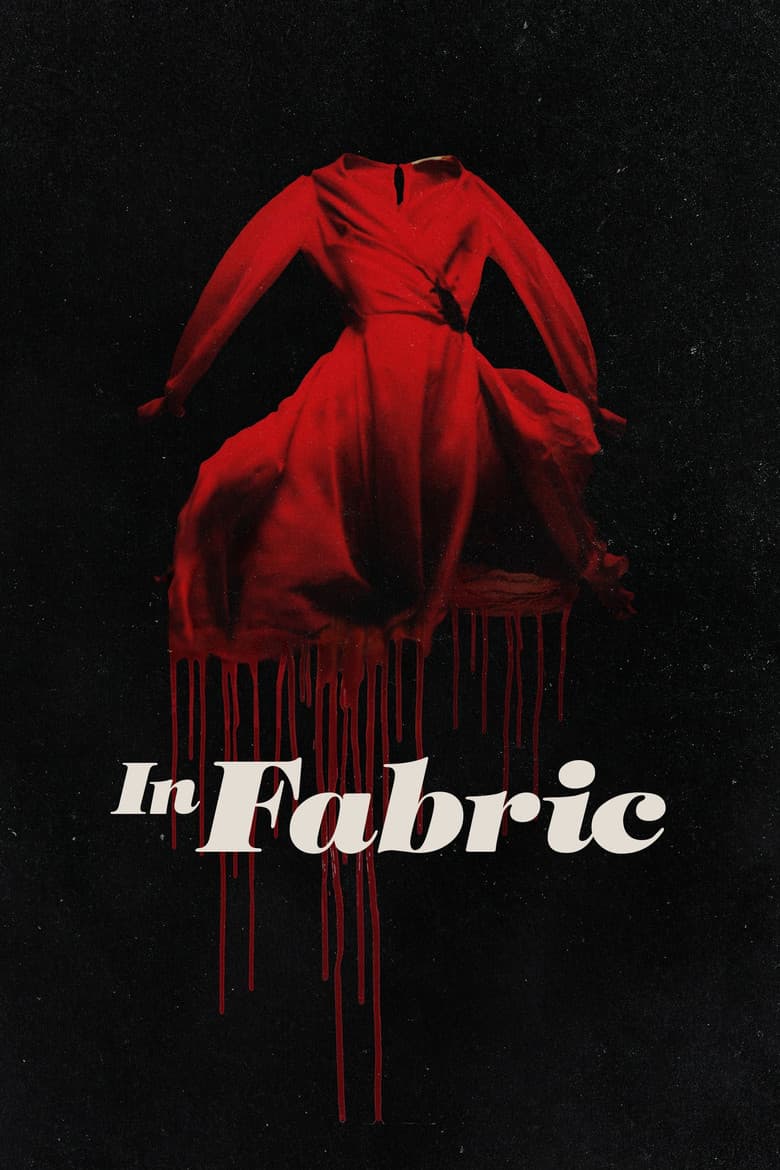
In Fabric follows Sheila Woolchapel, a lonely bank worker in a strange version of late twentieth-century Britain. She wants a fresh start after her divorce and buys a bright red dress from the Dentley and Soper department store for a date. The dress seems to fit every owner, but it brings rashes, accidents, and death. The story later follows washing machine repairman Reg and his fiancée Babs after the dress reaches them. The film mixes horror, black comedy, old television advertising style, and odd sexual behavior.
The film makes clothing, beauty, sex, and body image part of its main horror. Sheila hopes the dress will make her feel attractive, while Gwen uses modeling and sexual confidence to unsettle the family. The store workers treat mannequins and the red dress as objects of desire, and two gay bank bosses appear in Sheila’s workplace. The story also presents advertising, office rules, and shopping as forces that trap ordinary people. These ideas recur throughout the film, but the movie uses strange jokes and cruel fantasy instead of speeches about modern identity politics.
Community feedback
Was our 47% Woke rating accurate?
Breakdown
These are the editorial factors and ratings behind our score for In Fabric.
Woke representation / casting
Not present. The film uses a mixed British cast, including black lead Sheila, but it does not present race or casting as a message. The roles fit the film’s loose British setting.
0%
Woke political dialogue
The store workers use strange lines about consumerism and shopping, including a question about whether a purchase validates a person’s “paradigm of consumerism.” The bank bosses also use corporate language about company culture and worker behavior. These lines are brief and comic, so they do not form a direct identity or activist speech.
22%
Identity-driven story themes
The film repeatedly links clothing to sex, desire, and body image. Sheila buys the dress to feel attractive after her divorce, while Gwen uses modeling and sexual confidence to unsettle the family. Two gay bank bosses recur in workplace scenes that mix control with sexual role-play. The store workers use female mannequins and the red dress as objects of desire. The film presents these ideas as strange horror and satire, not as a clear equality or identity campaign.
42%
Western institutional / cultural critique
The department store’s ads and sales workers make shopping look like a system that feeds on people. Sheila’s bank job repeatedly shows managers using company rules to control a worker. Reg’s employer also treats him as a replaceable part. The dress turns the wish to buy a better image into a source of injury and death. The critique is broad and strange, and it does not target a named political party, religion, or Western institution.
43%
Woke character or canon changes
Not relevant. The film is an original story about a cursed dress. It does not change an established character, source, real person, or historical event.
0%
Anti-woke backlash and complaints
One fringe audience review called the film’s consumer critique self-righteous and compared it to a “trust-fund Marxist” lecture about socialism. Other reviews and Reddit posts did not show a clear anti-woke campaign or boycott. The complaint appears isolated, so the backlash signal is very weak.
8%
Creator track record context
Peter Strickland’s wider work repeatedly explores sex, gender roles, unusual relationships, and queer-coded worlds. His interviews about In Fabric focus on clothes, bodies, retail, and consumerism rather than diversity or activist politics. Shaheen Baig brings an inclusive-casting background, but no title-specific representation message was found. The producers mostly have low or limited public activist context. This makes the creator track record context moderate.
50%
Production
Movie · 2023
An American family fulfills their dream of moving back to their roots after inheriting a remote cabin in the mountains of Norway. But there's a surprise waiting for them.
Movie · 2022
A disgraced internet personality attempts to win back his followers by livestreaming one night alone in a haunted house.
Movie · 2023
Having grown sick and tired of his centuries as Dracula's lackey, Renfield finds a new lease on life — and maybe even redemption — when he falls for feisty, perennially angry…
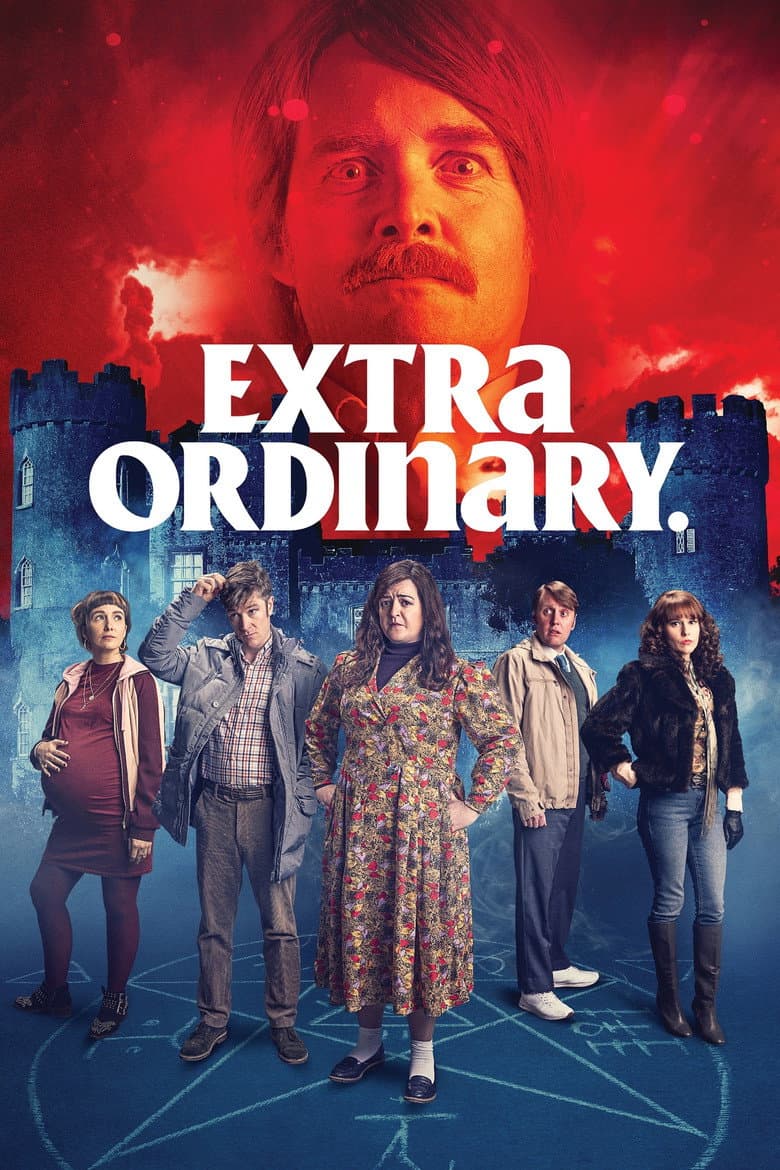
Movie · 2019
A driving instructor must use her other-worldly gifts to save a lonely man’s daughter from a rock star looking to use her for Satanic purposes.

Movie · 2018
Max and Annie's weekly game night gets kicked up a notch when Max's brother Brooks arranges a murder mystery party -- complete with fake thugs and federal agents.
Movie · 2025
A father and daughter accidentally hit and kill a unicorn while en route to a weekend retreat, where his billionaire boss seeks to exploit the creature’s miraculous curative…
Movie · 2018
The crew of a horror web series travels to an abandoned asylum for a live broadcast, but they encounter much more than expected as they move deeper inside the nightmarish old…
Movie · 2018
A series of mysterious events changes the life of a blind pianist who now must report a crime that was actually never witnessed by him.
