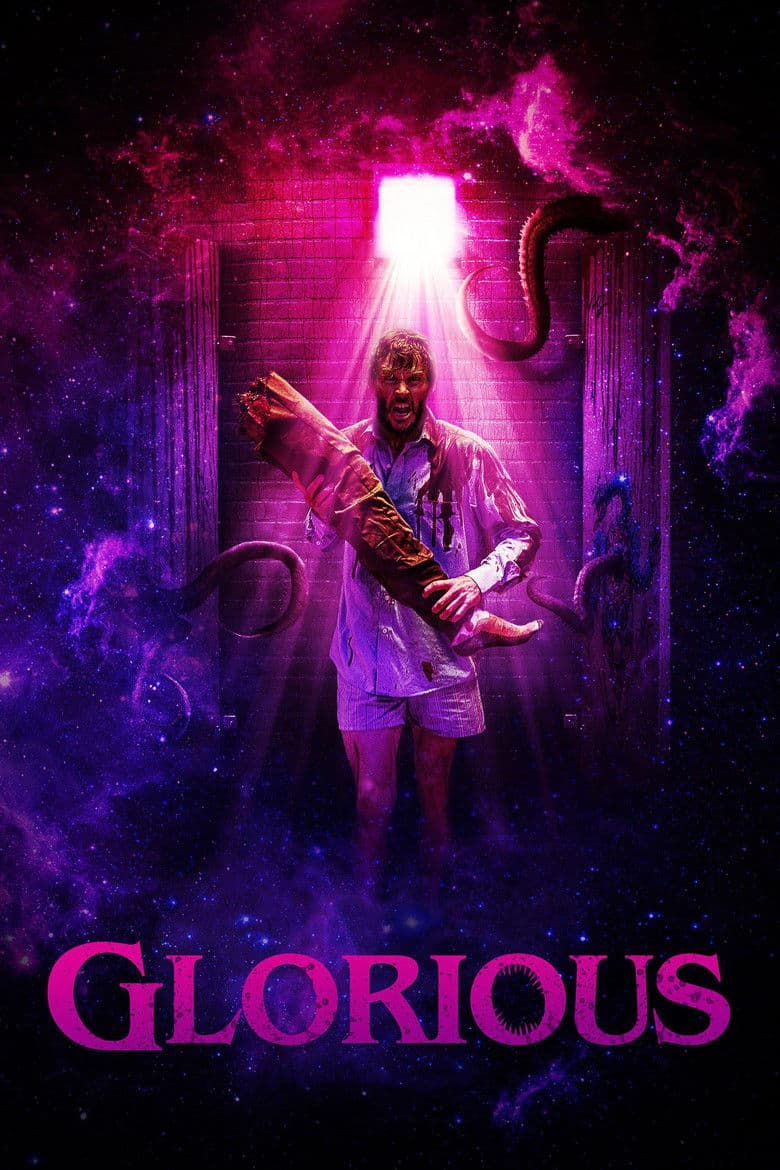
Glorious follows Wes, a heartbroken man who drives to a lonely roadside rest stop after his breakup with Brenda. He drinks heavily, burns his belongings, and wakes up trapped inside a dirty bathroom. A voice from the next stall says it belongs to Ghat, an ancient god who needs Wes to help stop the end of the universe. The film mixes gross jokes, bloody body horror, strange ideas about gods, and a grim story about guilt and murder.
The movie’s clearest woke element is its repeated focus on damaged men, toxic masculinity, and the harm that can pass from an abusive father to a son. Wes is shown as angry and violent, and the story reveals that he killed Brenda after she found proof of his earlier murders. The film treats this as part of his personal horror and does not turn it into a speech about modern politics or a broad campaign against men. The cast has brief women and a black rest-stop worker, but the movie does not make representation, queer identity, or diversity a main part of the story.
Community feedback
Was our 34% Woke rating accurate?
Breakdown
These are the editorial factors and ratings behind our score for Glorious.
Woke representation / casting
Not present. The main cast centers on two white men, while the film gives brief parts to a black rest-stop worker and women. The movie does not frame these choices as a diversity or identity statement.
0%
Woke political dialogue
Not present. The dialogue deals with gods, death, guilt, and the end of the universe. It does not push modern identity, gender-role, DEI, or activist ideas.
0%
Identity-driven story themes
The film makes Wes’s anger and violence part of the main mystery. Wes is revealed to have killed Brenda after she found photos of his victims. The story connects his damage to an abusive father and a mother driven to suicide. Ghat also acts as a destructive male figure who links Wes’s private pain to the larger threat. These ideas shape the ending, but the movie presents them through personal guilt and cosmic horror instead of a broad activist message.
39%
Western institutional / cultural critique
The film presents two male figures as angry and destructive. The story ties their damage to an abusive father and male violence toward women. The movie does not attack Christianity, capitalism, family life, or a Western institution. The critique stays inside Wes’s personal guilt and the supernatural plot, so it is noticeable but limited.
27%
Woke character or canon changes
Not relevant. The film uses original characters such as Wes, Ghat, and Brenda. It does not change an established character, source world, or historical figure.
0%
Anti-woke backlash and complaints
Not present. The X research pass found no anti-woke reaction. Other audience discussion focused on the strange premise, gore, pacing, and ending rather than DEI or identity politics.
0%
Creator track record context
The director has a public record of supporting women in horror and female filmmakers. Barbara Crampton has spoken about better roles for older women and women having more control in horror. Mark Myers has backed underrepresented talent and stories centered on strong women. The writers and most other producers have little public identity-driven record, so the context is mixed.
38%
Production
Movie · 2024
After a family tragedy, three generations of the Deetz family return home to Winter River. Still haunted by Betelgeuse, Lydia's life is turned upside down when her teenage…
Movie · 2023
Having grown sick and tired of his centuries as Dracula's lackey, Renfield finds a new lease on life — and maybe even redemption — when he falls for feisty, perennially angry…
Movie · 2018
The story of a heartbroken man who attends a spiritual retreat, only to discover that the course releases more than everyday toxins and traumatic experiences.

Movie · 2023
An American family fulfills their dream of moving back to their roots after inheriting a remote cabin in the mountains of Norway. But there's a surprise waiting for them.

Movie · 2025
A father and daughter accidentally hit and kill a unicorn while en route to a weekend retreat, where his billionaire boss seeks to exploit the creature’s miraculous curative…
Movie · 2026
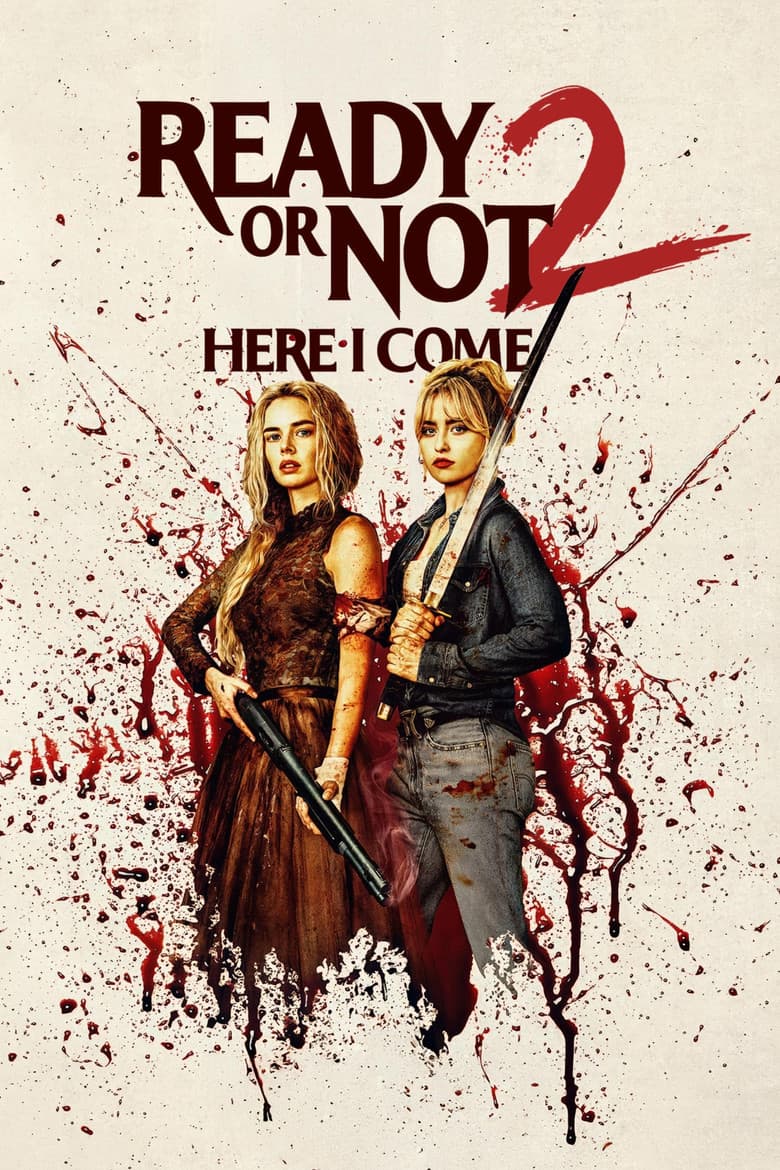
Moments after surviving an all-out attack from the Le Domas family, Grace discovers she’s reached the next level of the nightmarish game — and this time with her estranged sister…

Movie · 2024
After Santa Claus (codename: Red One) is kidnapped, the North Pole's Head of Security must team up with the world's most infamous tracker in a globe-trotting, action-packed…

Movie · 2019
On the outskirts of a kingdom, a quiet but fierce medieval warrior protects the realm from monsters and the occult.
