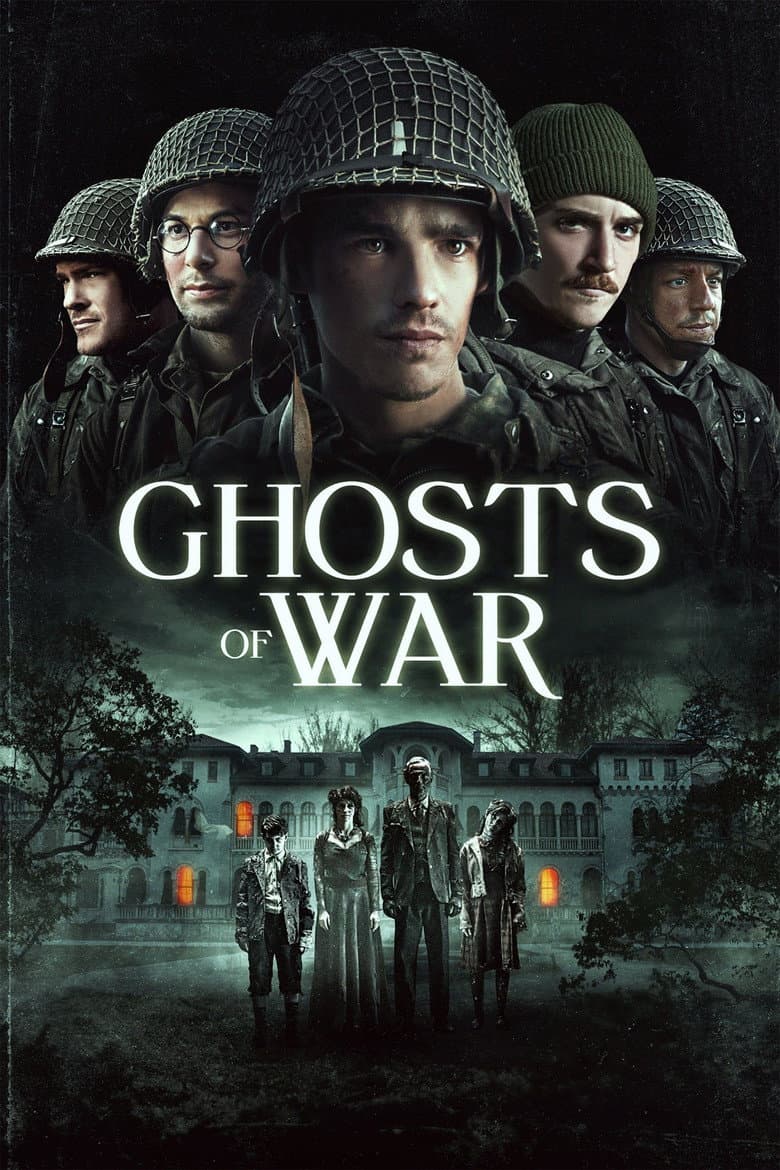
Lieutenant Chris Goodson leads four tired American soldiers near the end of World War II. The Army sends the group to guard a French chateau that once served Nazi leaders. The men find signs that a family was tortured and killed in the house, and a strange force begins to attack them. The movie mixes war action with haunted house horror and a dark final twist.
The story later shows that the soldiers are modern American troops recovering from severe wounds after a mission in Afghanistan. A computer program places them inside a World War II battle so doctors can treat their trauma, but the ghosts come from an Afghan family the men failed to save. The film asks the men to face their guilt instead of treating combat as a clean victory. Its main ideas are the mental harm of war and the cost of failing to protect civilians.
Community feedback
Was our 14% Woke rating accurate?
Breakdown
These are the editorial factors and ratings behind our score for Ghosts of War.
Woke representation / casting
Not present. The main group is five male American soldiers, and the Afghan family appears because of the later plot. The film does not present casting as a diversity or identity message.
0%
Woke political dialogue
Not present. The soldiers discuss orders, combat, fear, and survival. The dialogue does not push modern identity, DEI, or activist ideas.
0%
Identity-driven story themes
Not present. The movie centers on war trauma, guilt, and a failed rescue mission. It does not build its story around race, gender, sexuality, or modern identity politics.
0%
Western institutional / cultural critique
The ending shows American troops failing to protect an Afghan family after a military order leaves them hiding. The treatment program places wounded soldiers inside a false war and makes them relive their guilt. The movie gives a mild anti-war criticism of military missions and their human cost. It does not attack patriarchy, Christianity, capitalism, or ordinary family life.
18%
Woke character or canon changes
Not relevant. The movie uses an original story and does not change established characters, source material, or real historical figures.
0%
Anti-woke backlash and complaints
One small review accused the film of using Holocaust survivors to earn moral credit and treating their presence as a way to score points. That complaint is the clearest anti-ideological reaction found, but it is isolated and does not use a woke or DEI label. Reddit viewers mostly attacked the twist and its logic, and the supplied X pass found no anti-woke reaction.
8%
Creator track record context
Eric Bress has a genre-focused career and no clear political or DEI pattern. The casting director has a public diversity and inclusion record. Producer Shelley Madison has supported stronger female leads and spoken about women’s underrepresentation. Most of the other stored producer profiles show little activist activity, so the wider context is mild.
15%
Production
Movie · 2019
A year after the mysterious disappearance of an 8 year-old girl, we meet her grieving family as they return home from her memorial service in their small town.
Movie · 2024
With his wife out sick, a struggling father brings home a lifelike AI, only to have his self-aware new help want everything her new family has to offer...
Movie · 2021
Following the events at home, the Abbott family now face the terrors of the outside world. Forced to venture into the unknown, they realize that the creatures that hunt by sound…

Movie · 2024
Nothing is what it seems when a twisted one-night stand spirals into a serial killer’s vicious murder spree.
Movie · 2019
A man steps out of a park fountain in Ho Chi Minh City with no recollection of who he is or where he came from.
Movie · 2018
After waking up to find himself all alone in an apartment where a massive party was being held the night before, Sam is immediately forced to face a terrifying reality: the living…
Movie · 2026
After a catastrophic military disaster reanimates the dead, Ava searches for her missing husband amidst an increasingly hostile world.
Movie · 2017
Jimmy is a committed child psychologist who uses his own playbook, but when he is brought in to work with Ellie, he is completely unprepared for his subject—a 9-year-old…
