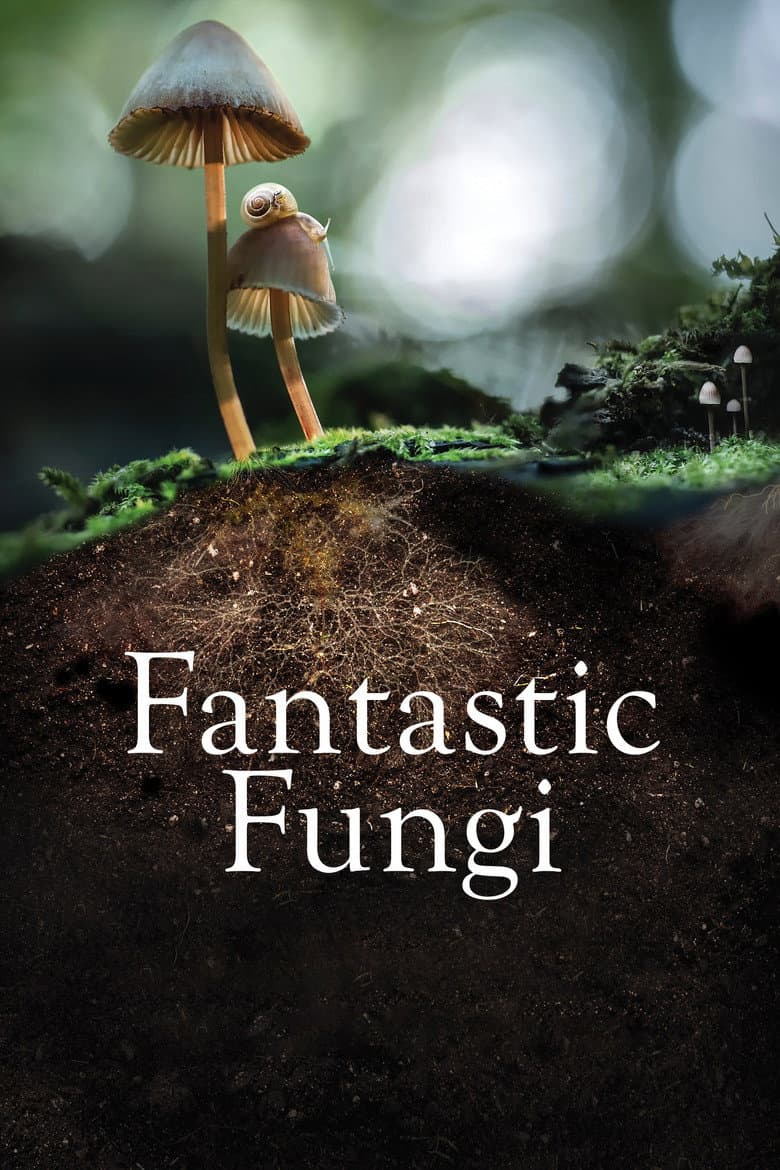
Paul Stamets guides this documentary through the hidden world of fungi, with help from scientists, doctors, writers, and mushroom growers. The film moves from old forests and soil to laboratories, hospitals, farms, and psychedelic research rooms. Its main conflict is not a fight between people, but the struggle to understand whether fungi can help damaged bodies, sick ecosystems, and a planet facing climate change. Time-lapse images, computer pictures, interviews, and Brie Larson's soft narration give the film a dreamy, hopeful, and sometimes spiritual tone.
Fantastic Fungi presents fungi as a model for human life because plants, trees, and fungi share food and support one another. The film asks viewers to replace a human-centered view of nature with a picture of shared life, community, and mutual help. It also supports wider discussion of psilocybin, criticizes the criminalization of psychedelic drugs, and says old institutions slowed research. The film briefly connects European disease and harm to Indigenous people with a wider critique of Western medicine and government policy, but identity politics does not drive the story. Its strongest message is environmental and spiritual rather than about race, sex, or sexuality.
Community feedback
Was our 32% Woke rating accurate?
Breakdown
These are the editorial factors and ratings behind our score for Fantastic Fungi.
Woke representation / casting
Not present. The film presents scientists, doctors, writers, and mushroom workers because of their subject knowledge. It does not make race, sex, or other identity a theme in the choice of interview subjects or narrator.
0%
Woke political dialogue
The film says climate change is one of the biggest threats facing the planet. The speakers link psychedelic drug laws to government fear, anti-war politics, and lost research. The film also says Europeans spread disease among Indigenous people and criticizes Western medicine for overlooking older healing traditions. These lines appear in several sections, but they support the ecology and mushroom message instead of forming the whole story.
30%
Identity-driven story themes
The film repeatedly asks people to see nature as a connected community instead of a hierarchy with humans at the top. The speakers present cooperation, shared resources, and a change in human thinking as answers to social and environmental problems. The film treats psychedelic experiences as tools for healing and wider social change. These themes are clear, but the story does not center on race, gender, sexuality, or DEI.
28%
Western institutional / cultural critique
The film criticizes government drug policy for stopping psychedelic research. The speakers call older anti-drug messages fearful and unscientific. The film contrasts Western medicine with shamanic and Asian healing traditions. It also criticizes human treatment of nature, but it does not make patriarchy, Christianity, family life, or capitalism its main target.
24%
Woke character or canon changes
Not relevant. The film is an original documentary and does not change a known character, source story, or real historical figure.
0%
Anti-woke backlash and complaints
Not present. Audience complaints focus on weak science, Paul Stamets's claims, and the film's support for psychedelics. No clear anti-woke complaint about DEI, identity politics, or left-wing messaging is reported.
0%
Creator track record context
Louie Schwartzberg and Mark Monroe have low scores and mainly work in nature and documentary projects. Producer Geralyn White Dreyfous has a gender-equity focus, and producer Regina K. Scully has a strong record of funding media about gender and representation. Producer Lyn Davis Lear adds an environmental activist link. These people raise the context score, but the film itself centers on ecology, psychedelics, and human connection rather than identity politics.
32%
Production
Movie · 2016
The Beatles stormed through Europe's music scene in 1963, and, in 1964, they conquered America. Their groundbreaking world tours changed global youth culture forever and…
Movie · 2020
When Washington Post journalist Jamal Khashoggi disappears after entering Saudi Arabia’s consulate in Istanbul, his fiancée and dissidents around the world are left to piece…
Movie · 2022
After years in the limelight, Selena Gomez achieves unimaginable stardom. But just as she reaches a new peak, an unexpected turn pulls her into darkness.
Movie · 2023
A short kid from a Canadian army base becomes the international pop culture darling of the 1980s—only to find the course of his life altered by a stunning diagnosis.
Movie · 2022
In candid conversations with actor Jonah Hill, leading psychiatrist Phil Stutz explores his early life experiences and unique, visual model of therapy.
Movie · 2017
While investigating the furtive world of illegal doping in sports, director Bryan Fogel connects with renegade Russian scientist Dr.
Movie · 2021
For over 40 years Val Kilmer, one of Hollywood’s most mercurial and/or misunderstood actors has been documenting his own life and craft through film and video.
Movie · 2023
As the Russian invasion begins, a team of Ukrainian journalists trapped in the besieged city of Mariupol struggle to continue their work documenting the war's atrocities.
